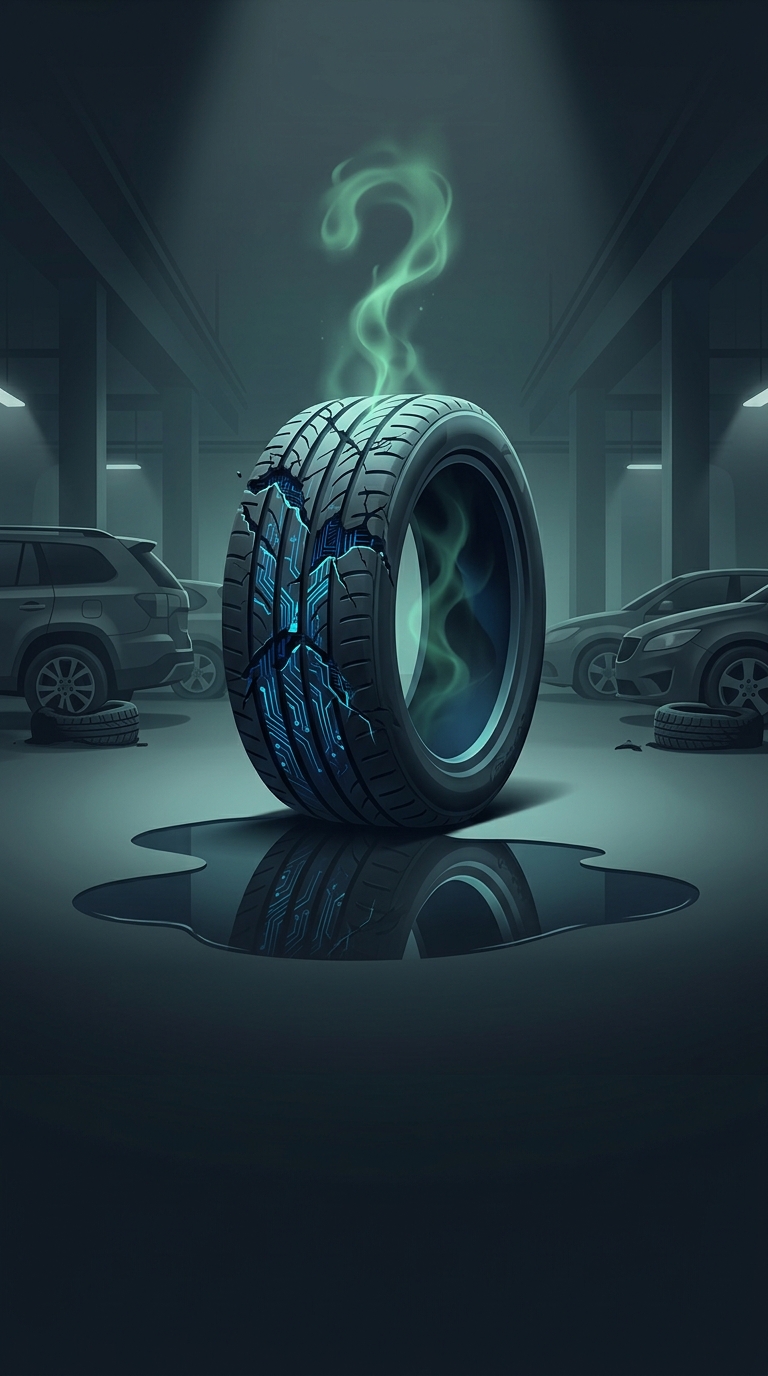
How a pothole can ruin a tire in one hit
A tire can look fine from the outside and still be badly damaged after striking a deep pothole. The impact squeezes the tire between the road edge and the wheel rim. If the force is strong enough, it can bruise or tear the tire’s internal cords—the reinforcing layers that help it hold its shape. The damage may show up later as a bulge in the sidewall, a slow leak, or a sudden loss of air.
The wheel can take a hit, too. A bent rim may no longer seal tightly against the tire, while a misaligned wheel can make the tread wear unevenly. That means one road impact can lead to more than a puncture: it can set up a tire for failure or shorten its remaining life.
Why damage can arrive in clusters
Potholes often form when water seeps into cracks in the pavement, freezes and expands, then thaws. Repeated freezing and thawing loosens pieces of the road; traffic breaks them away, leaving a cavity with a sharp edge. A stretch of damaged pavement can expose many drivers to the same hazard, and a rough season can bring repeated impacts before repairs catch up.
Tire pressure and tire design affect how much protection a tire has. An underinflated tire flexes more, while a tire with a short sidewall has less rubber cushioning the wheel from a hard impact. Neither makes a pothole harmless, but both can leave less margin for absorbing a blow.
What a driver may not notice
A tire that still holds air is not necessarily undamaged. After a hard strike, a new sidewall bulge, vibration, pulling, or repeated pressure loss can signal a problem that needs inspection. The hidden cost of rough roads is that the first warning may come after the impact: the pothole hits once, but the damage can keep developing afterward.