Why a bad show can be hard to turn off
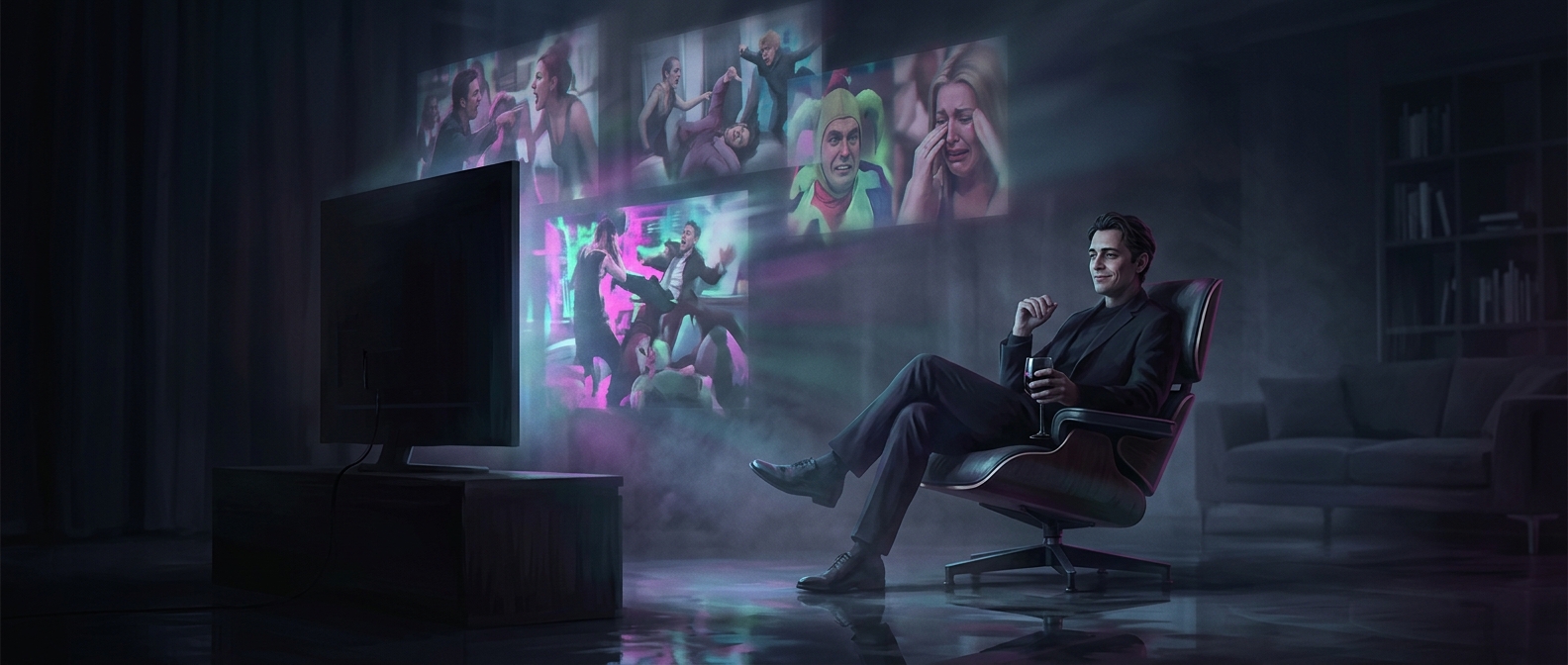
“Hate-watching” is less about enjoying every scene than about finding something engaging in a show’s flaws. A clumsy argument, an awkward performance, or a baffling decision gives viewers something to react to. The pleasure can come from commentary as much as from the program itself: predicting what will go wrong, pointing out an inconsistency, or debating whether a moment is genuinely spontaneous or shaped for the camera.
The appeal of low-stakes drama
A chaotic show can create tension without asking much of its audience. Its conflicts may feel intense on screen, but viewers are not responsible for solving them, and they can stop watching whenever they like. That distance makes it possible to feel surprise or irritation while staying comfortably outside the consequences.
The format can also turn viewing into a social activity. Friends can trade reactions, make running jokes, and disagree about who is behaving worst. Even watching alone, a viewer may mentally narrate the action or imagine what others would say. The show becomes raw material for a conversation, not just a story to follow.
Flaws become part of the entertainment
Traditional dramas often ask viewers to admire careful plotting and believable characters. Hate-watching reverses the standard: a weak scene can be entertaining precisely because it invites scrutiny. Viewers may keep watching to see whether the next episode becomes more absurd, or simply to find out how an unresolved clash ends.
That does not mean the show is secretly good by conventional standards. It means entertainment can come from the audience’s response as well as from the creators’ craft. A program that seems too messy to take seriously may still provide a steady supply of surprises, jokes, and shared opinions—enough to make “just one more episode” feel worthwhile.