A colony the crown could not afford to lose
Columbus was not simply an explorer operating far from Spain. He governed Hispaniola, the Caribbean island where Spain was trying to establish its first lasting foothold in the Americas. His authority affected the settlers, the distribution of labor and resources, and the crown’s claims to the colony. Reports that he and his brothers governed harshly—and that punishments could be extreme—made the disorder a royal problem, not just a local grievance.
An investigator arrived with power to act
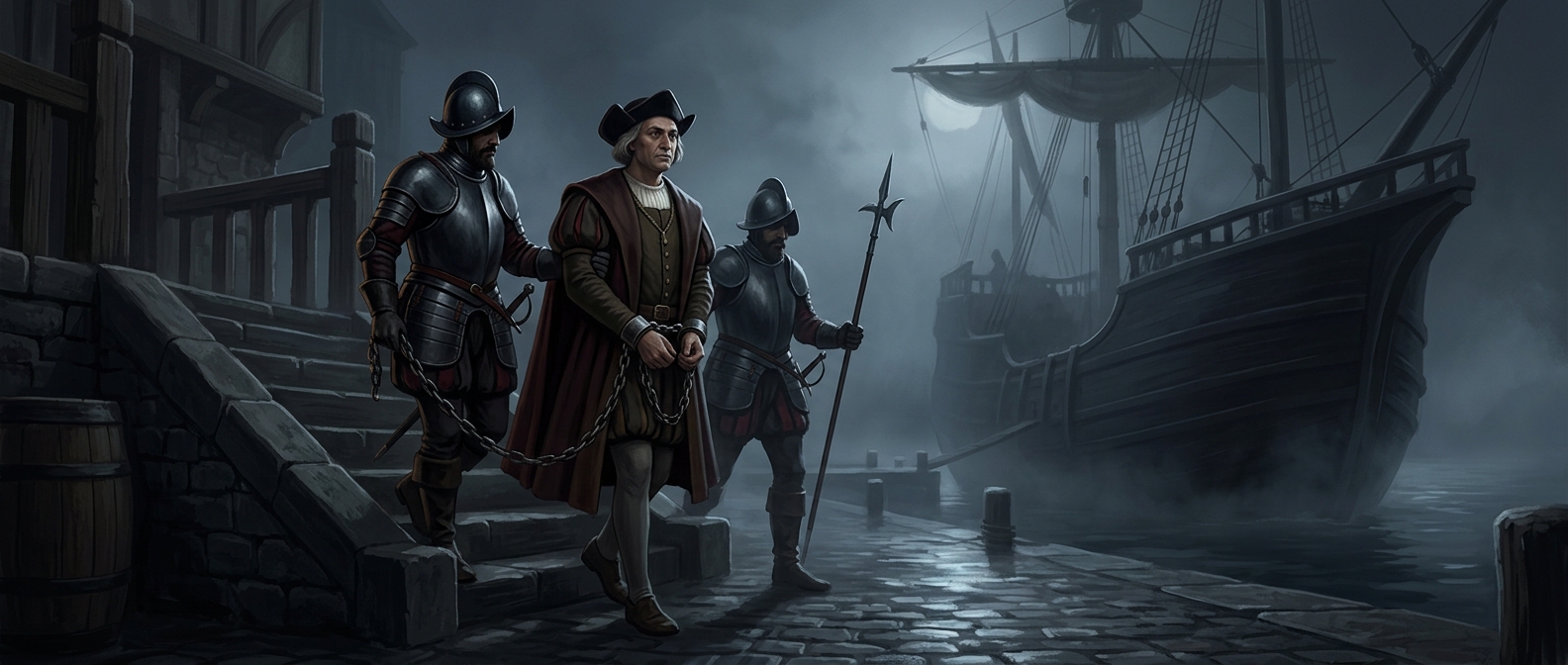
In 1500, the Spanish monarchs sent Francisco de Bobadilla to investigate conditions and take control of the government. He could question people in the colony, act on the findings, and remove Columbus from office. Once Bobadilla concluded that Columbus had to be detained, the chains made the change of power unmistakable: the man who had governed the settlement was now being transported as a prisoner.
The arrest also reflected a practical concern. A colony riven by conflict and accusations of abuse was harder to govern and less useful to the crown. Removing Columbus offered the monarchs a way to assert control and respond to complaints without abandoning Hispaniola.
The chains did not settle the case
Columbus returned to Spain in chains, but the arrest was not a final judgment on every allegation. The crown later released him; he did not regain his governorship. The episode showed the limit of his position: his discoveries had made him valuable, but his authority in the colony still depended on monarchs who could investigate, replace, and recall him.