An unfamiliar animal, seen through a familiar story
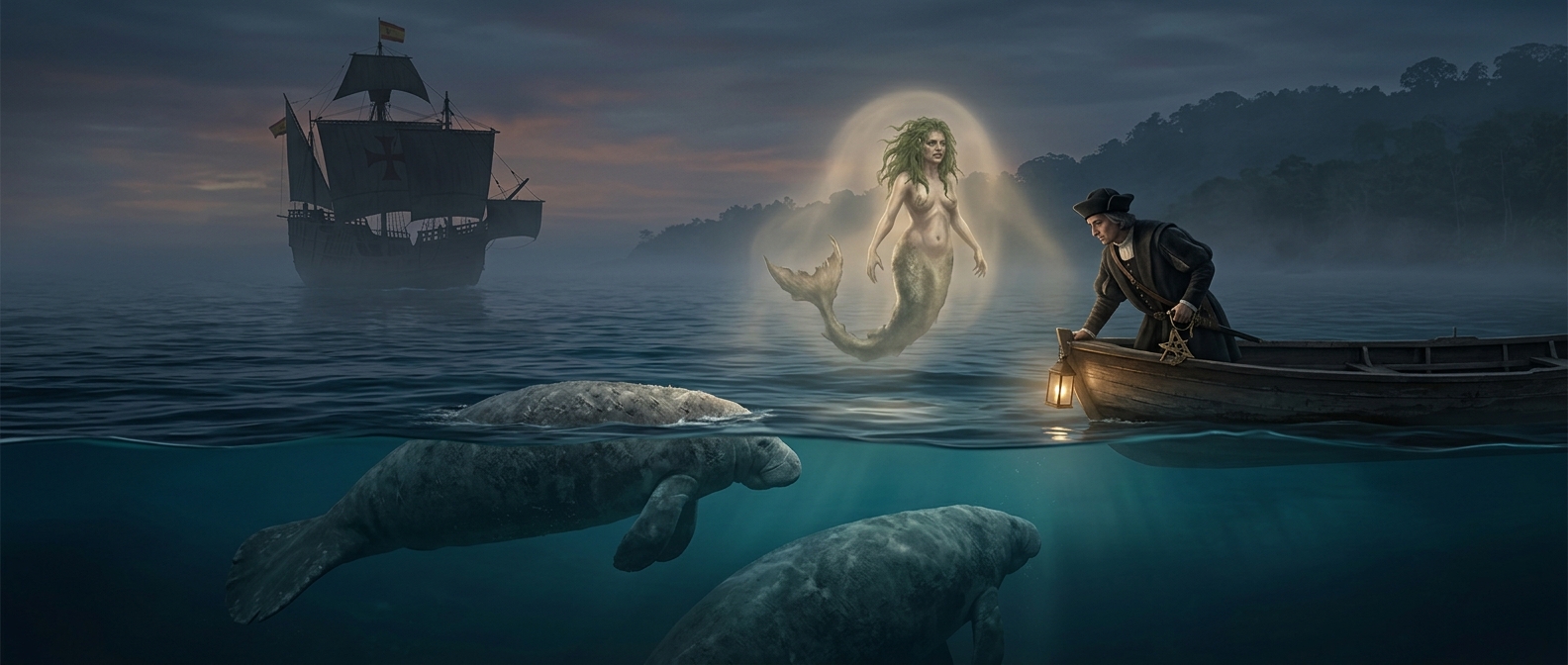
During his first voyage across the Caribbean, Christopher Columbus described seeing figures in the water that he identified as mermaids. The animals were likely manatees, large marine mammals that surface to breathe and may hold their heads and upper bodies above the water. From a ship, at a distance, that glimpse could suggest a humanlike form—but not the graceful woman of European art and legend.
Columbus’s comparison reveals how observation and expectation worked together. He did not simply record an unknown animal; he interpreted it using a category he already knew. Mermaid stories offered a ready-made explanation for a fleeting sight in the sea, while the visible details—especially the animals’ faces—failed to match the idealized pictures he had in mind.
Why manatees could invite the mistake
Manatees are slow-moving, air-breathing mammals with rounded heads and flexible front flippers. When one lifts its head to breathe or turns near the surface, its outline can look strangely human from far away. But up close, its broad muzzle, wrinkled skin, and heavy body make clear that it is not a person-like figure from a tale.
The episode is a small example of a larger problem in exploration: a new environment does not arrive with labels attached. Travelers brought expectations with them, and those expectations shaped what they thought they saw. In Columbus’s account, the manatee did not become more beautiful by being mistaken for a mermaid; instead, the real animal forced the legendary image to compete with an untidy, unfamiliar reality.