A moving laboratory in the central Arctic
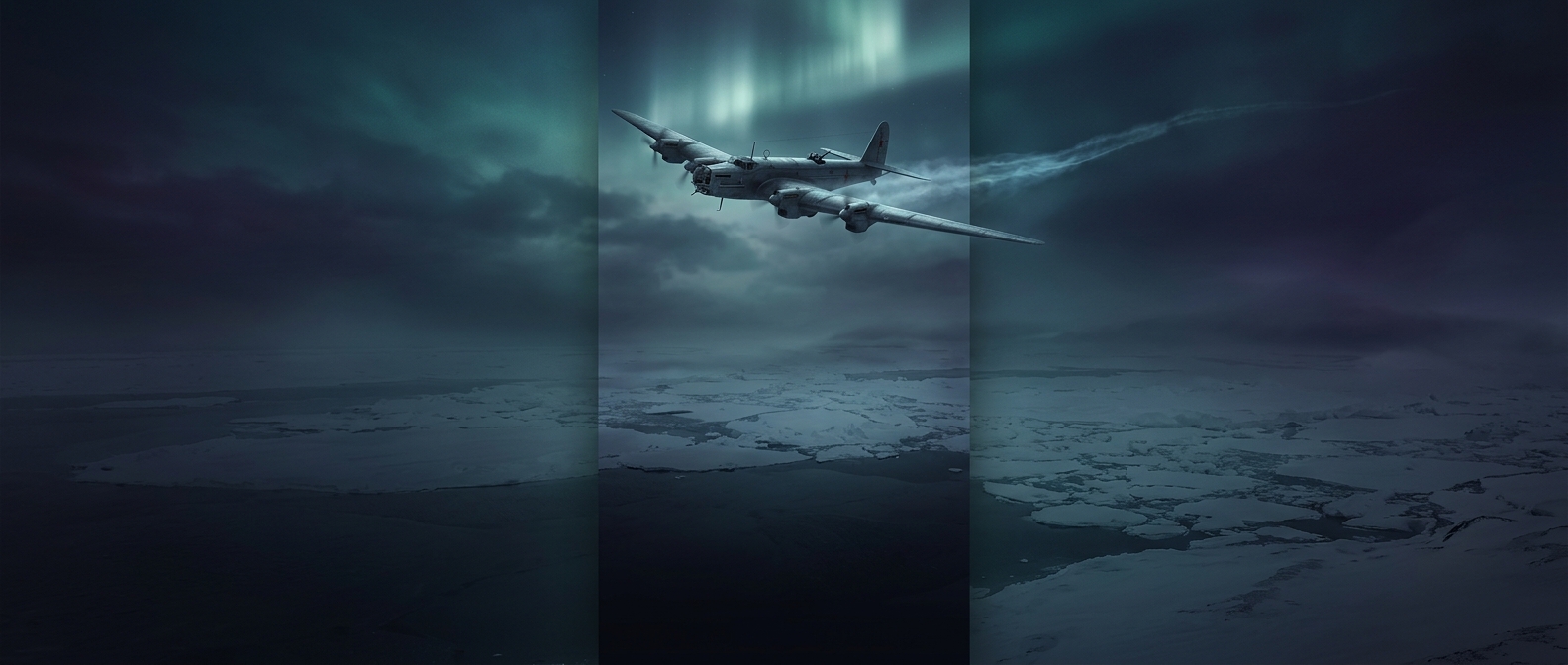
Before North Pole-1, much of the Arctic Ocean’s interior was known from brief visits and distant measurements. A station fixed on sea ice could do something different: record conditions day after day while the floe carried its instruments across the ocean. The Soviet expedition’s four researchers tracked weather, ocean conditions, ice, and other features of the polar environment, sending reports by radio.
That continuity mattered. A reading taken once tells where conditions stood at a particular moment; repeated readings help reveal how they change and how different parts of the Arctic are connected. Because the station itself drifted, its observations also traced a route through waters that ships could not readily survey.
The floe was both platform and hazard
The team lived and worked on sea ice—not solid ground. Their camp, instruments, and supplies had to move with a surface that could split under pressure from shifting ice. As the floe drifted south, cracks and deteriorating conditions made the station increasingly precarious. The men could collect valuable data only so long as the ice remained a usable base.
This was the expedition’s central engineering tradeoff: the drifting ice opened access to the remote ocean, but it offered no dependable foundation. Radio links kept the station in contact with Soviet organizers, while aircraft had made its original placement possible; neither could make the floe stable.
Why the evacuation mattered
After roughly nine months, the researchers were taken off the ice by icebreakers as the floe became unsafe. The station had demonstrated that a small, equipped crew could sustain long-term observations while crossing the central Arctic—a scientific achievement with clear national significance for the Soviet Union.
Its legacy was not simply the hardship of surviving there. North Pole-1 showed how a temporary camp on drifting ice could turn an inaccessible stretch of ocean into a moving research platform, gathering a continuous record until the platform itself could no longer be trusted.