Why a remedy might begin with snails and earthworms
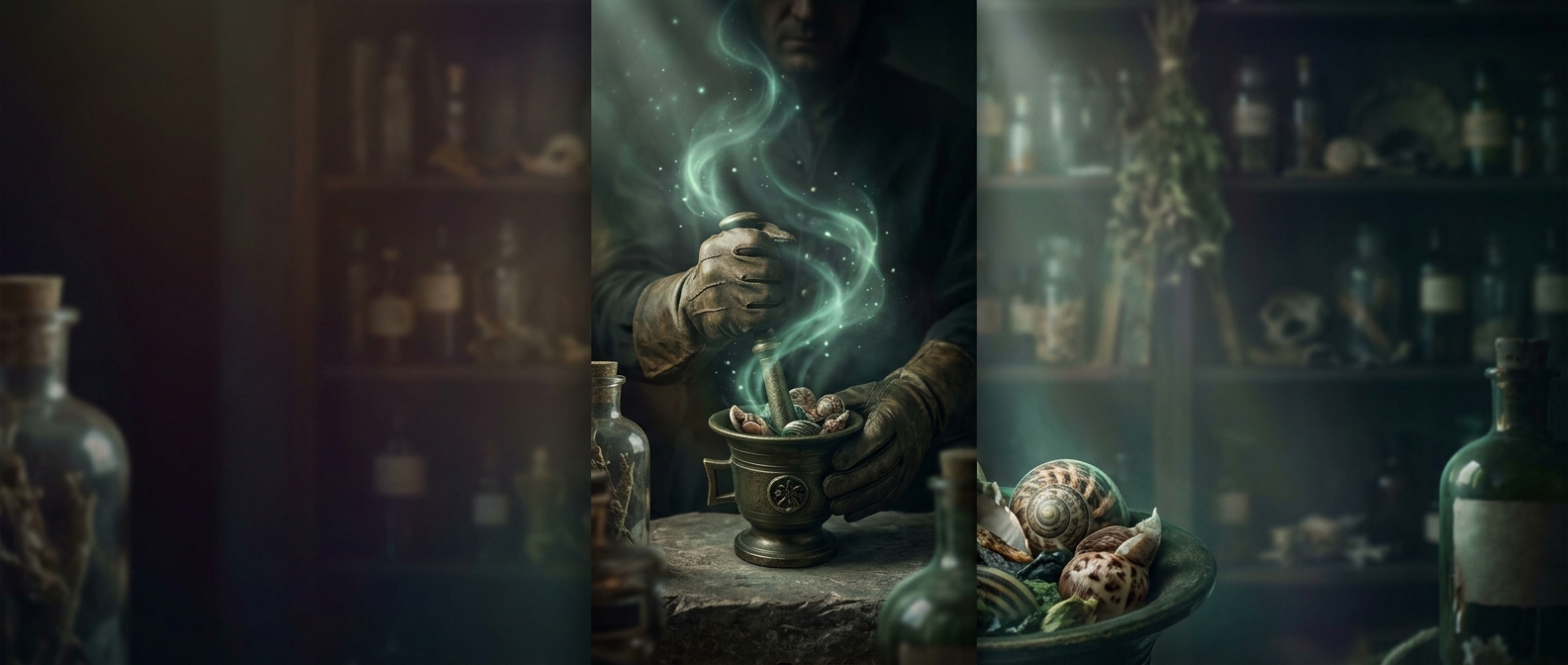
A recipe calling for live snails and earthworms treated the natural world as a storehouse of possible medicines. Before modern drug testing, remedies were often assembled from materials people could gather, prepare, and administer. A detailed recipe made that process repeatable: collect the ingredients, crush them, then boil them into a broth.
What crushing and boiling did—and did not prove
Crushing broke the animals into smaller pieces, while boiling softened the mixture and transferred some of its contents into the liquid. That could make the ingredients easier to swallow than whole animals. But preparing a substance as a broth did not show that it could treat a severe illness. To establish that, one would need reliable evidence that the remedy helped patients, not merely a recipe that described how to make it.
The prescription is revealing less as a proven treatment than as a record of practical medical thinking: when illness demanded an answer, ordinary living materials could be turned into medicine by a sequence of familiar steps. The vivid detail is that the remedy’s transformation began before the pot was even lit—with the prescribed crushing of two very different creatures.