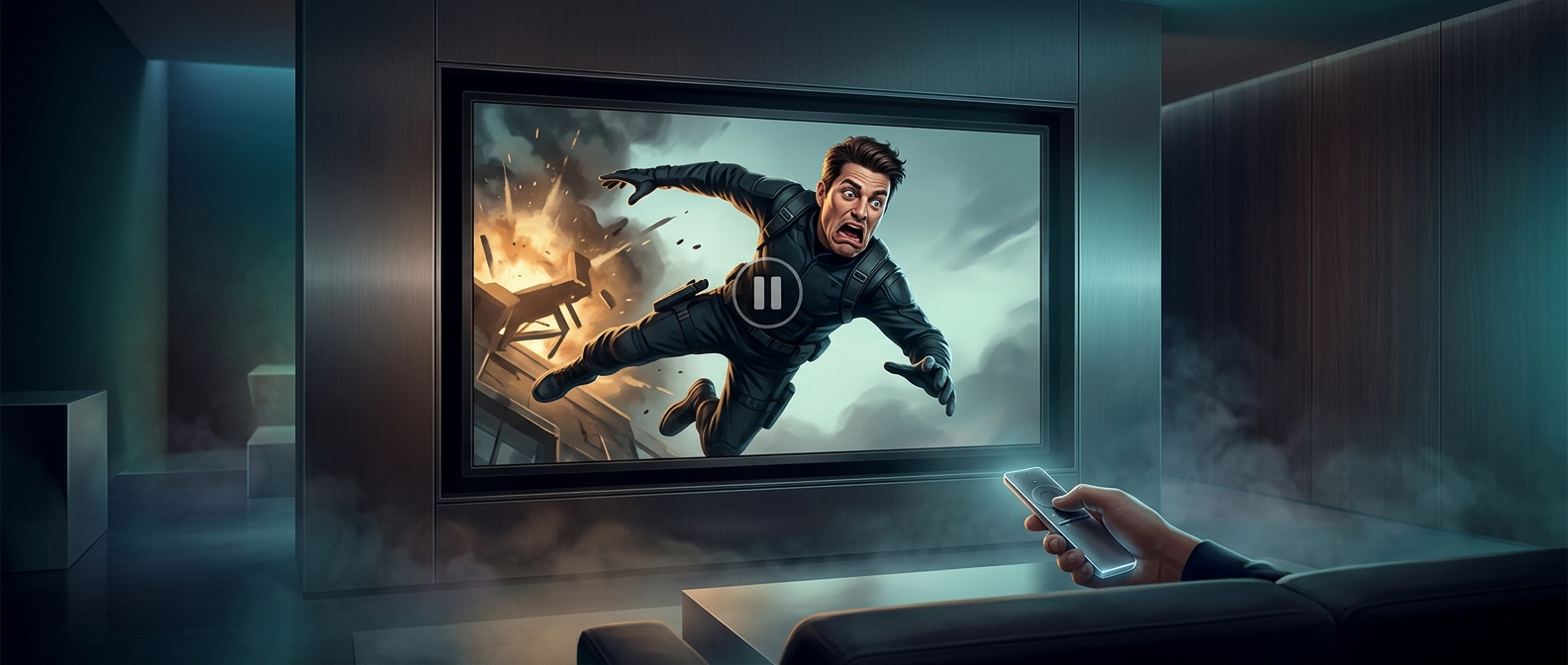
Why a movie star can look strange when you pause
A film is not a stream of perfectly still portraits. Each frame records a slice of movement, and faces are constantly changing: eyelids drop, eyes shift, lips form sounds, and cheeks tense. Stop playback at the wrong instant and the image may preserve a fleeting in-between expression—one that no one would notice at normal speed.
Motion makes the difference
Movies typically show a sequence of separate images quickly enough that viewers perceive continuous action. The brain links those images into movement, so a blink reads as a blink rather than a series of awkward stages. A pause removes that flow. It can freeze the eyes at different points in a blink or catch a mouth halfway through a word, making the face seem blurry, cross-eyed, or oddly distorted.
The camera adds another wrinkle. When a face or camera moves during an exposure, the recorded image can smear slightly across the frame. That blur helps motion look natural when the film is playing, but it can make a paused image look especially messy.
A polished performance is still made of moments
Actors and filmmakers shape the scene viewers experience over time: the rhythm of a line, a glance, a reaction, a cut to another character. They do not need every fraction-of-a-second frame to work as a flattering still photograph. A bizarre paused face is often less a mistake than a reminder that the performance was designed to be watched in motion.