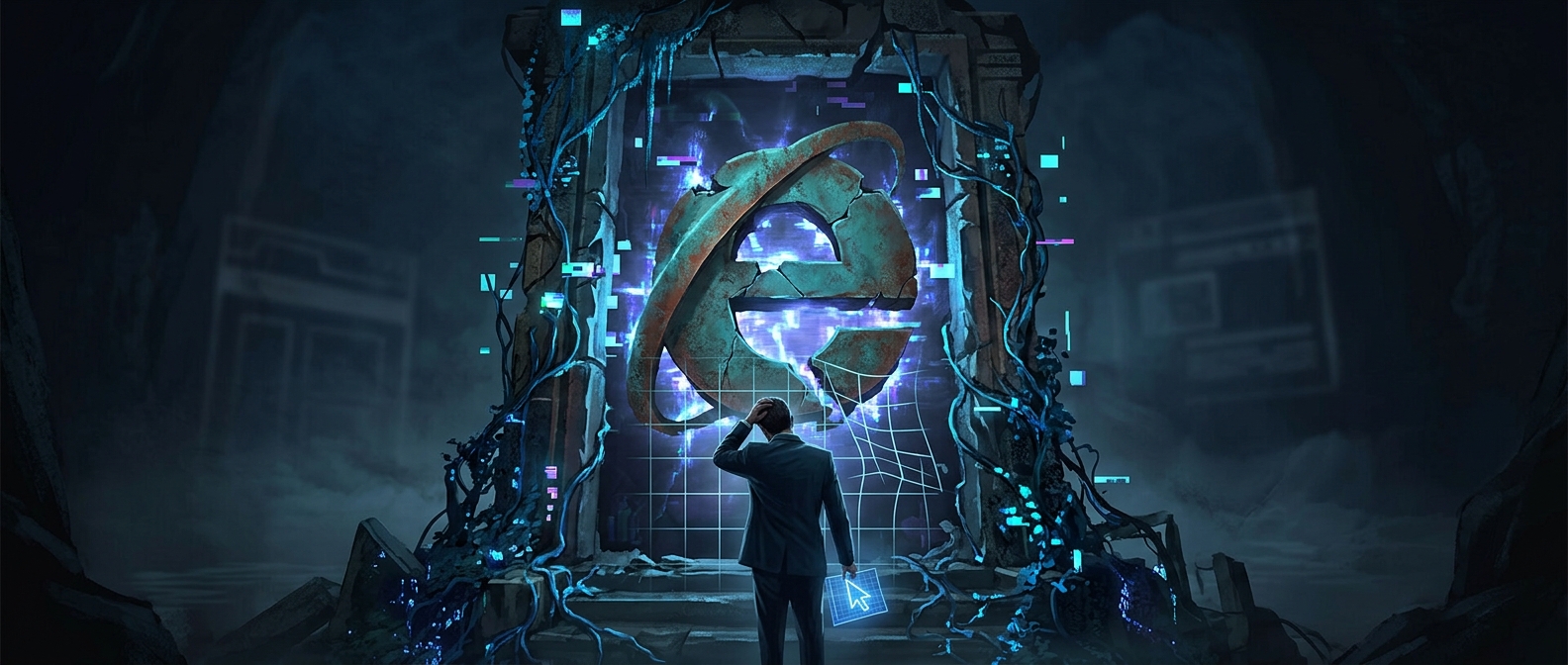
Why one old browser could shape an entire website
A web page is not a picture sent intact to every visitor’s screen. The browser reads its code, decides what the elements mean, and lays them out. Internet Explorer 6 often interpreted that code differently from newer browsers. A design that looked aligned elsewhere might shift, overflow, or break in IE6—not because the page had changed, but because the browser’s rendering rules differed.
That left designers with a practical choice: accept a broken experience for some users or build exceptions into the site. They might use conditional comments—instructions that only Internet Explorer would read—or adjust styles to work around a particular display bug. The result could be a modern version of a page plus a second set of rules for the older browser.
Why companies did not simply replace it
For many organizations, a browser was part of a working system, not a personal preference. Internal websites and business applications could depend on IE6-specific behavior or technologies such as ActiveX, which let web pages interact with software on a Windows computer. Replacing the browser might therefore require testing or rebuilding applications, retraining staff, and coordinating changes across many machines.
Those costs made “keep the old setup running” an easier short-term decision than upgrading. And the more a company relied on its existing applications, the more risky a browser change could seem. Meanwhile, designers still had to serve the employees, customers, and partners using that setup.
The cost of keeping compatibility
Every special case added work: developers had to test it, preserve it during later redesigns, and avoid breaking the newer versions of the site. A small browser-specific fix could become a lasting piece of technical baggage, especially when the original application owner or reason for the workaround was no longer obvious.
That is why IE6’s legacy lasted beyond its usefulness. A browser that was difficult to replace could make every new website carry a little of the old one’s history in its code.