Why the moth flies toward the flame
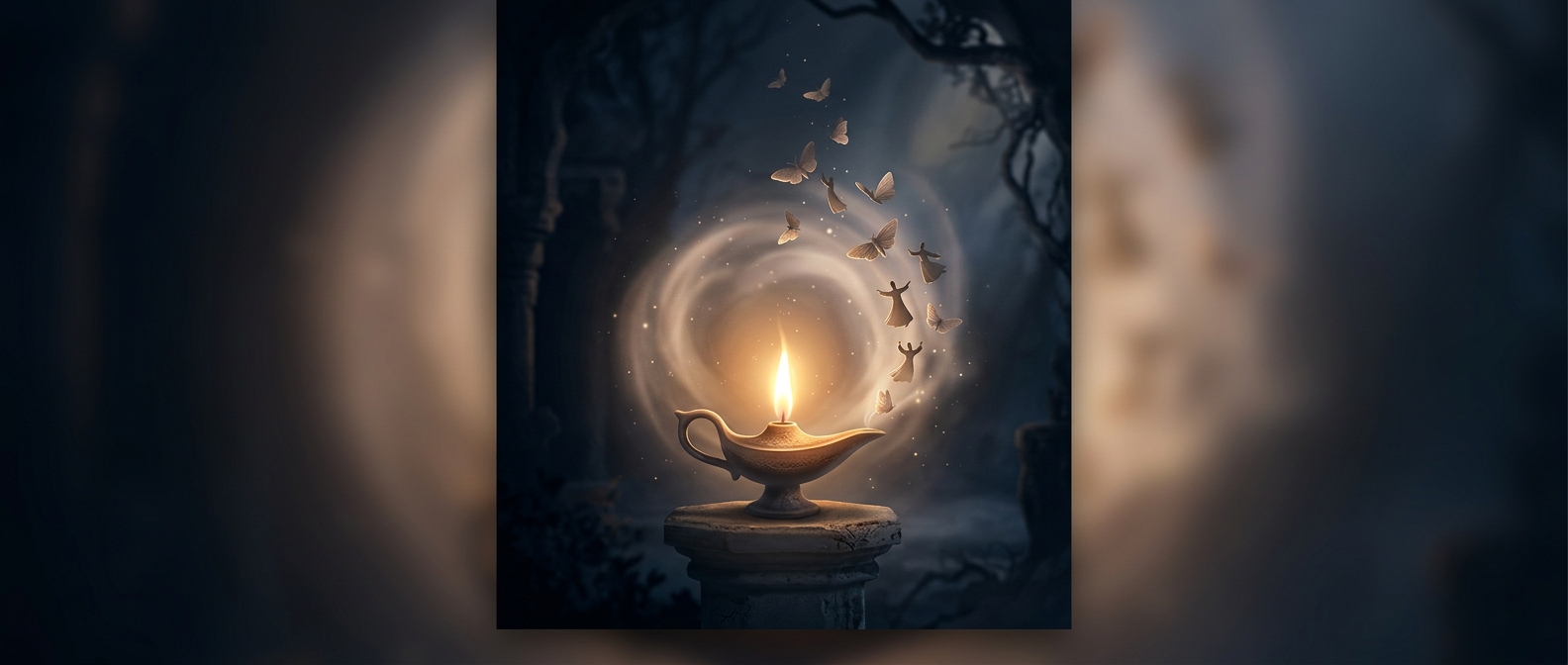
In Sufi poetry, the moth and flame turn an abstract spiritual idea into a visible, perilous scene. The moth does not study the fire from a safe distance; it is drawn toward it until the separation between seeker and sought seems to disappear. The image gives longing a physical cost: devotion is not merely admiration but a willingness to let go of the self that insists on standing apart.
The flame can suggest the divine as a source of overwhelming light, while the moth stands for the human soul approaching that presence. The contrast matters: the moth cannot possess or control the flame. Its movement expresses desire, but also the limits of ordinary understanding when faced with what it seeks.
What “loss of self” means
Sufi writers often connect this kind of imagery with fanā, an Arabic term for the passing away of the ego’s claim to independence. It does not mean that a person should literally destroy themselves. It describes a spiritual transformation: the self-centered sense of being separate loosens, making room for devotion to the divine.
The metaphor’s power comes from its ambiguity. The moth’s approach can look like destruction, union, or both, depending on how a poem develops the scene. That tension lets poets portray a love that cannot be reduced to calm admiration: the seeker is changed by moving toward the beloved, and cannot return untouched.