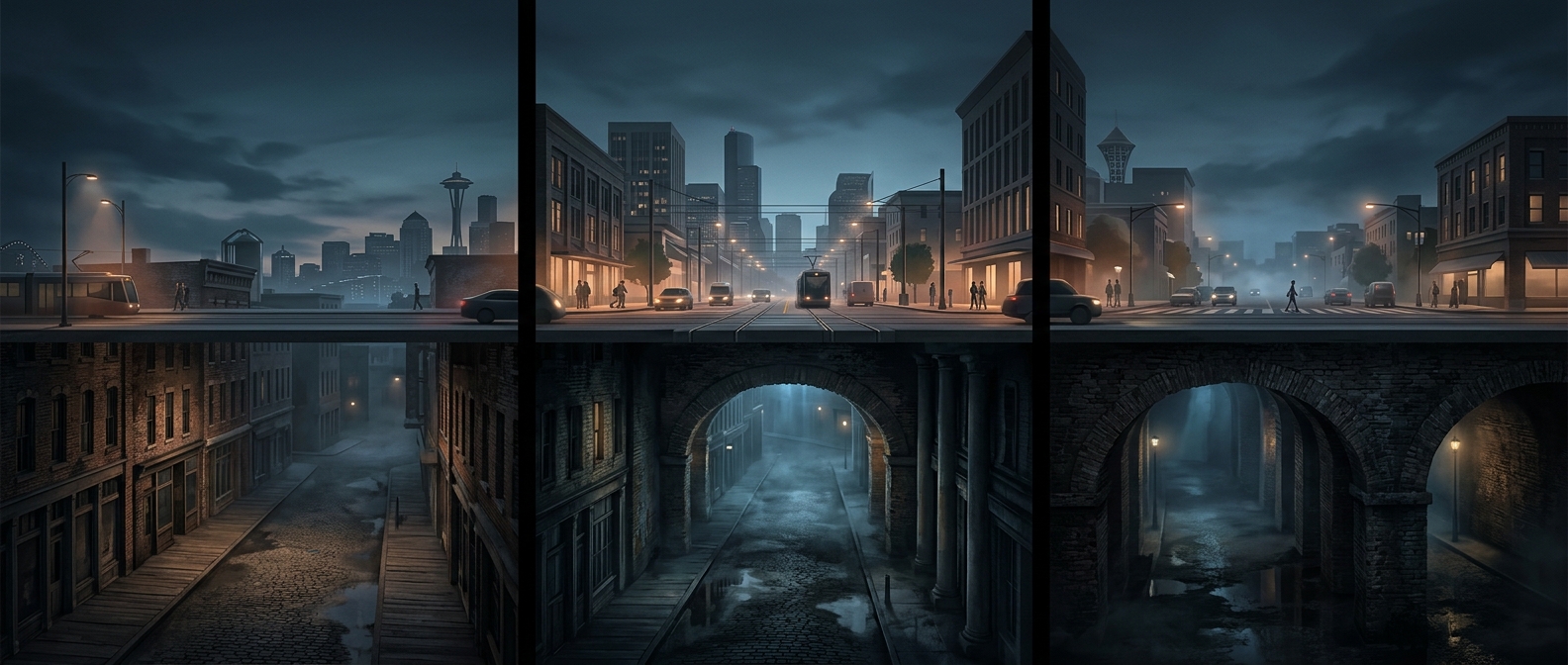
How Seattle’s streets ended up above their storefronts
In parts of old Seattle, the street did not simply get resurfaced: the ground level itself was changed. Flooding and poor drainage made low-lying streets muddy and difficult to use, while sewage could back up into the city’s growing downtown. The response was to reshape the terrain, raising some streets by many feet—locally, nearly a full story.
The city moved the ground, not the buildings
Raising a street meant creating a new, higher route alongside buildings that had already been built at the old grade. Retaining walls—sturdy structures that hold back soil—kept the raised street in place. Where the new roadway met an existing storefront, the old entrance could be left below it, turning the former ground floor into a basement-like space.
The transformation was uneven. Street grades changed in particular sections, not across all of Seattle, and the effects depended on how each block and building was altered. Some old doorways and windows wound up below the sidewalk; elsewhere, owners adapted buildings to the new level.
A buried street became part of the city’s structure
The result was more than an odd architectural curiosity. Seattle effectively built a second layer of urban space: traffic and pedestrians moved along the raised streets, while pieces of the earlier city remained underneath. The old storefronts make the cost of such infrastructure visible—the city could lift the public way, but it could not lift every building with it.
That is why a basement in this part of Seattle may once have opened directly onto the street.**