The People Who Still Wait at the Bus Stop
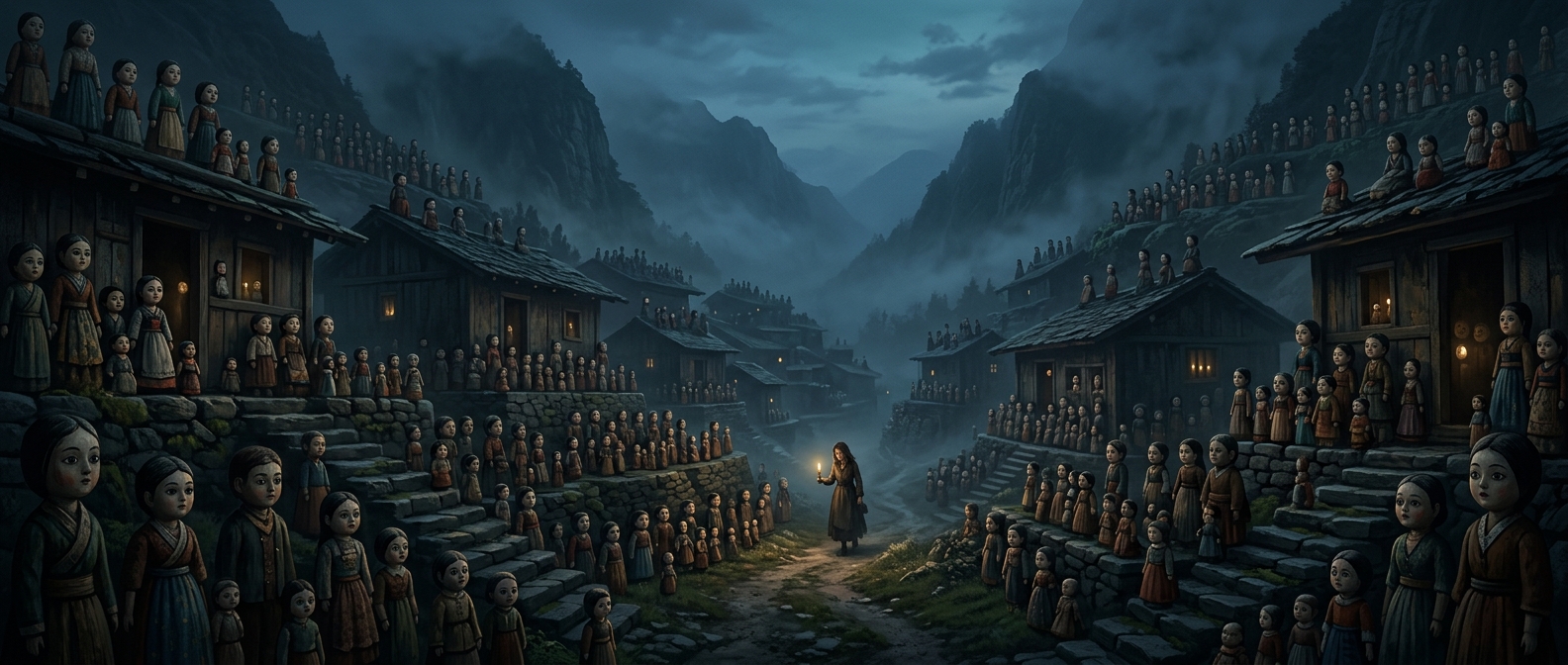
In a shrinking mountain village, an empty bus stop can make a community’s losses visible: the people who once gathered there are gone, and few remain to take their place. One artist answered that absence by making life-size dolls modeled on people who had died in the town. She set them in familiar places, including bus stops and vacant classrooms, so the village’s everyday scenes would not look entirely deserted.
The figures are not simply decorations. Their placement supplies the detail that gives them meaning: a doll sitting in a classroom suggests the children and lessons that used to fill it; a figure at a stop recalls the ordinary wait for a ride. The handmade bodies turn memory into something residents and visitors can encounter along the road.
A Memorial Made of Ordinary Scenes
As the population dwindled, the dolls accumulated. Now there are hundreds, enough to outnumber the living residents. That reversal makes the village feel uncanny, but its effect is also practical and tender: instead of commemorating people only with names or dates, the artist restores their presence to the places where they once belonged.
The result is a portrait of community life in which absence has a shape. A visitor may arrive expecting a quiet village and find a classroom still full—except its pupils are figures sewn by one person, keeping familiar routines in view after the people themselves are gone.