A Pin Becomes a Stand-In
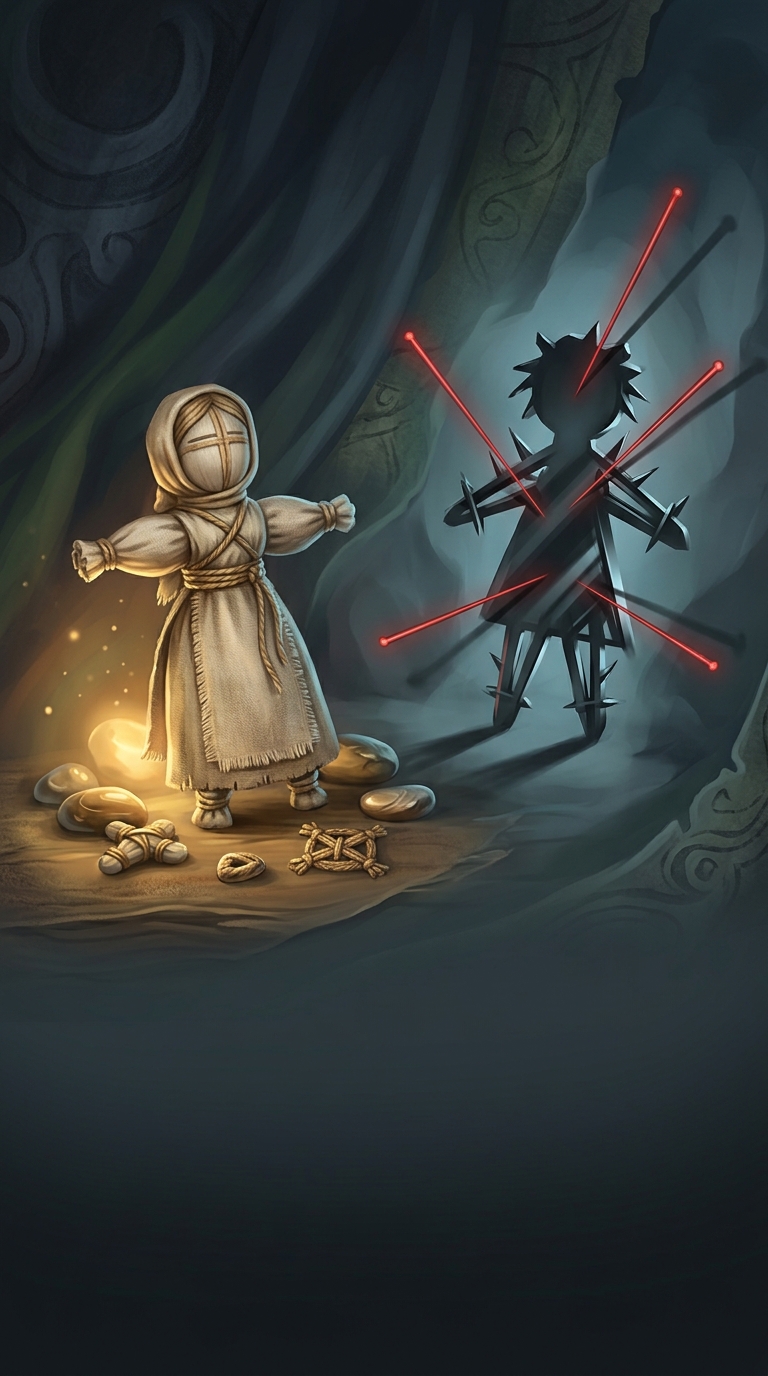
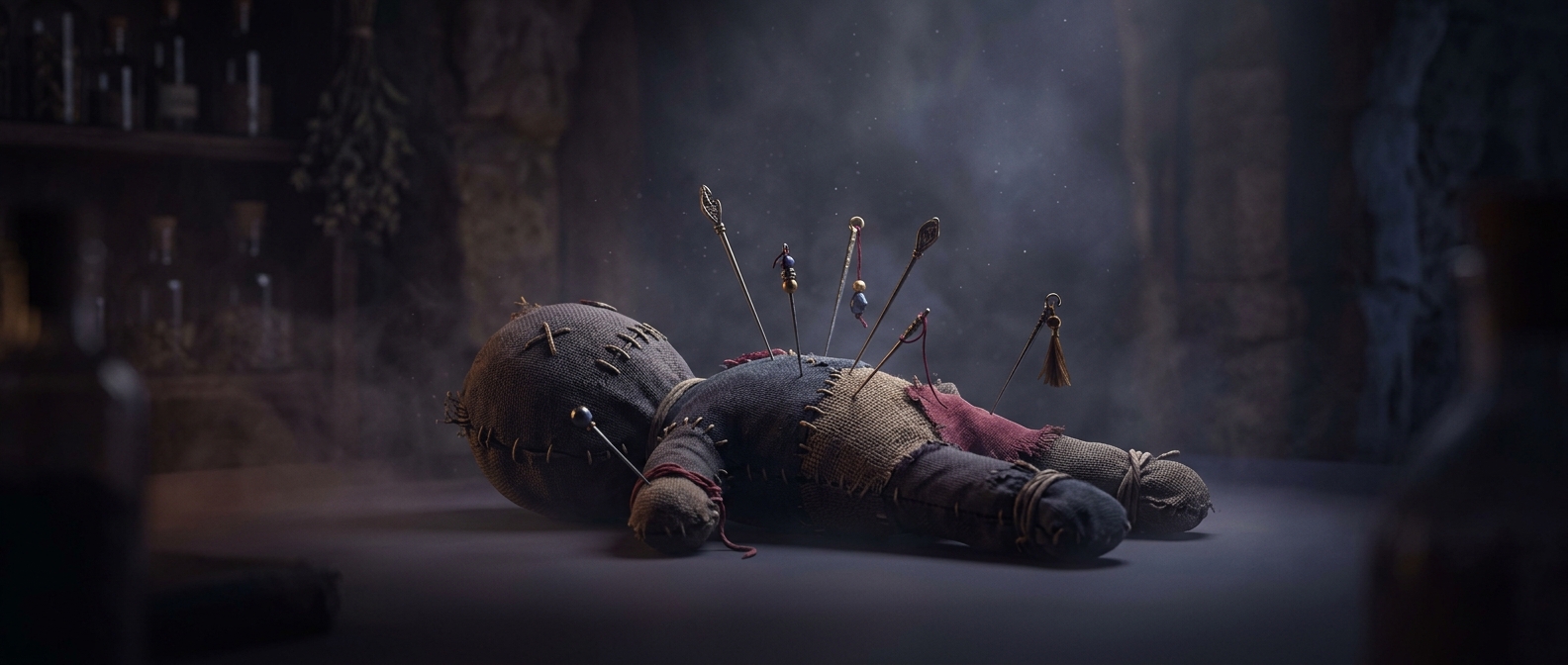
In this kind of folk-magic story, the doll matters because it represents the rival. The object is treated as a substitute: an action performed on it is imagined to reach the person it stands for. Anthropologists often call this idea sympathetic magic—the belief that things connected by resemblance or representation can affect one another.
A pin in the doll turns an ordinary irritation into a miniature, visible act. The hoped-for result is small, such as a stubbed toe, but the gesture gives anger a target and a script. Instead of confronting the rival, the person stages a private scene in which the rival suffers a setback.
Ritual, Not a Reliable Mechanism
The doll-and-pin image is best understood as a familiar piece of folklore and popular storytelling, not evidence that a pin can physically cause an injury at a distance. Nor does it stand for every tradition involving dolls or spiritual practice; beliefs and rituals vary widely, and the image is often used loosely in fiction.
Its enduring appeal lies in the scale of the fantasy: a petty grievance gets a dramatic outlet, while the desired revenge remains safely small. The pin makes resentment tangible—even when the misfortune exists only in the imagination.