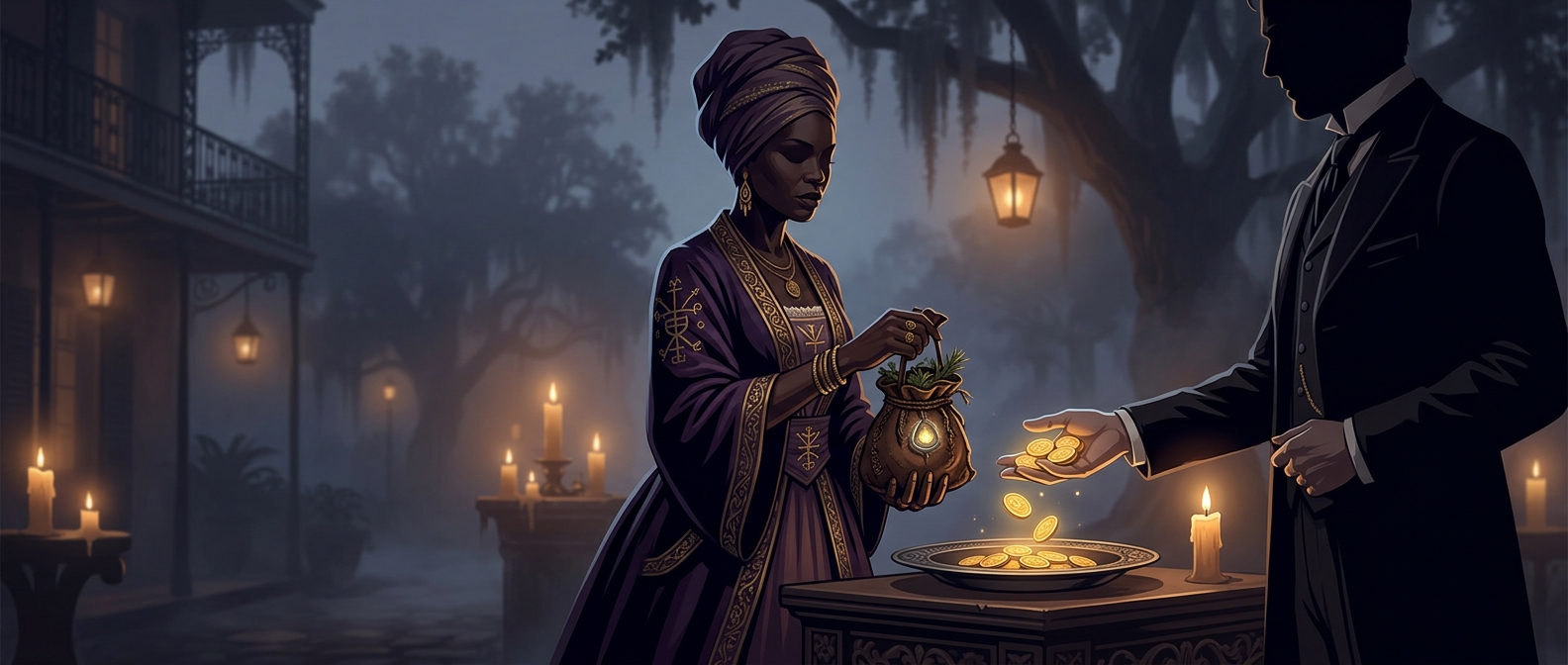
What a gris-gris bag was meant to do
A gris-gris (pronounced roughly “gree-gree”) is a small charm or pouch associated with West African spiritual traditions and their development in New Orleans. Its contents and preparation could vary; people used such objects for purposes such as protection, luck, or influence. In the city’s Voodoo tradition, a bag was not simply a souvenir. It was a material focus for spiritual help in a specific problem.
That made the practice personal and practical. A client might seek a charm in the face of a court case or an election—situations where the outcome mattered enormously but could not be controlled outright.
Spiritual help in a city of unequal power
Marie Laveau’s reputation drew clients across racial and social lines. Wealthy white politicians and businessmen could pay for rituals or gris-gris just as other people sought spiritual assistance. Their requests reveal how Voodoo operated not only in private community life but also at the edges of formal power: in contests decided by voters, judges, and other people.
The exchange was economic as well as spiritual. Laveau’s expertise, reputation, and access to ritual services had value, and clients paid for them. The pouch offered a tangible way to seek help when ordinary influence could not guarantee an outcome. That does not establish that a charm changed an election or a court decision; it shows that powerful people, too, turned to spiritual practices when the stakes were high and the future uncertain.
Why the clientele mattered
The contrast is striking: people who held conventional political or financial authority also sought assistance from a Black spiritual leader whose influence rested on a different kind of knowledge and standing. Their patronage helped make Laveau a consequential figure in New Orleans, while the stories surrounding her blended documented activity with later legend. The gris-gris bag made that exchange portable—a small object carried into the uncertainty of a campaign or a legal fight.