A Hairdresser’s Place in the Parlors of New Orleans
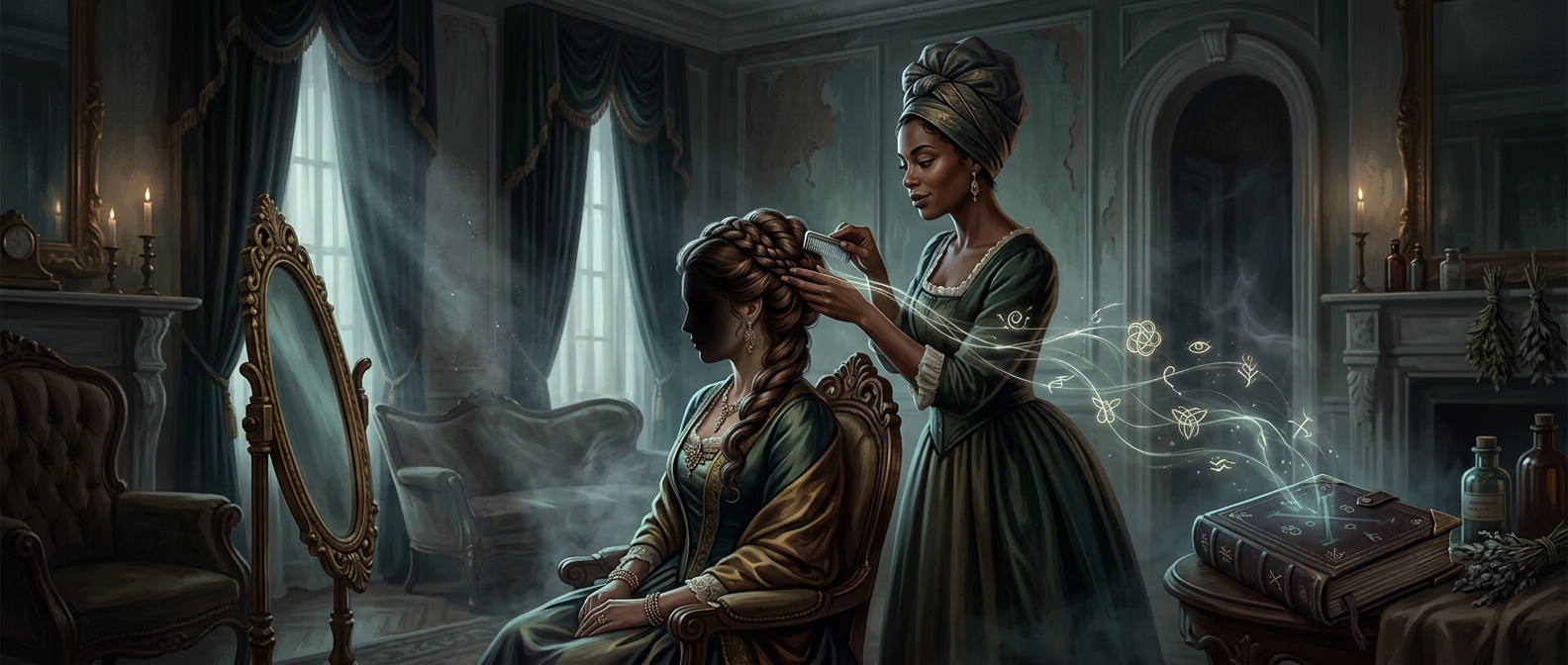
Marie Laveau’s work as a hairdresser put her close to wealthy white women at moments when they were relaxed and talking. Styling someone’s hair was personal, practical work: the client sat still while the hairdresser listened. In a household where formal social boundaries were rigid, that everyday service could open a door to private conversation.
How Household Knowledge Traveled
A client’s parlor was only one source of information. Enslaved servants also witnessed the routines, disputes, and worries of the households where they worked. Laveau’s connections with people in those homes could let news travel across boundaries that usually kept Black New Orleanians and wealthy white families apart. The information might concern relationships, illness, money, or conflict—matters people did not necessarily discuss in public.
Knowing what others concealed could make Laveau seem unusually perceptive. If she understood a person’s circumstances before offering counsel or performing a ritual, the encounter could feel like evidence of special insight. The reputation grew from a blend of social access, human networks, and spiritual authority, rather than from a single source of “secrets.”
Information Became Influence
In a city shaped by slavery and sharp racial and class divisions, knowledge was a form of leverage. Laveau’s position allowed her to hear things that powerful households might prefer to keep private, while her public identity as a spiritual leader gave that knowledge meaning beyond ordinary gossip. The same web of relationships that helped her learn the city’s concerns helped make her name—and her aura of knowing—travel through it.