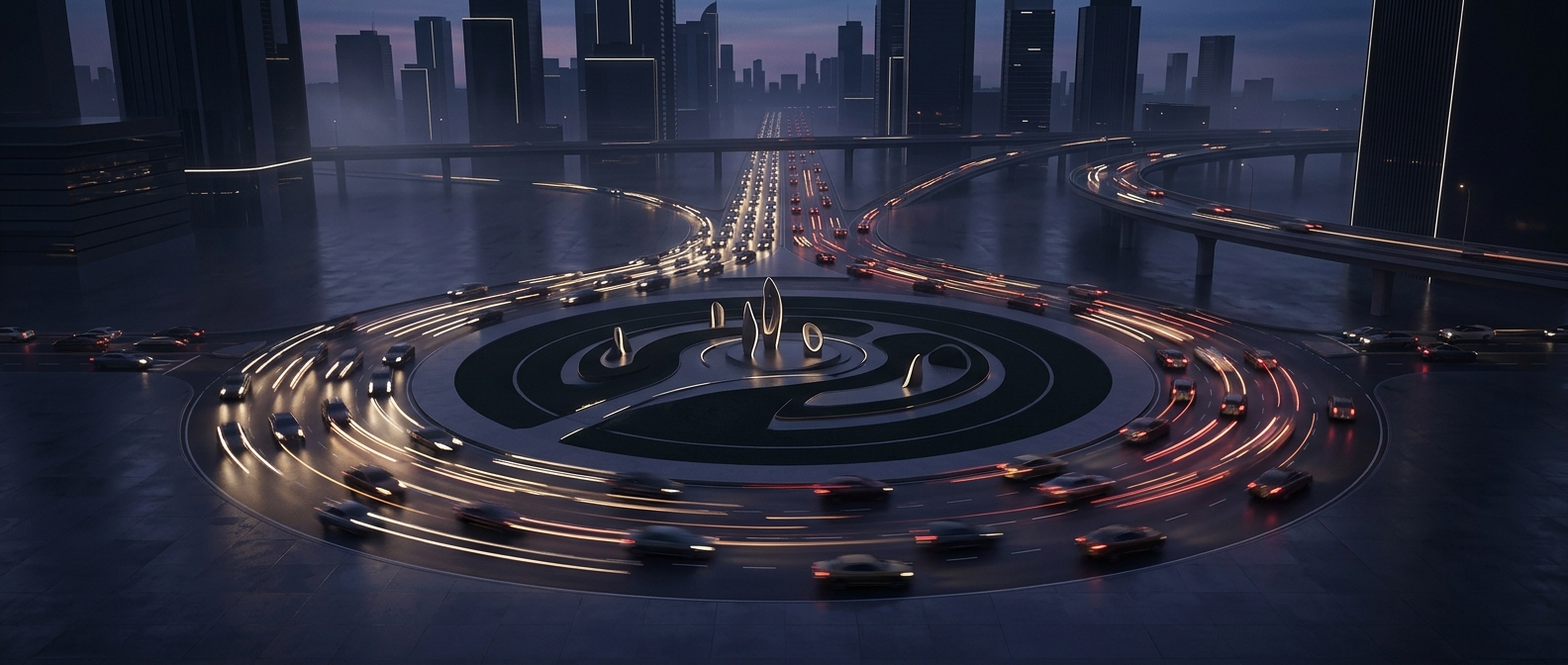
The stroad’s built-in conflict
A stroad is a road designed to do two jobs at once: move traffic quickly between places and provide direct access to shops, parking lots, and side streets. Those goals pull in opposite directions. Fast movement works best with few entrances and intersections; easy local access creates many of them.
Each driveway or junction gives vehicles another place to turn, slow down, or cross traffic. Signals and turning queues interrupt the stream, while wide lanes and long stretches between crossings encourage drivers to travel at higher speeds. The result is a corridor where conflicts are frequent but the consequences of a mistake can be severe.
Why congestion and danger reinforce each other
As traffic grows, turning vehicles and queues block through lanes. Drivers may change lanes abruptly or speed up between lights, adding more opportunities for collisions. Meanwhile, people walking or biking must cross broad, busy roads, often between destinations that the corridor itself has attracted. High vehicle speeds leave less time to react and make crashes more likely to cause serious injury.
That is the outcome behind the stroad’s bad reputation: it combines the access conflicts of a street with the speeds of a road, producing a corridor prone to both congestion and dangerous crashes. “Mathematically guarantees” is a dramatic way to put it, not a literal prediction that every stroad will crash or gridlock.
The design choice underneath
Planners can reduce the conflict by making a corridor serve one purpose more clearly: limit access and intersections on a route meant for faster travel, or slow traffic and make crossings and destinations comfortable on a street. A stroad tries to avoid choosing—and asks drivers, pedestrians, and nearby businesses to absorb the resulting tradeoff.