How patents became a gatekeeping system
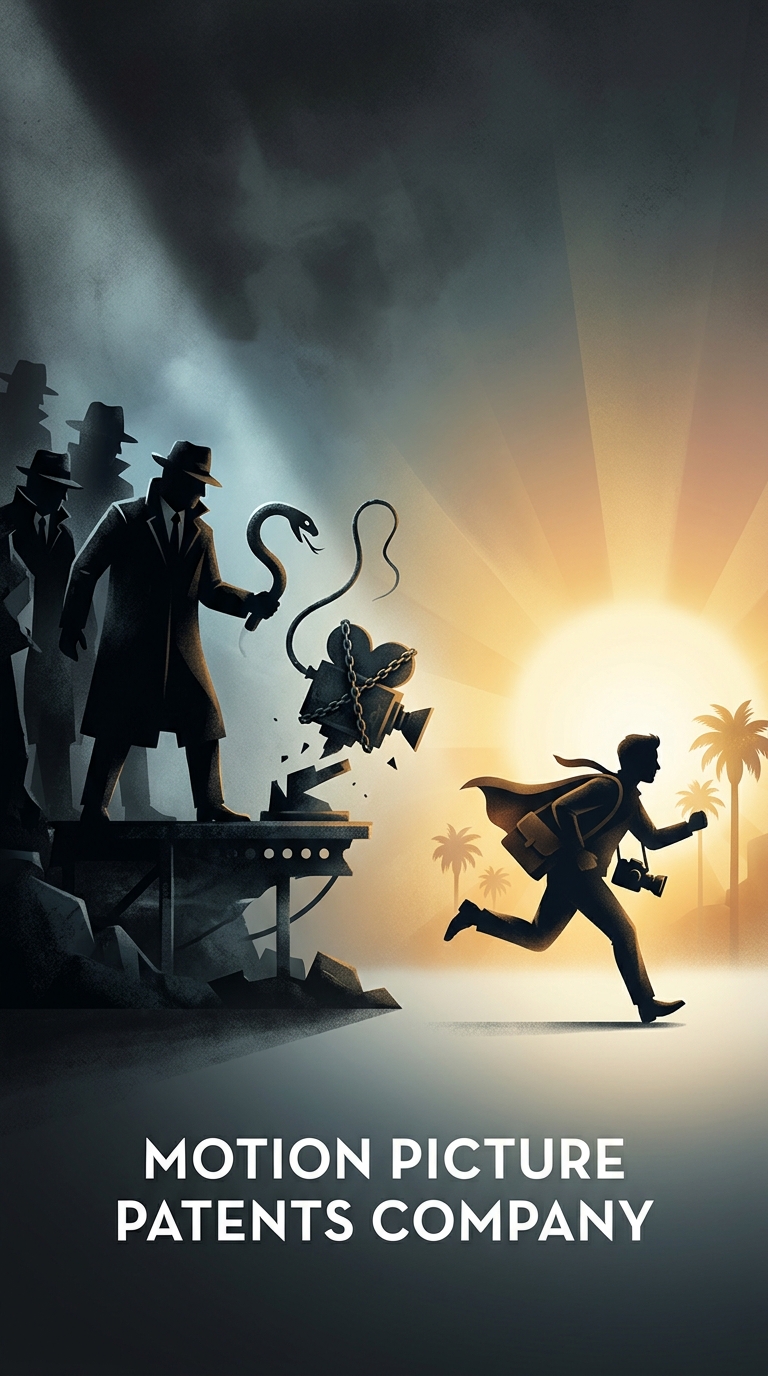
In the early film business, control of a camera could mean control of who was allowed to make movies. Thomas Edison and other patent holders combined key motion-picture patents in the Motion Picture Patents Company, formed in 1908. Instead of negotiating separately with each owner, licensed producers paid to use the pooled technology and had to follow the company’s terms. The system also tied access to film stock and other parts of production to approved suppliers.
That arrangement made filmmaking a licensed business, not simply a matter of buying a camera and setting up a studio. Companies that worked outside the system risked patent lawsuits and efforts to block their equipment or films. The pressure was legal and commercial as well as physical; the familiar image of Edison personally sending gangs to attack filmmakers goes beyond what the evidence safely supports.
Why California offered an escape
For independent producers, moving west increased the distance between their operations and the patent holders’ strongest base of enforcement in the East. That did not make California a law-free zone, but it could make monitoring and pursuing a production harder. Distance bought time and room to work while companies tested ways to make films without paying into the licensing system.
California had practical attractions beyond that standoff: reliable sunshine helped crews shoot outdoors, varied scenery stood close together, and land was available for expanding studios. Those advantages mattered because early filmmaking depended heavily on daylight and outdoor sets. The West was both a strategic refuge and a useful place to produce movies.
The lasting consequence
The patent regime did not single-handedly create Hollywood, and independent producers had several reasons to head west. But the conflict helped push filmmaking toward a region where studios could grow beyond the patent company’s immediate reach. A fight over who could use cameras and film stock thus helped shape where American movies were made—and where the industry’s power would eventually concentrate.