How a fracture in ice becomes a sound in the sea
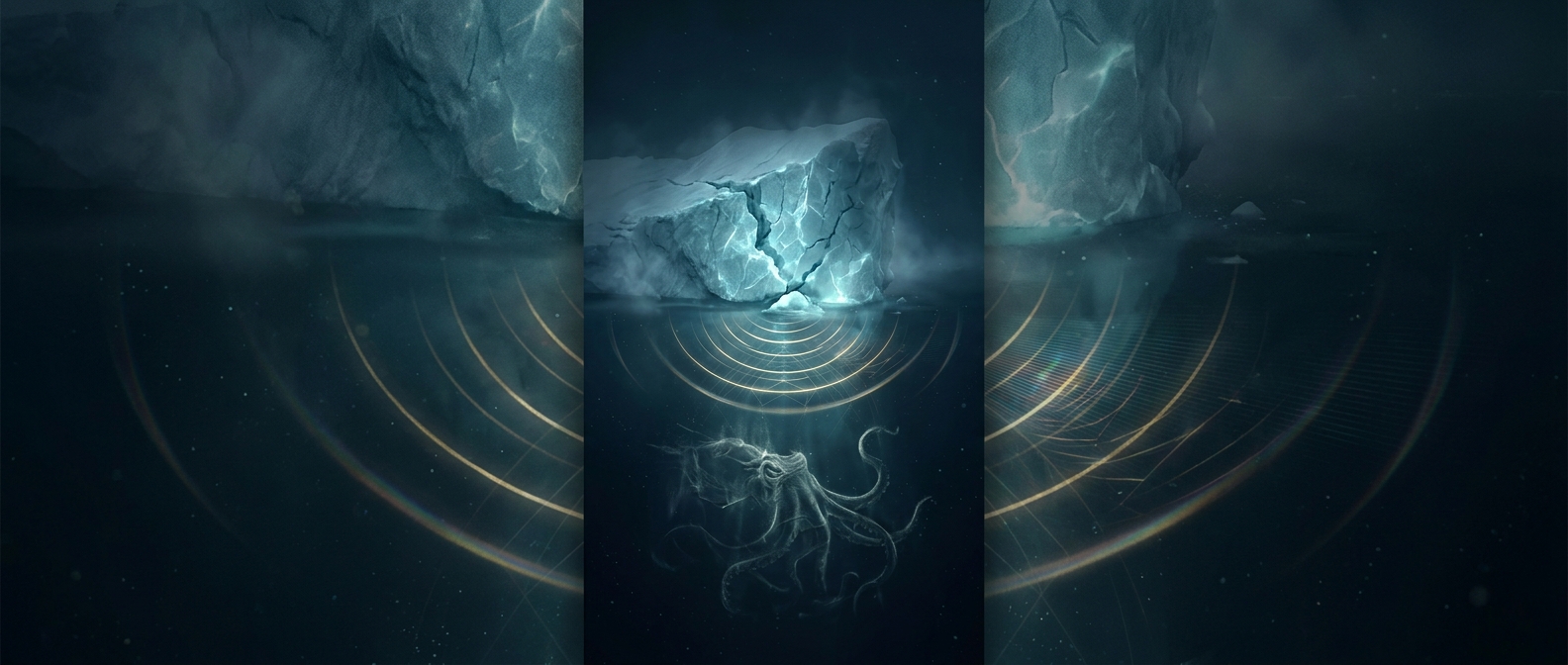
When a large mass of Antarctic ice cracks or breaks away, the event does more than shift ice. It jolts the surrounding water, creating pressure waves that travel as sound. The source can be a short, violent fracture, but the sound recorded far away may be a drawn-out, low rumble rather than a sharp crack.
That difference comes partly from the ice itself: a large fracture can generate vibrations at very low frequencies, far below the pitch of most familiar sounds.
Why the ocean carried it so far
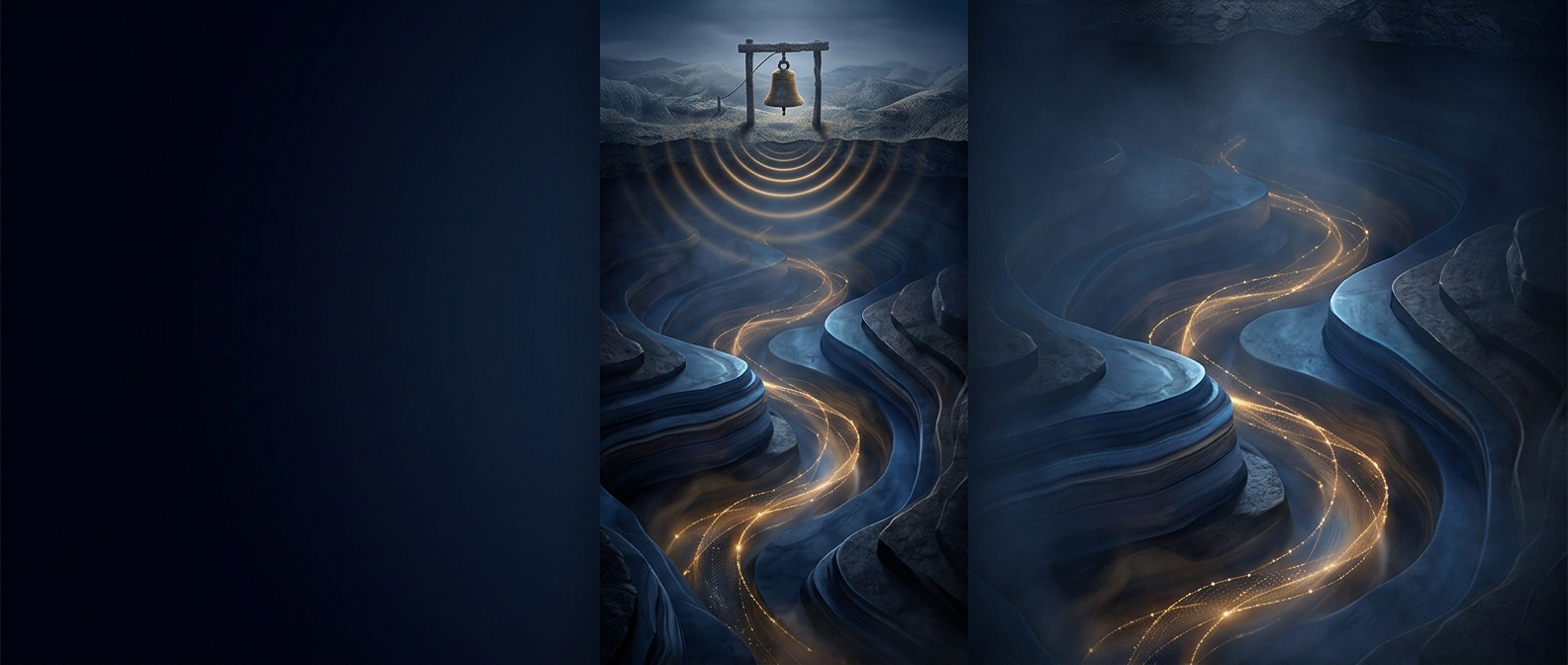
Low-frequency sound can travel long distances underwater because it loses energy more slowly than higher-pitched sound. Ocean conditions also help: changes in water temperature and pressure bend sound waves, sometimes guiding them through a broad underwater pathway called the SOFAR channel. A distant hydrophone—a microphone designed for use underwater—can detect sounds that would be faint or inaudible near the surface.
The Bloop was the name given to an unusually loud underwater recording, not to an animal or a confirmed creature. Its scale and strange, rising sound made it seem mysterious, but a powerful ice event could produce a similar signal and send it across an enormous stretch of ocean.
A distant recording can disguise its source
A hydrophone captures the waves that reach it, not a clear recording of what happened at the source. Distance, water conditions, and the recording system all shape the sound. A rumble that seems enormous at the receiver does not, by itself, prove that something enormous—or living—made it.
The striking part is the reach: a break in Antarctic ice can leave a recognizable acoustic trace thousands of miles away, giving ordinary geological activity a voice that sounds almost otherworldly.