Cold buys time between catch and kitchen
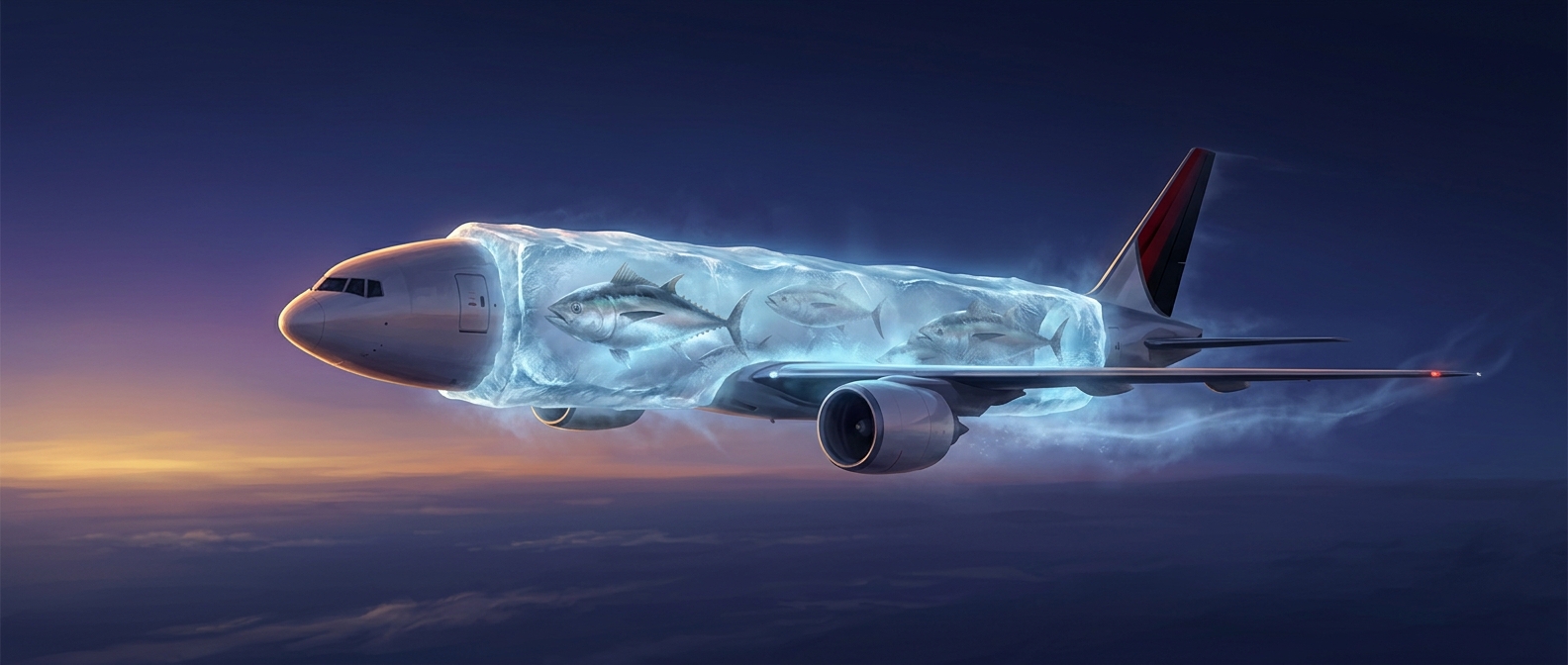
Bluefin tuna is valuable partly because its texture and flavor depend on careful handling. After a fish is caught, its own enzymes continue changing the flesh, while bacteria can multiply on its surface. Both processes can dull freshness. Keeping the fish frozen during an air journey slows those changes far more than simply leaving it cool, giving the shipment more time to reach its destination in usable condition.
Freezing is not a literal pause button: chemical changes can continue slowly, and bacteria are generally slowed rather than erased. The practical advantage is control. Instead of racing against spoilage throughout the flight and transfer process, the airline can keep the fish cold until it is ready to be thawed and handled.
The cold chain matters beyond the flight
A cold chain is the sequence of refrigerated storage and transport that keeps perishable food at a controlled temperature. The aircraft is only one link. If tuna warms during loading, unloading, or storage, the protection gained in transit can be undermined; keeping it frozen through those handoffs helps preserve the benefit of the journey.
There is a tradeoff: freezing can affect a fish’s texture, especially if it is thawed poorly. So the goal is not simply to make tuna as cold as possible, but to preserve it in a stable state until it can be prepared. The flight does not make the fish fresher—it helps prevent the trip from making it less fresh.