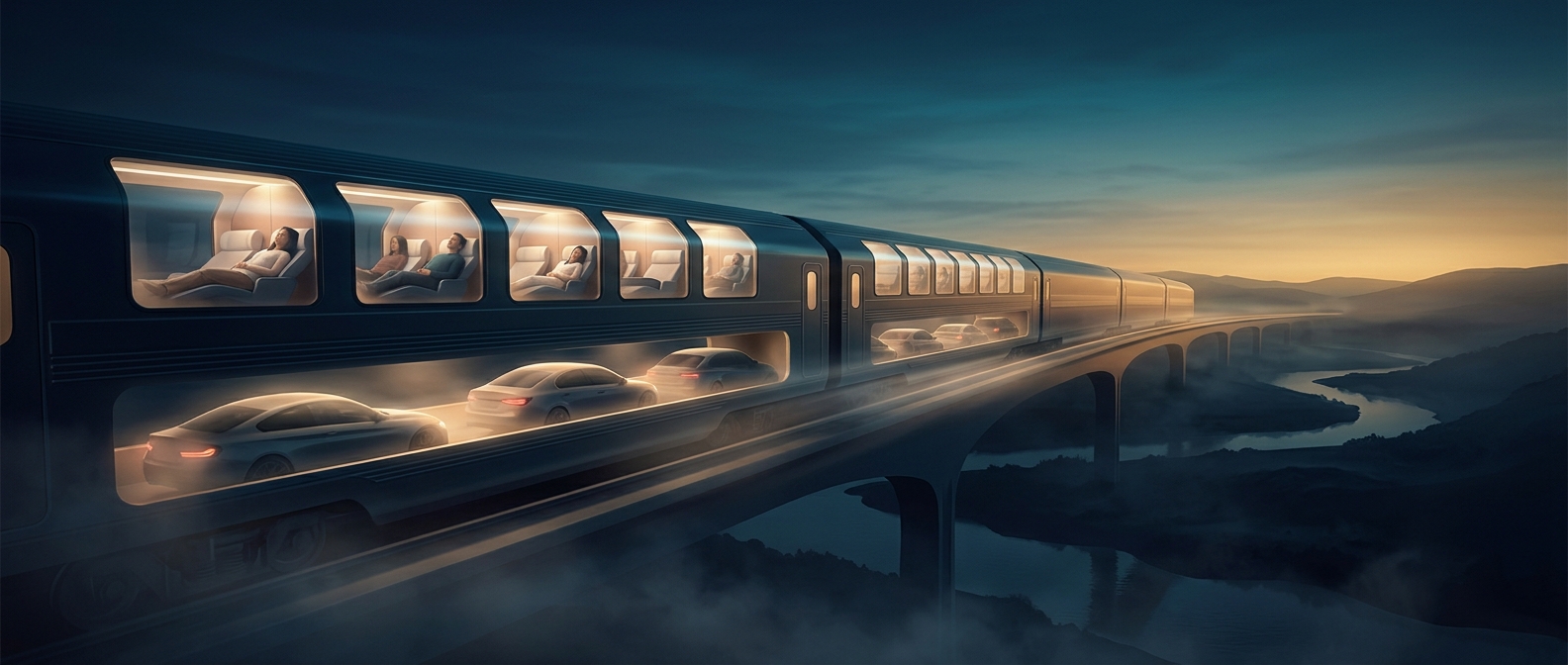
Automation Takes the Repetition Out of the Run
A long freight train crossing remote Australia may travel for hours over nearly unchanging track. Keeping it moving safely still takes constant attention: the operator must manage speed, respond to signals and apply the brakes in time. Automation can take over those routine control tasks, rather than asking a person to make the same adjustments mile after mile.
The system acts like a continuous feedback loop. It monitors the train’s movement and operating conditions, then adjusts traction or braking to follow its programmed limits. That steadier control matters for a very long train: changes in speed and braking have to be managed across a large, heavy load, not just at the locomotive.
Rest Is Part of the Fatigue Problem
The benefit is less time spent actively steering and regulating the train, which can ease the strain of repetitive work. On a remote route, where there may be few visual changes to hold attention, that matters: fatigue can make sustained monitoring harder even when the train is behaving normally.
Automation does not make the journey risk-free or mean a crew member can simply ignore the train. People remain responsible for supervision and for situations the system is not meant to handle on its own. The practical change is that routine driving no longer has to occupy a person every moment. On an outback run, the machine manages the predictable miles so the crew has more room to rest and stay alert.