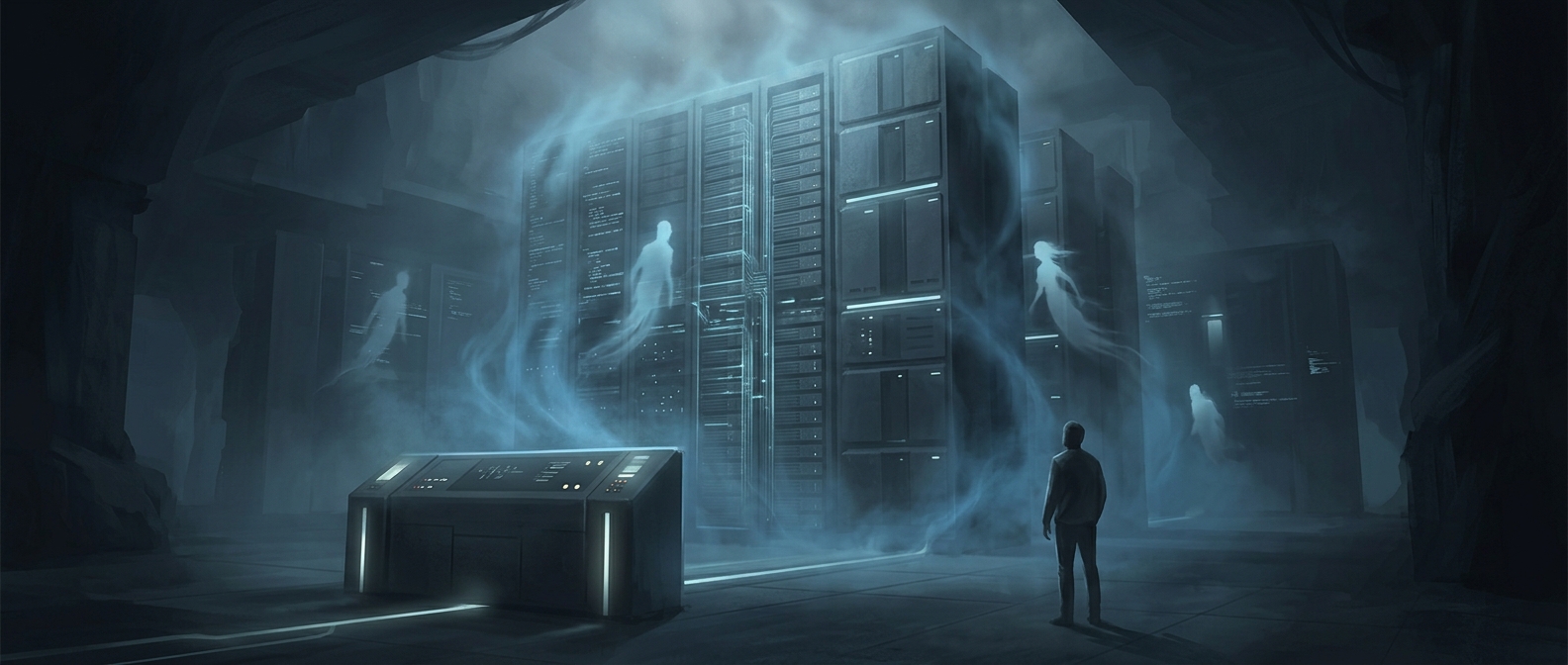
The invisible worker behind a Unix service
A daemon is typically a long-running process that waits quietly until something needs doing. It might accept a network connection, schedule a task, or record an event. Unlike an interactive program, it usually has no window or command prompt for a person to use; it runs in the background and responds to requests or system events.
That arrangement makes daemons useful infrastructure. A logging daemon, for example, can collect messages from many programs without requiring each one to manage its own permanent log-writing interface. The service can keep working while users open other applications—or even when nobody is logged in.
A thought experiment supplies the name
The word points to Maxwell’s demon, an imagined being in a physics thought experiment. The demon watches individual molecules and sorts them, apparently producing an orderly result from random motion. It is a figure that performs unseen work behind the scenes, not a supernatural creature in the computer.
The comparison is evocative rather than literal: a Unix daemon does not sort molecules or bend the laws of physics. It simply handles routine tasks out of sight. The name captures an important design choice in Unix-like systems: many services are meant to be dependable background workers, noticed mainly when the work they support stops happening.