A familiar strip became a new kind of product
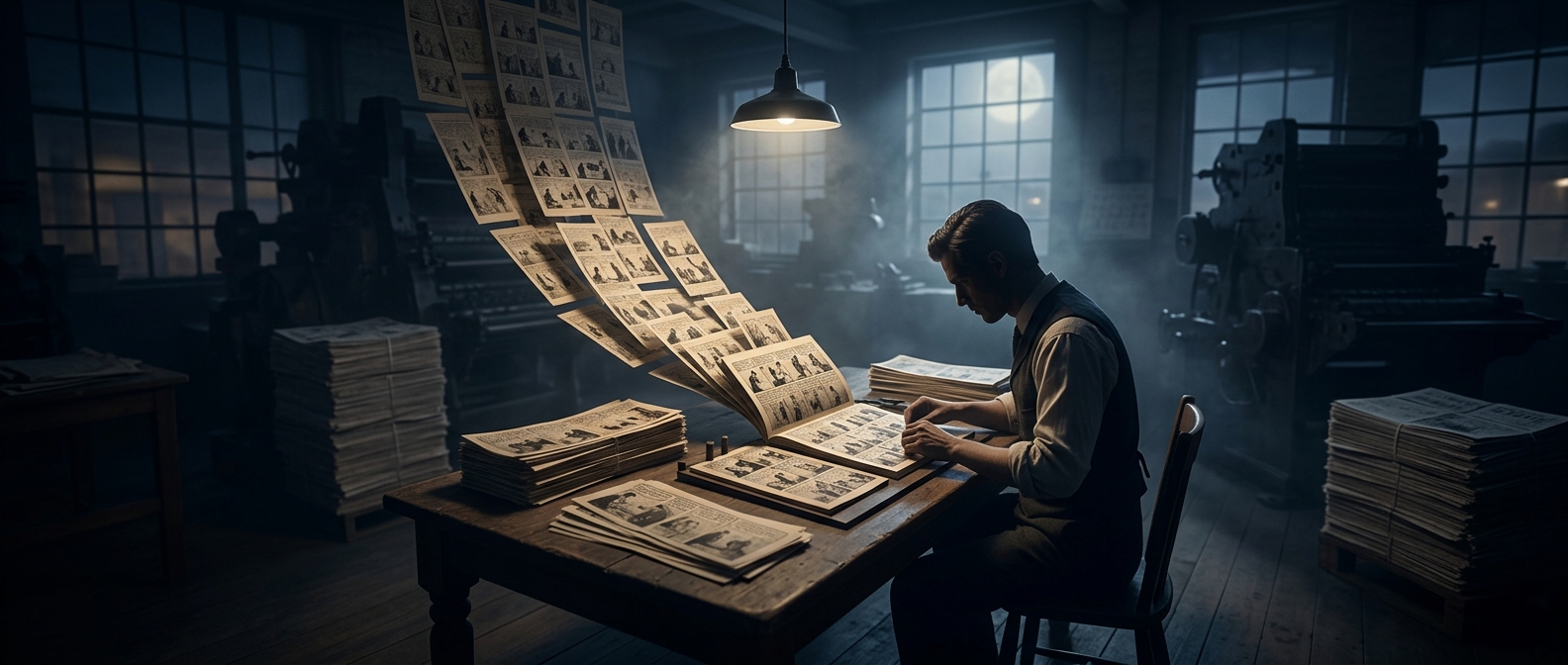
The earliest comic-book publishers did not have to invent characters or draw an entire book from scratch. Newspaper strips had already introduced readers to recurring characters and short, sequential stories. Publishers could gather that existing material and sell it in a different format: a booklet meant to be read apart from the newspaper.
That was a practical shortcut. New comics required artists and writers to create enough material for a whole issue; reprints made use of stories that had already been drawn and published. The booklet also gave strips a longer life than a single day’s newspaper: readers could revisit them and keep several installments together.
The format changed what comics could become
A newspaper strip was designed for a narrow space and often advanced in small installments. Collected in a booklet, those panels could be encountered as a sequence rather than as one brief daily stop. The material was old, but the packaging created a distinct reading experience—and a product publishers could sell on its own.
Reprints therefore served as a bridge between newspaper comics and the comic book as a regular publishing format. Once readers were buying stories in booklet form, publishers had a reason to fill those booklets with material made specifically for them. The shift began not with a new hero, but with a new way to bundle familiar stories.