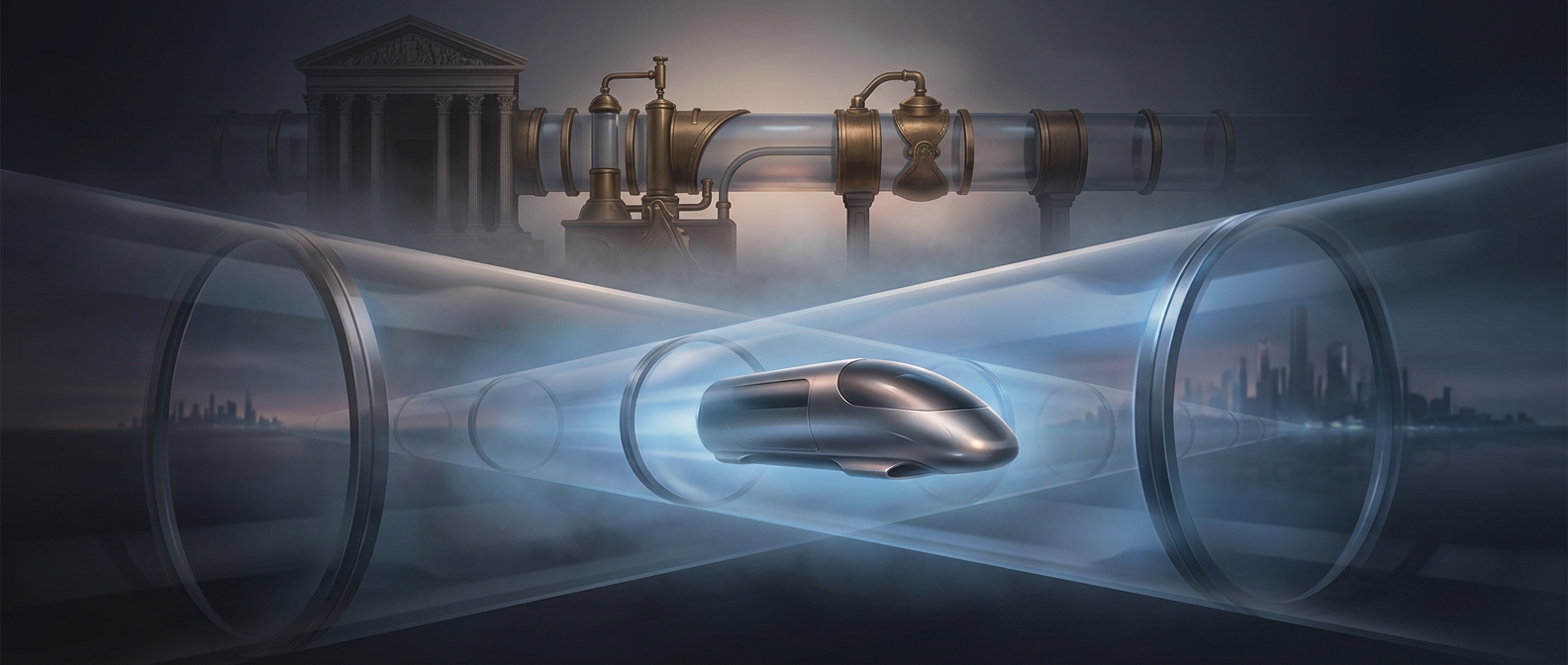
The tube was the engine
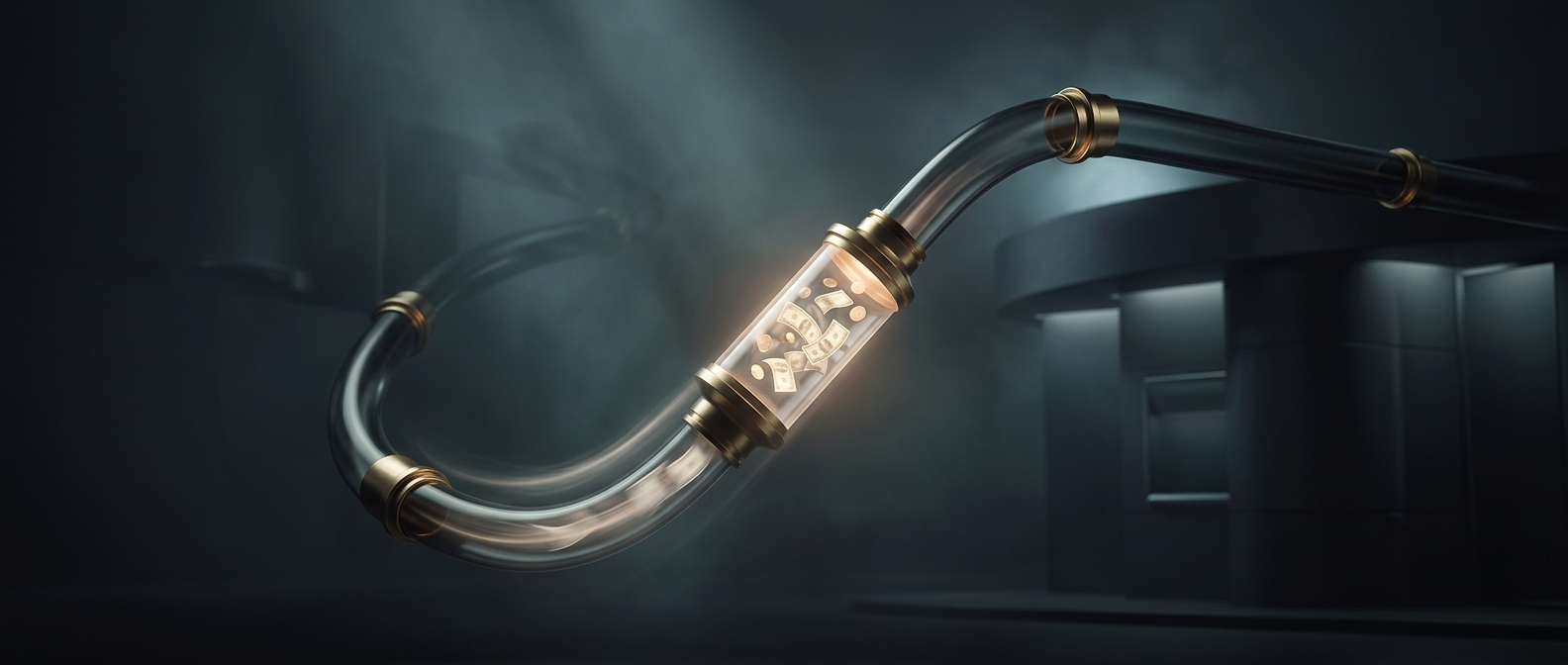
Early-19th-century inventors saw a way to move people without putting a locomotive beside them: change the air pressure in a tube and let it push a passenger carriage along. The carriage acted like a piston. Air pressure behind it supplied the force, while air ahead had to escape or be removed.
That idea shifts the engineering problem from carrying a powerful engine on every vehicle to building and operating a controlled tube. But pressure can only do useful work if the system stays sufficiently sealed and the airflow is managed. A leak or poorly controlled pressure difference can undermine the push, and a long route multiplies the practical challenges.
The modern version removes resistance
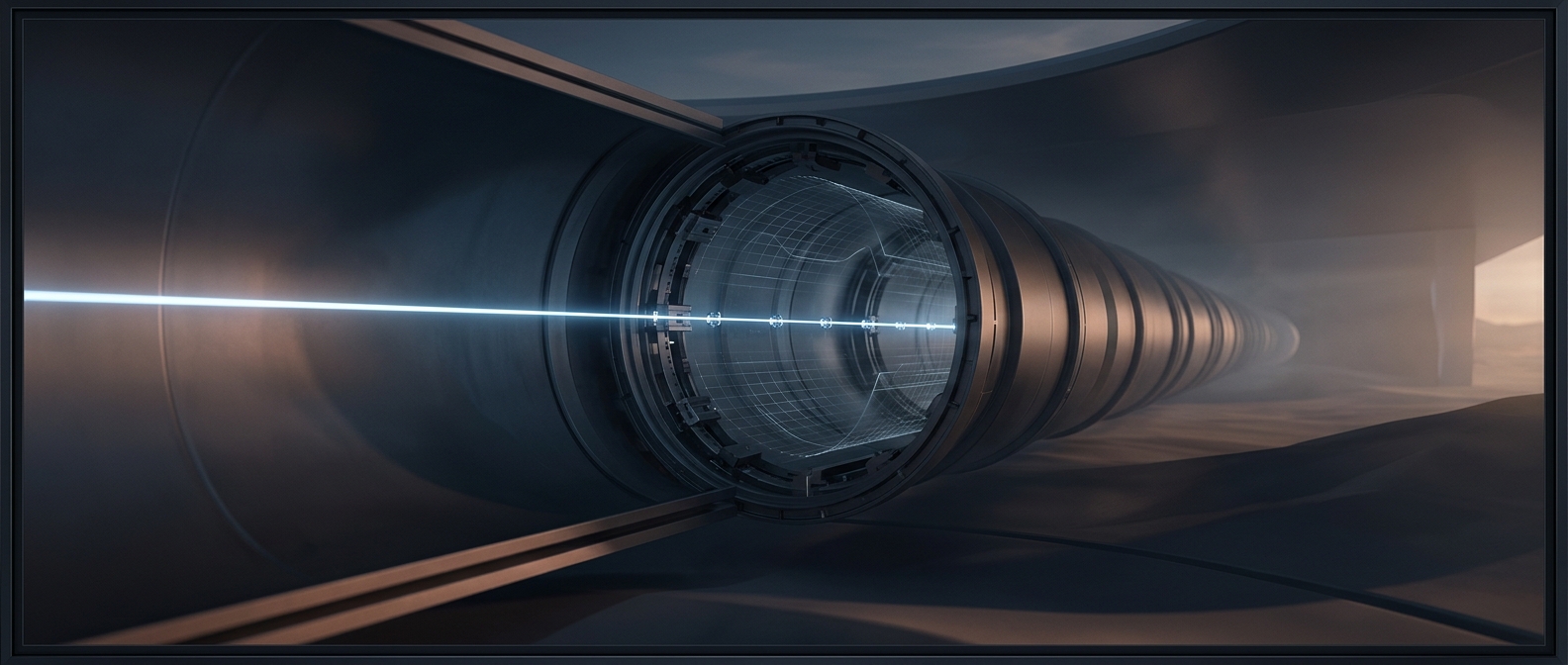
The contemporary Hyperloop concept takes a different approach. Rather than relying on a rush of air to shove a vehicle, it proposes running a capsule through a tube with much of the air removed. Less air means less drag—the force that resists motion as a vehicle pushes through its surroundings. The capsule would still need a way to accelerate and control its movement; the low-pressure tube is meant to make high-speed travel easier by reducing one major source of resistance.
This is not simply an old pneumatic railway with a new name. The earlier idea used air pressure as propulsion; the modern one uses a low-pressure environment chiefly to reduce drag. Both, however, make the tube itself part of the transport machine, bringing a demanding infrastructure problem along with the promise of fast travel.
Why the idea keeps returning
A tube offers a striking bargain: constrain the vehicle’s path and control the environment around it, and perhaps avoid some limits of travel through open air. But the more tightly that environment must be controlled, the more the route depends on specialized infrastructure rather than ordinary track. The recurring dream is not just a faster vehicle—it is a railway sealed inside a machine-sized pipe.