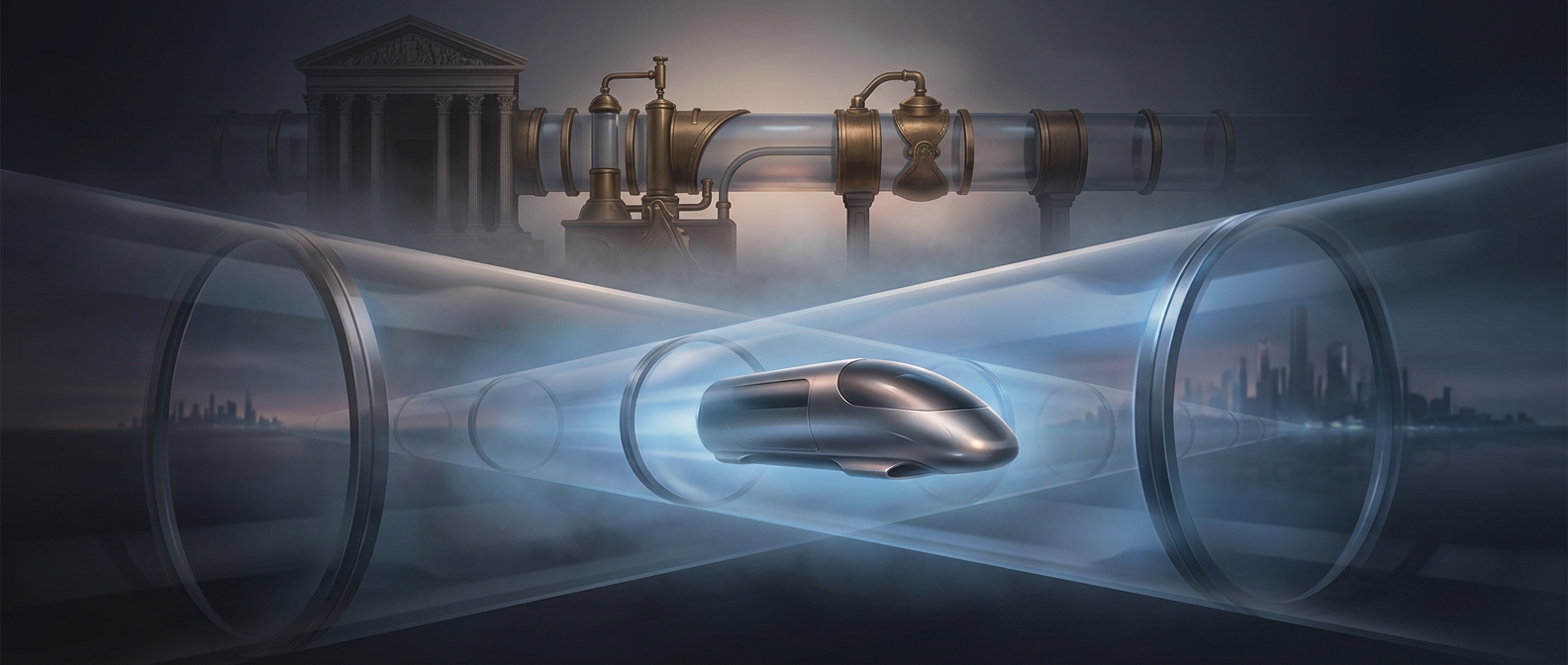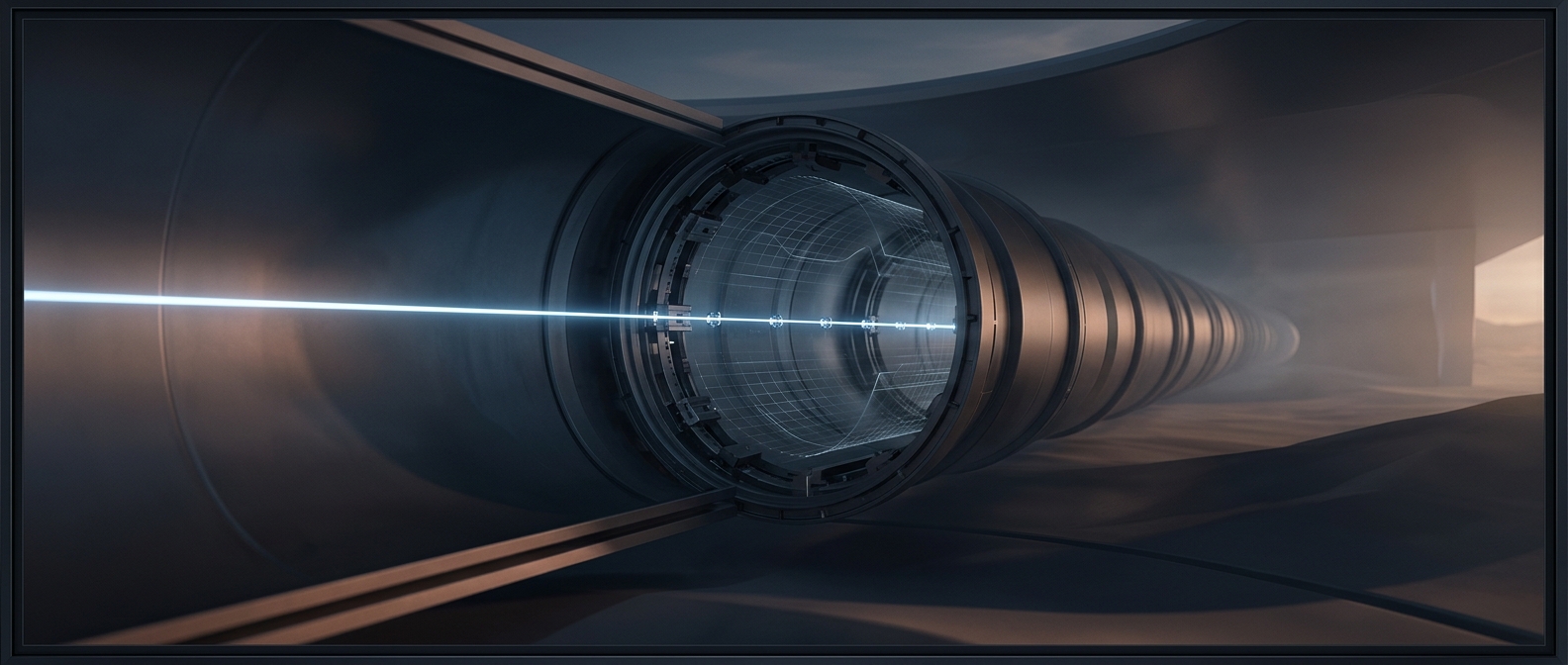
A laser gives the tube a shared centerline
A long tube cannot be aligned reliably by sighting from one end: small errors are hard to see, and each new section can drift from the last. Builders instead use surveying instruments to establish a planned route, then use laser beams as visible references for positioning and checking tube sections. Targets or sensors show whether a section’s center is where it should be; crews can adjust its supports before locking it in place.
The reference is not necessarily one laser aimed through the entire route. A winding tube follows a designed curve, so alignment is checked in manageable stretches against surveyed points. The laser helps transfer that geometry from one section to the next. It can indicate direction, while separate measurements establish height and position.
Small offsets can become a ride problem
A pod needs clearance from the tube and a predictable path through it. If neighboring sections meet with a sideways or vertical offset, the pod’s guidance system must accommodate a sudden change. Depending on the design, that can mean extra steering or stabilization effort, less clearance, or a rougher ride. A misaligned joint can matter even when the rest of the tube is straight.
Errors can also accumulate: each section may be only slightly out of position, yet a chain of small deviations can leave the route noticeably off its intended line. That makes alignment a construction problem as much as a vehicle-design problem. The vacuum reduces aerodynamic drag, but it does not make the pod immune to bends, uneven joints, or a route that wanders from its design.
The practical payoff of the laser is therefore not simply a perfectly straight tube. It is a way to keep every section faithful to the route the pod was designed to follow.