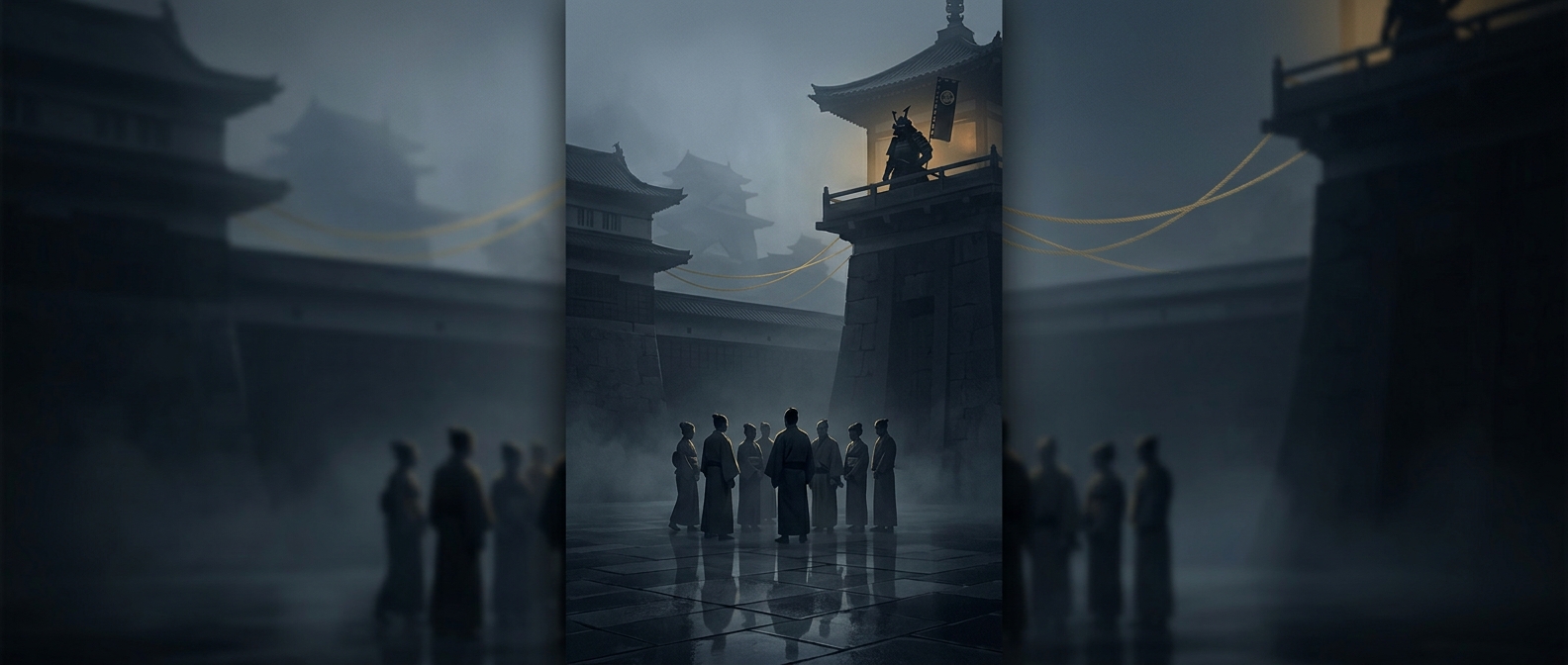
A court visit that doubled as political insurance
Under the Tokugawa shogunate, powerful regional lords called daimyo had to divide their time between governing their domains and attending the shogun’s court in Edo, now Tokyo. The system, known as sankin-kōtai, required them to travel to Edo on a rotating schedule, typically spending alternating years there and at home.
The arrangement made the daimyo’s presence—and their loyalty—visible. But the more potent leverage lay in who could not leave with them: their wives and heirs generally remained in Edo. A lord considering rebellion would have to reckon with the shogun’s access to his closest family members. Calling them hostages captures that pressure, even though they also lived as members of elite households in the shogun’s capital.
The road made obedience expensive
A daimyo did not travel alone. His procession included retainers, attendants, supplies, and the equipment needed for a formal journey. Moving such a household between a distant domain and Edo required planning and money; maintaining a residence in the capital added further costs.
Those expenses mattered politically. Wealth spent on travel and a second household was wealth not readily available for building an independent military challenge. The journeys also brought lords and their retainers onto the same roads, where their movements and status were hard to conceal. The system therefore exerted pressure through both family ties and the practical burden of compliance.
Control through routine, not constant force
The policy did not make rebellion impossible. It made defiance riskier and more costly before a conflict began. By drawing daimyo repeatedly into Edo while keeping family members there, the shogunate turned attendance, travel, and household life into instruments of control. A long procession on the road was more than ceremony: it was a recurring reminder that a lord’s power came with obligations the shogun could enforce.