A mountain gave way above the valley
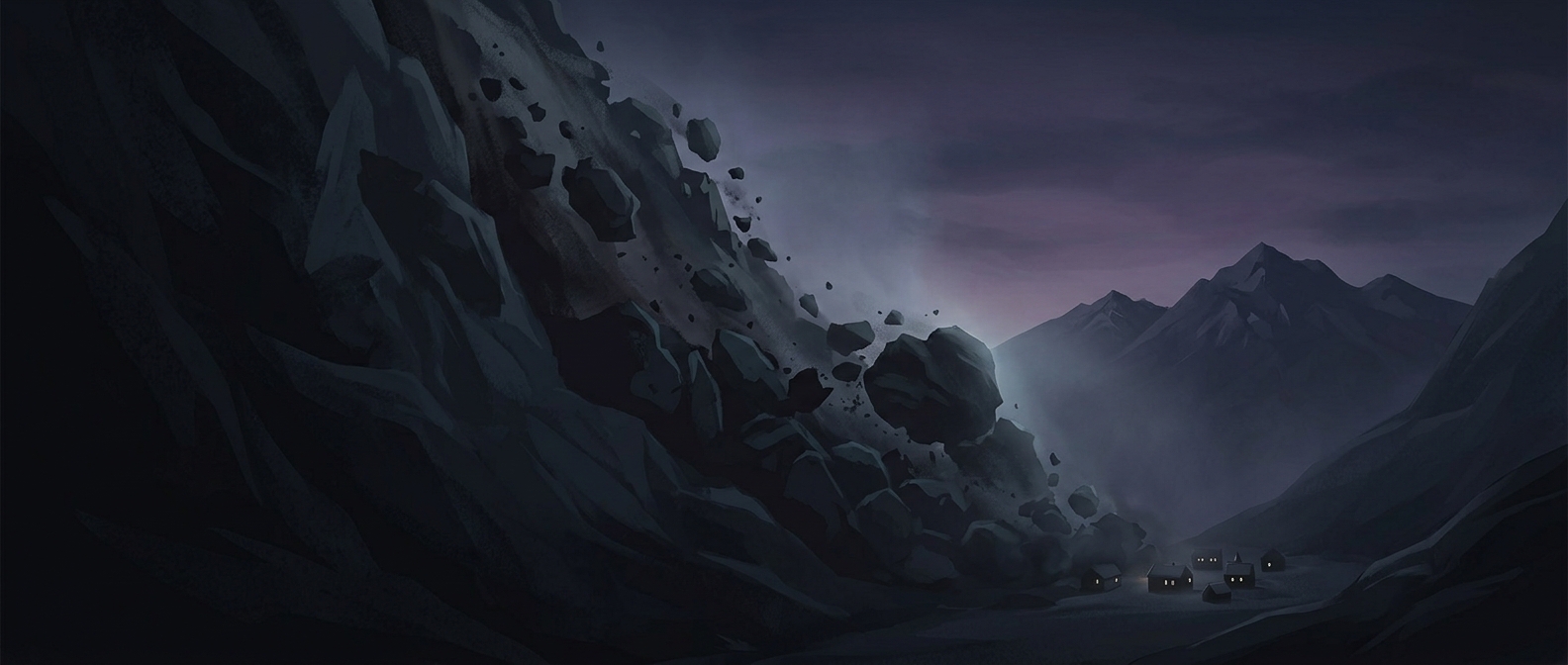
Frank sat beneath Turtle Mountain, whose steep face was made of fractured limestone. The rock was not a single solid slab: cracks divided it into enormous blocks, and the mountain’s shape left those blocks perched above the narrow valley. When part of the face broke loose, gravity turned the collapse into a fast-moving rock avalanche—a torrent of shattered stone that gathered speed as it plunged downhill.
The slide’s speed left little time to recognize danger, much less flee. It crossed the valley floor, smashing buildings and burying sections of the railway beneath rock and debris. The catastrophe’s brief duration was part of its force: there was no gradual approach that could give the settlement a clear warning.
The railway had to cross the debris field
The Canadian Pacific Railway was a vital route through the mountain corridor, so the slide disrupted more than the town itself. Crews had to clear or bypass the buried track before trains could pass again. The debris left a lasting landscape of huge, angular limestone blocks—visible evidence of how far the mountain’s broken rock had traveled.
The exact contribution of human activity, including nearby coal mining, has been debated; the collapse is not best explained as a simple, settled case of one mine causing the disaster. What is clear is the dangerous combination of fractured rock, steep terrain, and gravity. At Frank, those conditions transformed a mountain slope into a moving wall that crossed the railway and settlement before people could make sense of what they were seeing.