The pole turns a sideways push into rotation
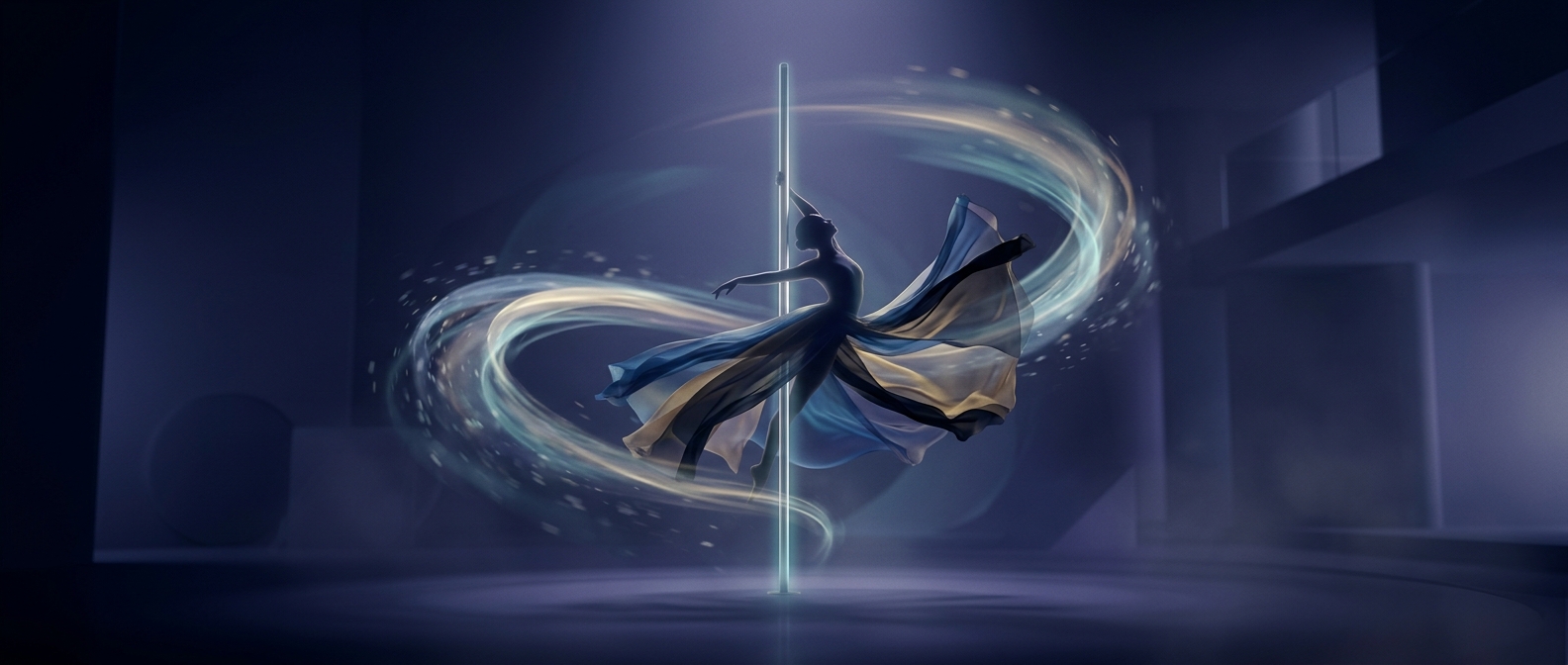
A push only starts a turn if it acts off-center. To spin around a vertical pole, the person pushes sideways against it—along the direction they want their body to move, rather than straight toward or away from the pole. The pole pushes back with an equal force. Because that reaction acts at a distance from the person’s center of rotation, it creates torque, the turning effect of a force.
The pole does not need to move. It supplies a stable point to push against, while the person’s muscles provide the energy that starts the motion. The pole and Earth take an almost imperceptible counter-push in the opposite direction.
Momentum keeps the turn going—for a while
After the push, the person’s rotating body has angular momentum: the rotational counterpart of the momentum of a moving object. That momentum carries the motion onward without another push from the pole. But the spin is not endless. Air resistance and friction at any contact with the pole gradually take energy from the motion, slowing the turn.
So the pole acts less like a motor than like a handhold for launching a spin. A well-aimed sideways push starts the rotation; momentum carries it until resistance wins.