Why a stagecoach route was built around stops
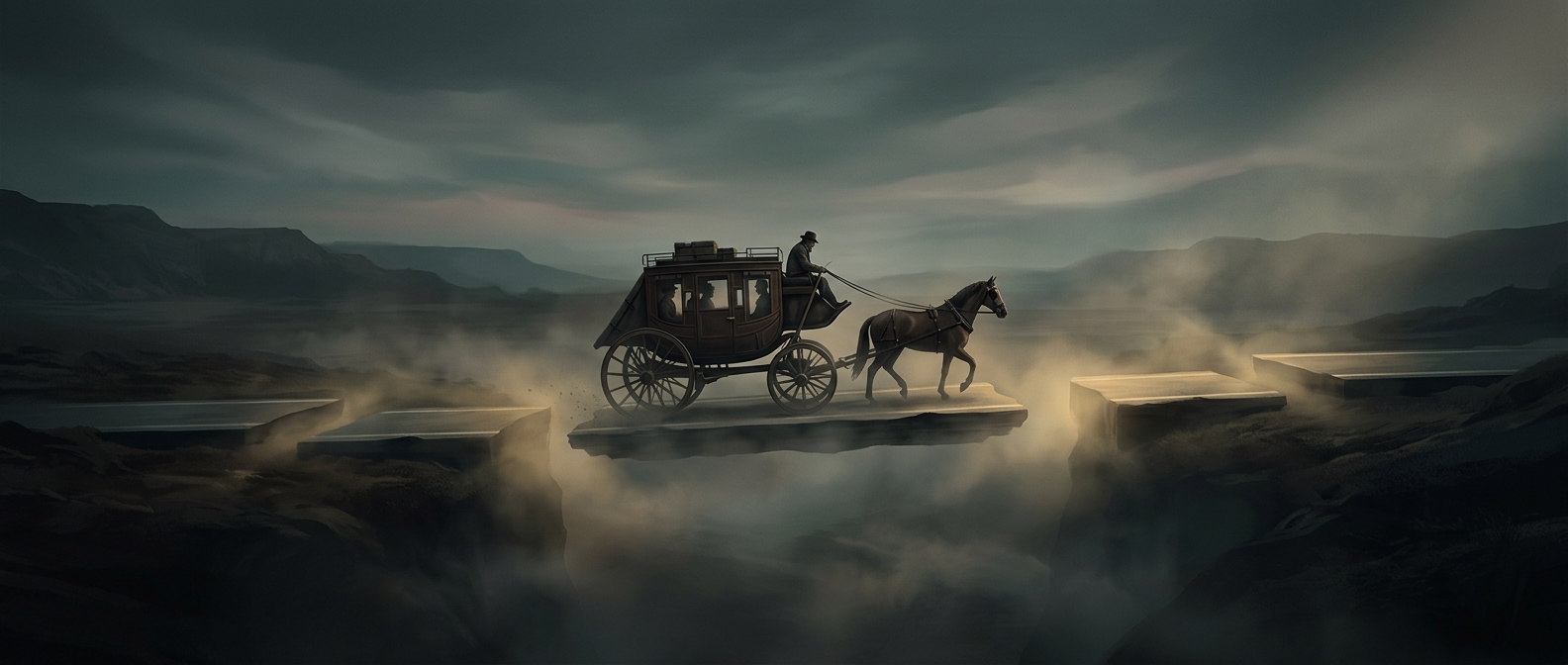
A stagecoach’s distance was limited less by how long passengers could sit than by how long horses could pull hard. Coaches were heavy, roads could be rough, and a team might have to climb hills or drag through mud. Requiring the same horses to cover an entire route would slow the journey and exhaust them.
Instead, routes were divided into stages: stretches between places where horses could be changed. At a stop, the coach was unharnessed from the tired team and hitched to fresh horses. The new team supplied the strength for the next stretch, while the spent horses could rest and recover.
The stop was part of the transport system
Stage stops were not just convenient places to pause. They made a regular coach service workable by turning a long trip into a chain of shorter efforts. A coach could continue after each change without waiting for one team to regain its strength. The animals and equipment had to be ready at the right places, so operating a route depended on a network of stops as well as on the road itself.
Passengers might use the pause to stretch or change seats, but that was secondary to the horses’ needs. The journey advanced through repeated exchanges: one team pulled, another took over. The coach kept moving because the work—and the animals doing it—were rotated.