A message became a pattern of magnetism
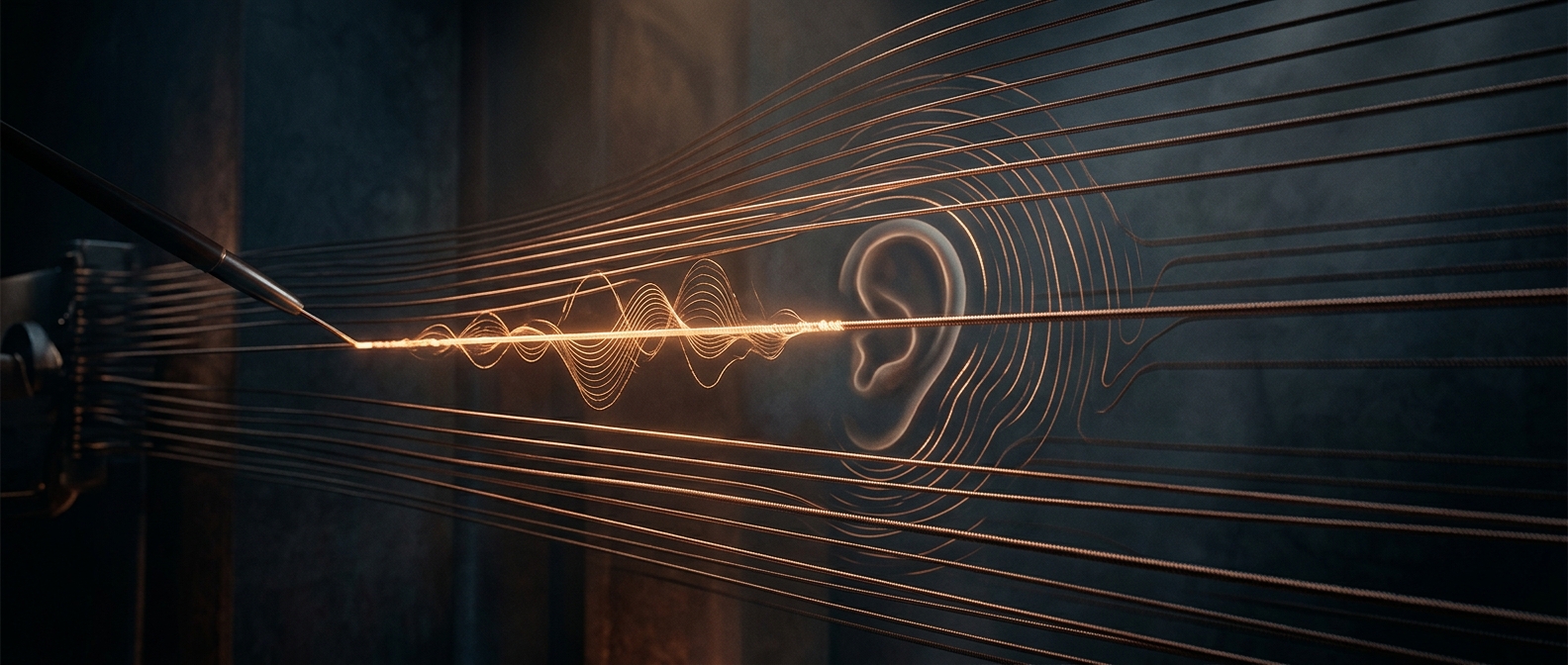
Valdemar Poulsen’s Telegraphone captured speech without cutting grooves into a cylinder or disc. As a person spoke, a microphone converted the changing pressure of the voice into an electrical signal. That signal flowed through a recording head, magnetizing the moving steel wire in a pattern that varied with the sound.
The wire was both the recording medium and the moving “track.” To play the message back, the machine drew the magnetized wire past a playback head. The changing magnetic pattern produced an electrical signal, which could be amplified and turned back into sound. The recording could be heard again because the wire retained its magnetization after passing the head.
From recording speech to leaving a message
The machine’s potential for telephone use lay in a simple problem: a call could arrive when no one was there to answer. A recorder connected to a telephone could, in principle, capture the caller’s voice for later playback. Poulsen envisioned the Telegraphone serving that purpose, extending sound recording from preserving a performance to preserving a conversation meant for someone absent.
That idea depended on more than the recording principle. The machine had to start at the right moment, record intelligible speech, and let someone retrieve it afterward. The Telegraphone demonstrated the magnetic method, but the caption’s image of a message waiting on a machine is best understood as its intended use—not as proof that it was already a convenient household answering service.
Why the wire mattered
Magnetic recording made sound storage reusable: the same wire could be played back without wearing away a physical groove, and it could be recorded over. But fine steel wire was difficult to handle, and the recording equipment was not yet a small, simple appliance. Poulsen’s invention therefore joined two ideas that would later become familiar: storing speech magnetically and letting a machine speak for an absent person. In 1898, both were still being worked out in the same moving strand of steel.