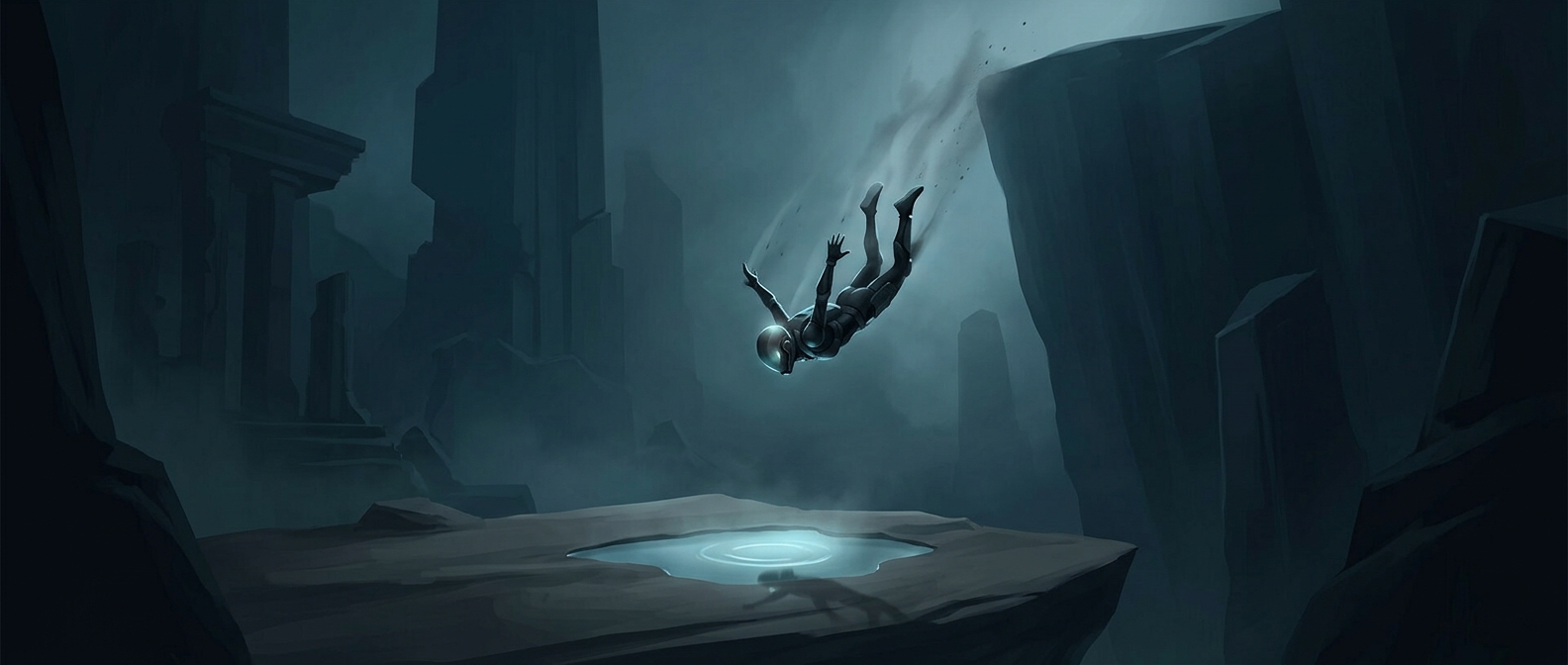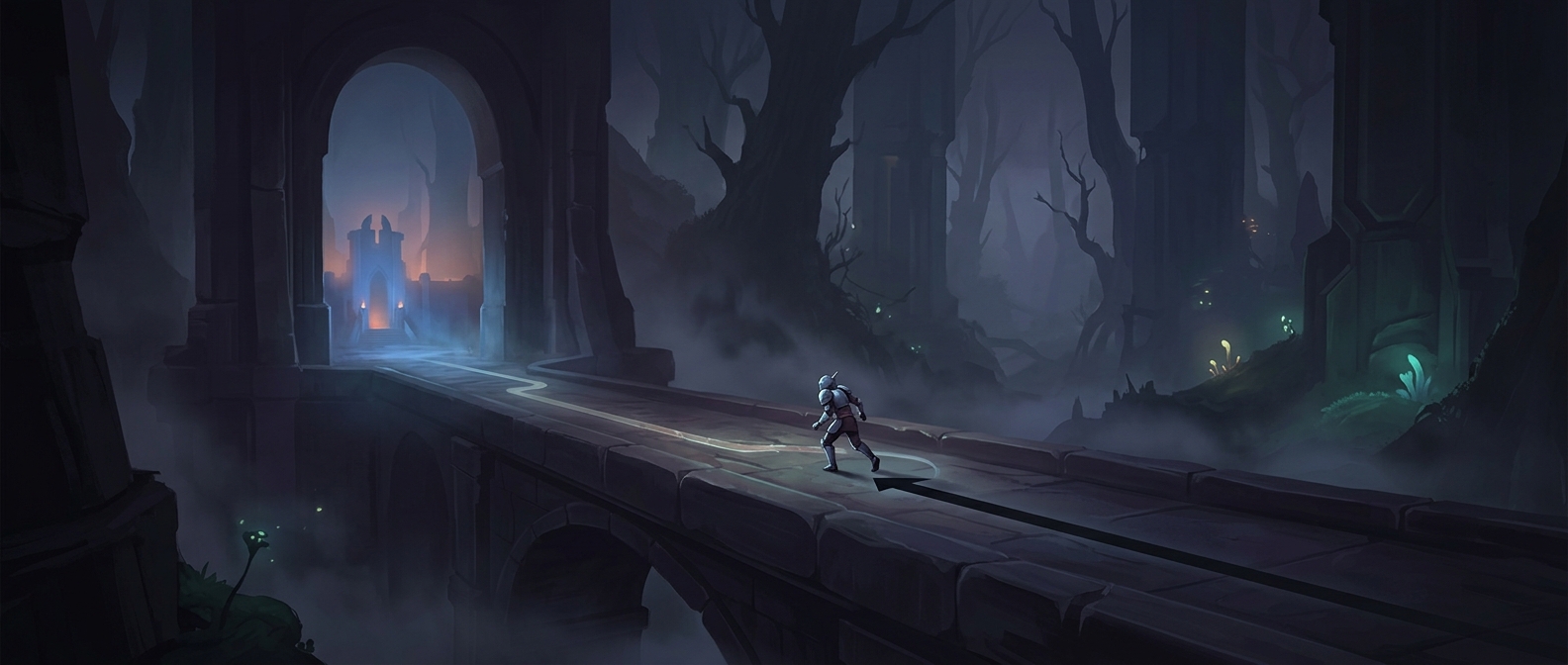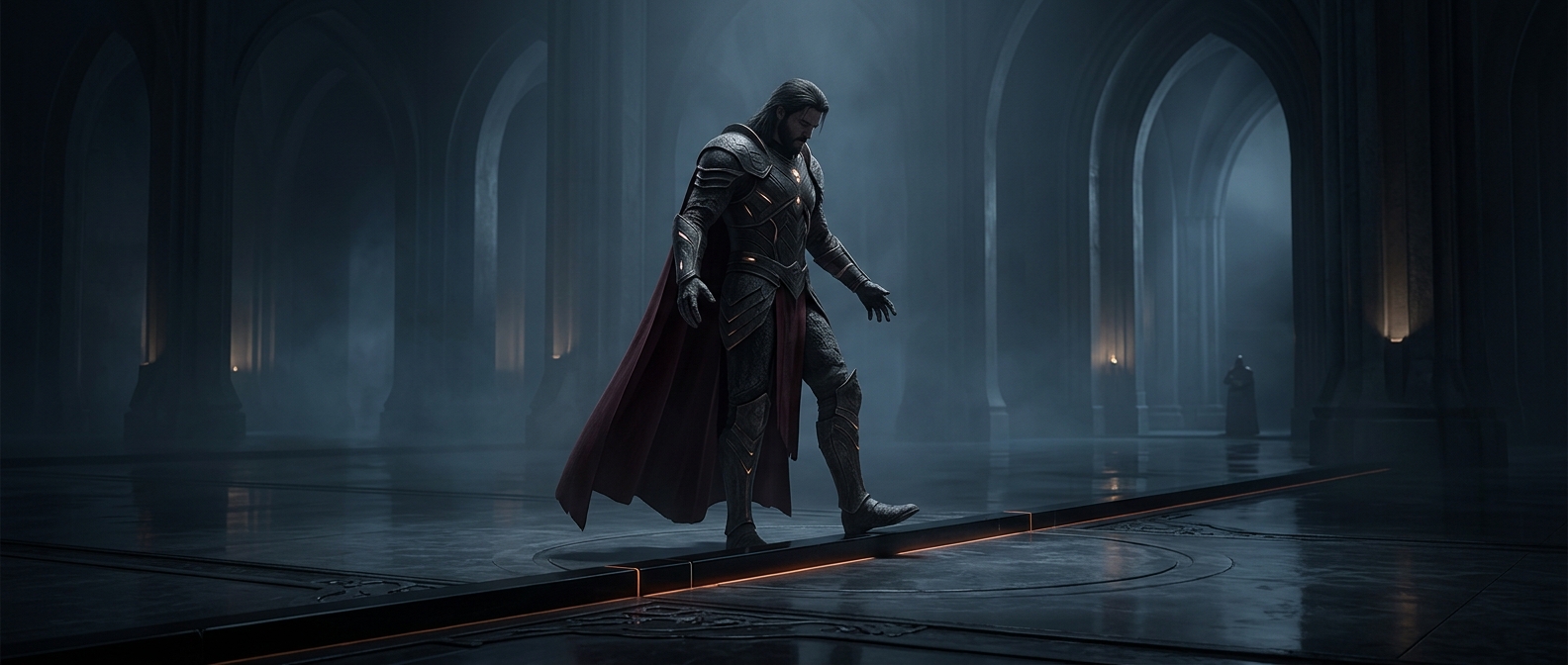
A pebble can be a wall in the game’s movement rules
A hero does not navigate by judging rubble the way a person does. The game checks whether the character’s collision shape—the invisible volume used to detect contact—can move into the next space without intersecting an obstacle. If a piece of debris is flagged as solid and the game has no step-up or jump behavior for that situation, the movement check fails. The character stops, even if the art makes the obstacle look trivial.
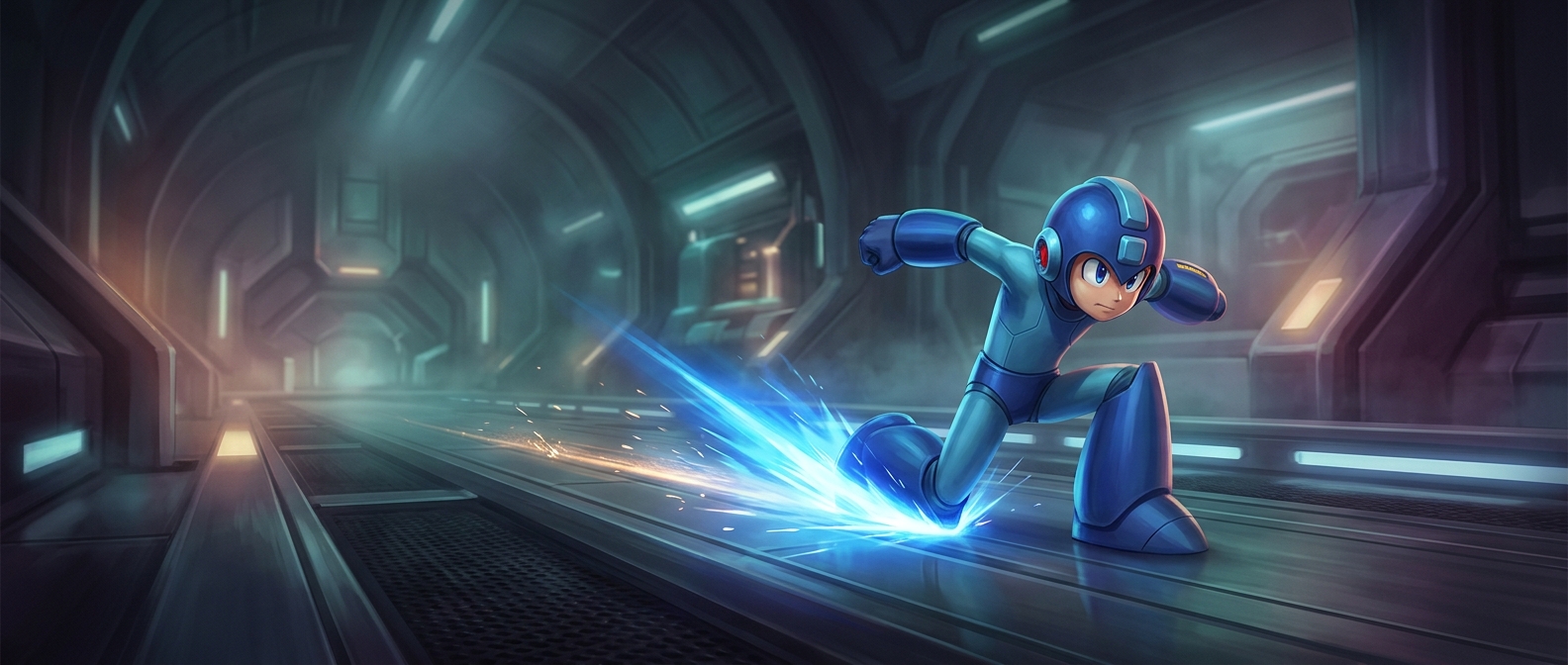
That can feel especially odd when the hero can defeat enormous enemies. Combat strength and movement abilities are separate systems: a powerful attack does not automatically give the character a way to climb, hop, or squeeze past something.
Why not let the hero step over everything?
Games can make characters automatically climb low obstacles, but that requires rules for what counts as “low,” animations that make the movement look natural, and checks to prevent the character from getting stuck or popping onto places they should not reach. In a game built around direct movement, simpler collision rules can make controls more predictable: solid object means blocked path.
Designers also use obstacles to shape routes. A small barrier might funnel the player toward a doorway, keep them on a path, or mark an edge they are not meant to cross. But not every bit of visible debris has to matter. Decorative rubble can be made non-solid so the character passes through it; when it blocks the way, that is a choice in the game’s collision and level design, not a measure of the hero’s strength.
The result is a useful reminder that a game world has two versions: the one drawn on screen and the one defined by movement rules. Sometimes the invisible version has the final say.