Why the Flames Look Like Blue Rivers
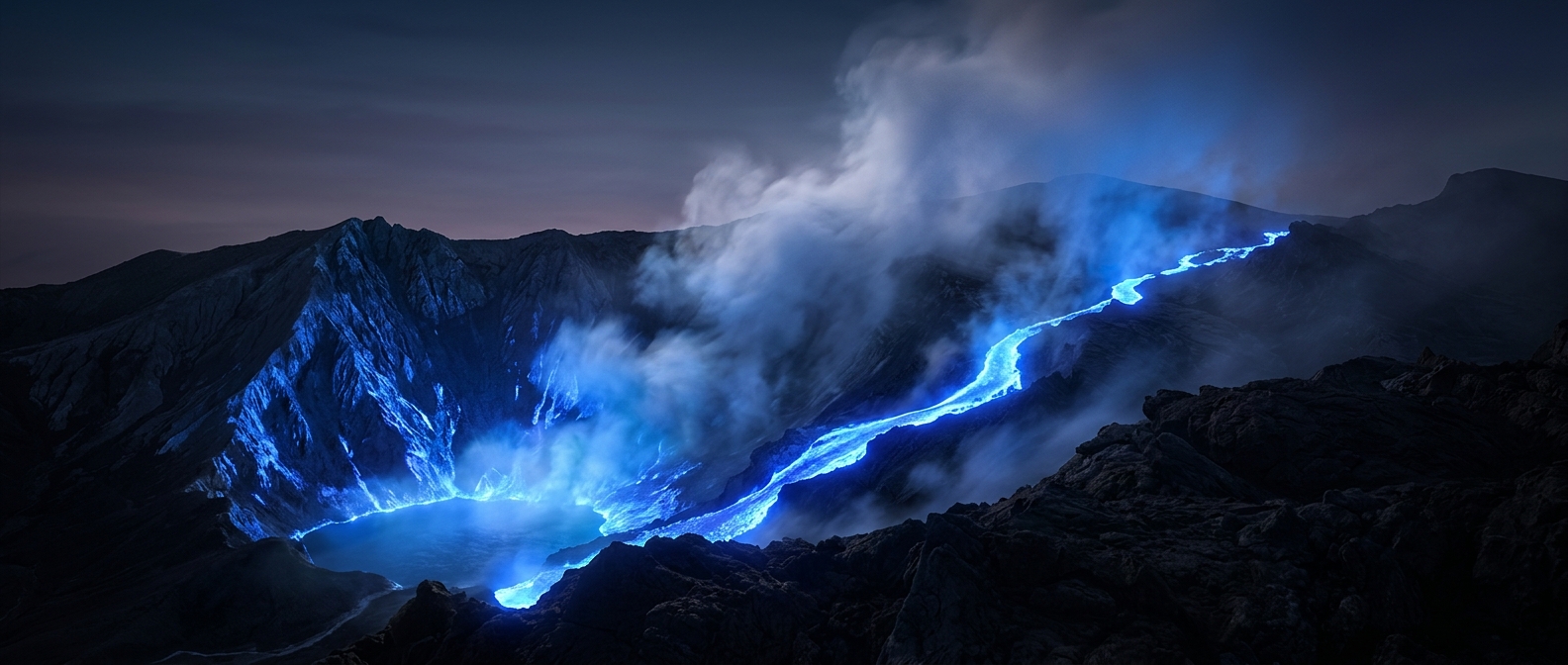
The blue glow comes from sulfur burning, not from lava. Deep inside the volcano, heat drives sulfur-rich gases through cracks and vents. When the hot gas reaches oxygen in the open air, some of its sulfur catches fire, producing an intense blue flame.
The “rivers” are a second part of the process. Some sulfur vapor cools and condenses into liquid sulfur, which can run downhill while still hot enough to ignite. Flames then follow the escaping gas and burning sulfur along the slope, making the fire appear to flow like molten rock.
A Fire That Disappears in Daylight
The blue light is most striking in darkness. In daylight, the flames may still be present, but sunlight overwhelms their glow. That contrast helps explain why the phenomenon can look like an otherworldly river at night while leaving the dark volcanic landscape around it largely unchanged.
The key distinction is physical: lava is molten rock; these blue streaks are burning sulfur and gas. The glow marks where volcanic heat and sulfur meet the air—not a stream of rock pouring down the mountain.