How a spinning drum turns drawings into motion
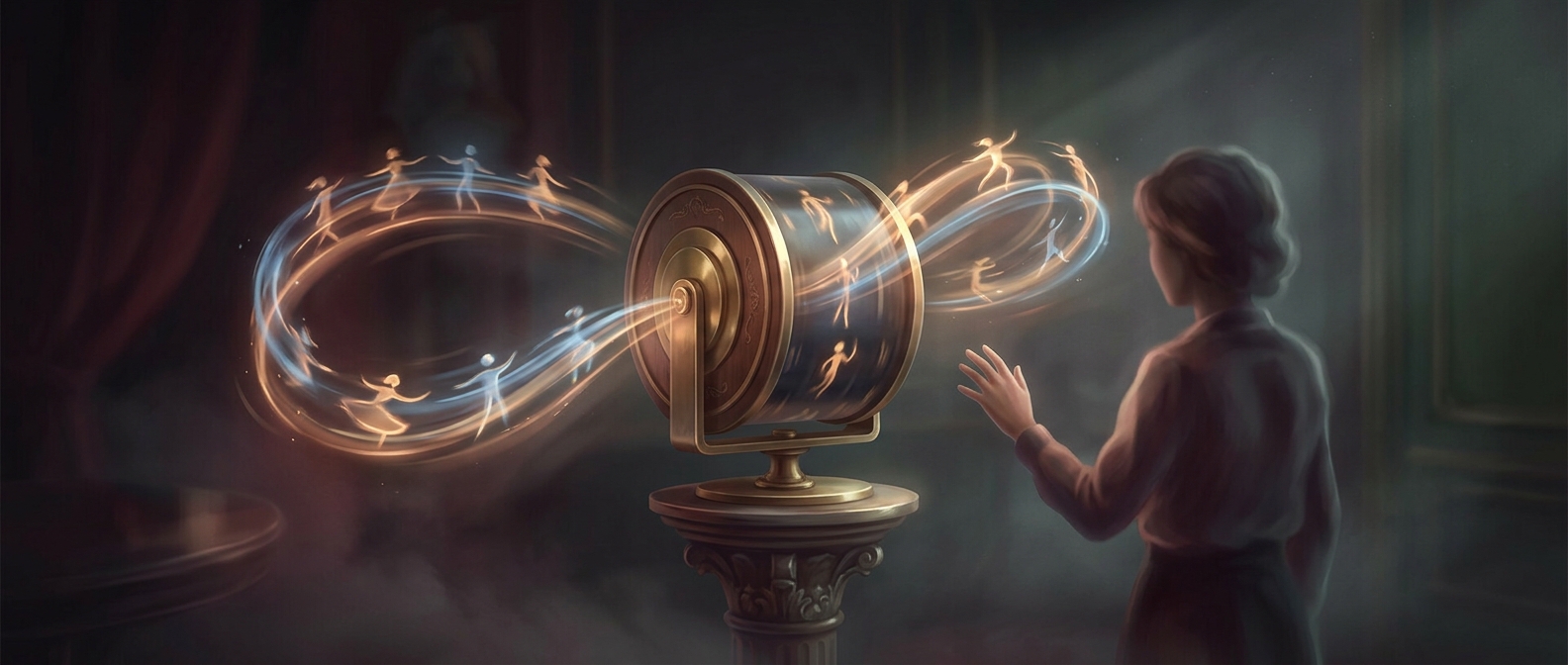
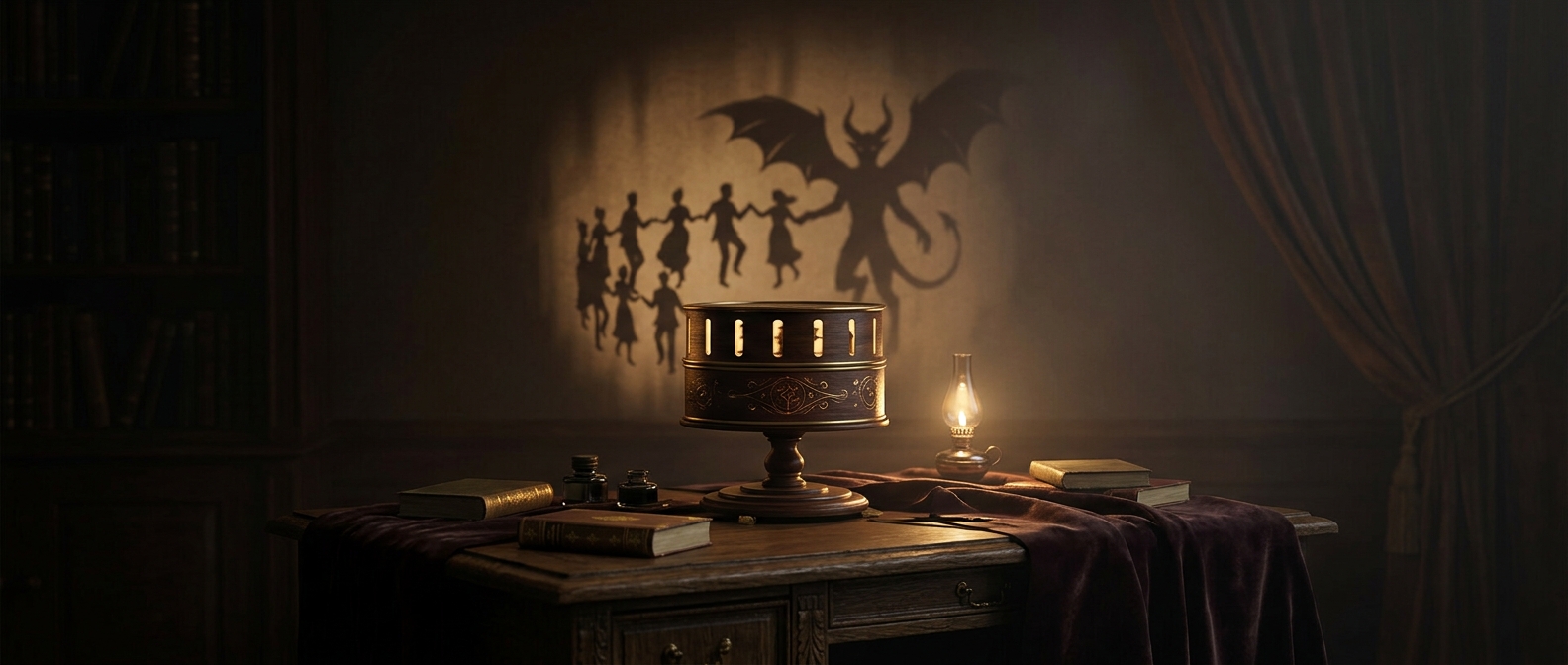
Horner’s Daedalum worked by separating a sequence of still pictures into quick glimpses. A strip of drawings was placed inside a cylinder, each image showing a slightly different moment in an action. The viewer spun the drum and looked through narrow slits around its rim. As each slit swept past, it briefly exposed one drawing; the next opening revealed the next pose.
The slits mattered as much as the pictures. They interrupted the view, keeping the drawings from simply smearing together as the drum turned. The eye and brain link the rapidly presented poses into a continuous-looking action—much like a flipbook, but arranged in a circle so the sequence can repeat. A horse can seem to gallop forever, or a dancer to turn without reaching an ending.
From Daedalum to Zoetrope
The device’s later name helped make its appeal easier to grasp. “Zoetrope” means, roughly, “wheel of life”: a compact promise that a set of static drawings could appear alive. The drum also made animation a shared spectacle. Unlike a small viewing toy that showed pictures to one person at a time, several people could look through different slits and watch the same loop together.
That combination—simple drawings, a rotating mechanism, and a repeatable action—made the device memorable long before projected film. Its trick is still recognizable in animation: movement can be suggested not by a moving picture, but by showing carefully ordered still images at the right rhythm.