How a spinning drum turned drawings into motion
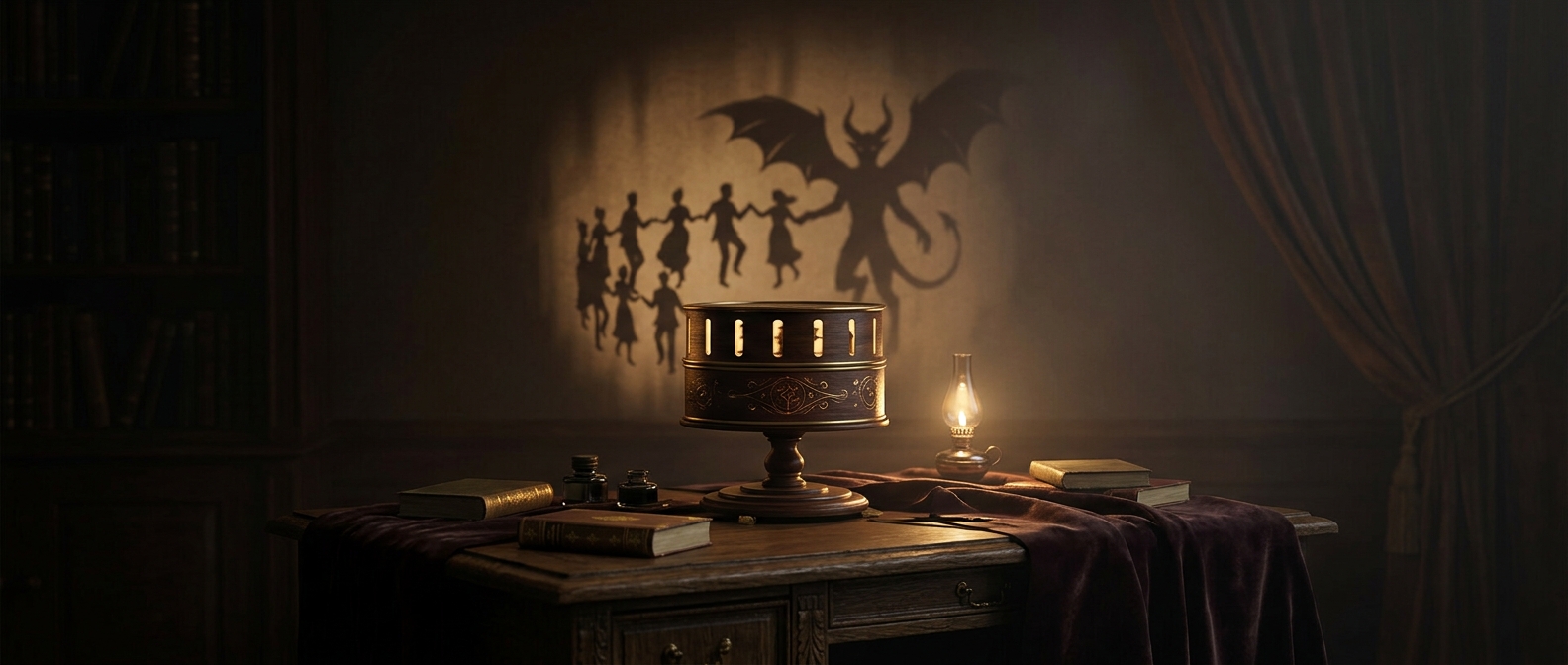
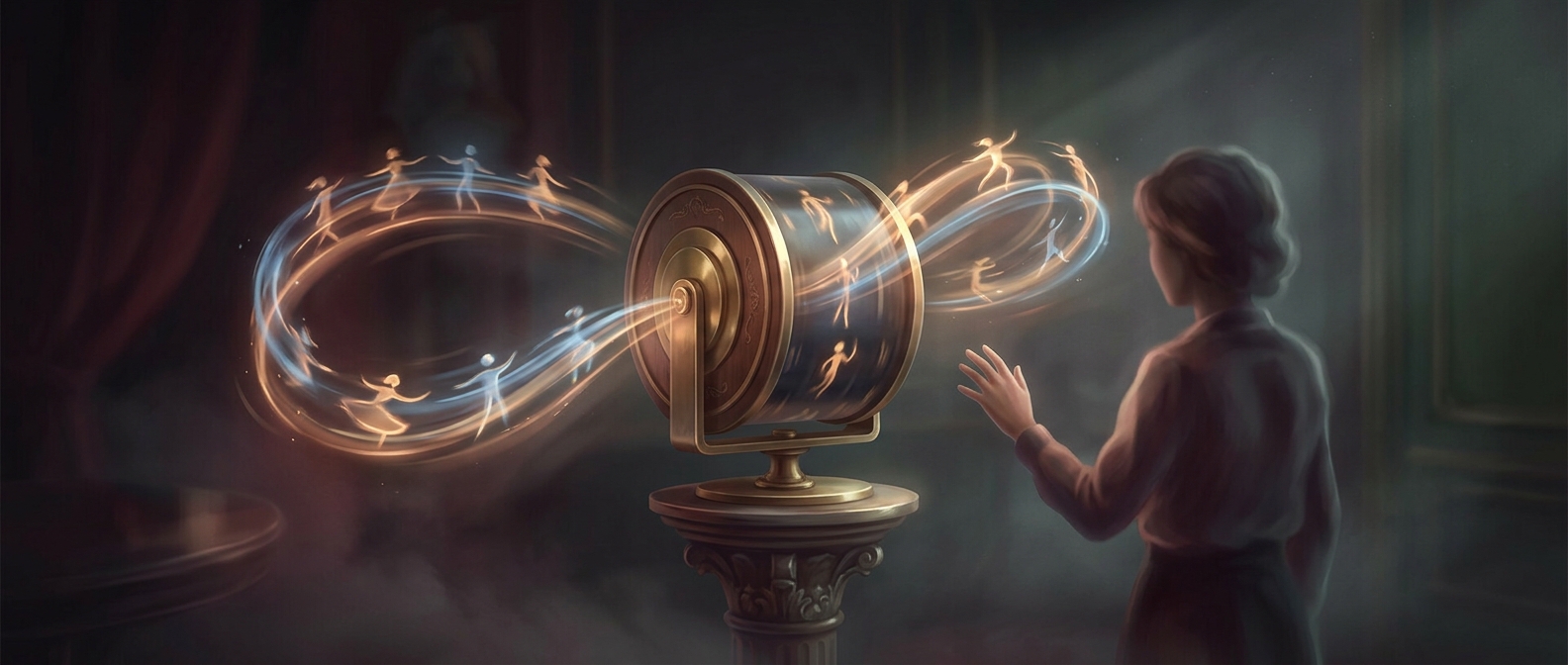
The illusion depended on a simple viewing trick. A paper strip showing successive poses was placed around the inside of a wooden drum. As the drum spun, a viewer looked through narrow openings in its side. Each opening briefly exposed a different drawing, then blocked the view while the next one moved into place.
Those brief interruptions mattered: without them, the images would mostly smear into a blur. Seen in quick succession, the slightly changed poses instead appear to flow together. A figure seems to run, leap, or wave—not because the paper moves, but because the viewer’s visual system interprets the sequence as continuous action.
A toy built around replaceable scenes
The drum was only half the entertainment. The illustrated strip could be taken out and replaced, so one wooden device could show different little performances. The drawings had to be arranged in the correct order and spaced around the drum; spinning the strip in the wrong direction simply made the action appear to run backward.
For Milton Bradley, selling these strips and the device meant packaging an early form of animated entertainment as a hands-on toy, before the company became known for board games. The viewer supplied the motion by turning the drum, while the paper supplied a succession of still images. That basic bargain—many separate pictures, presented fast enough to seem alive—would become central to animation and film.