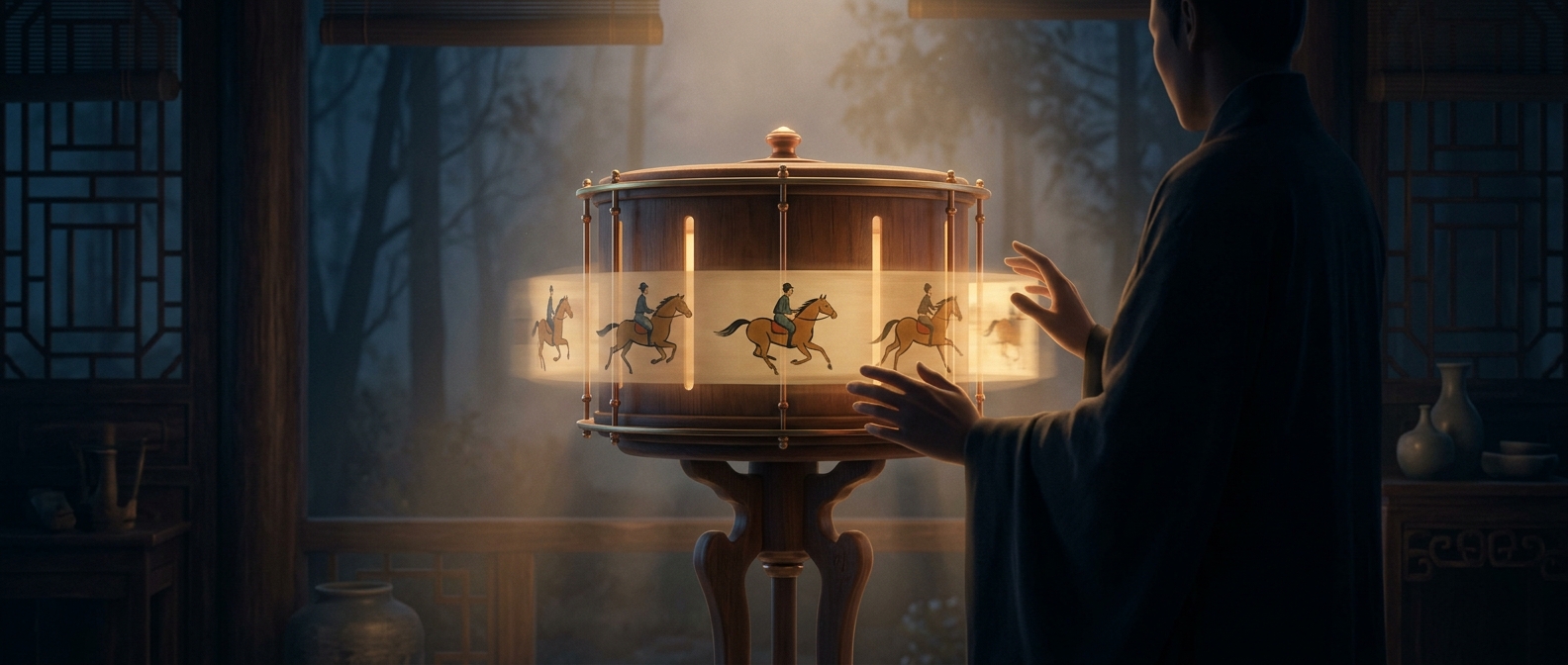
How a lamp could set pictures in motion
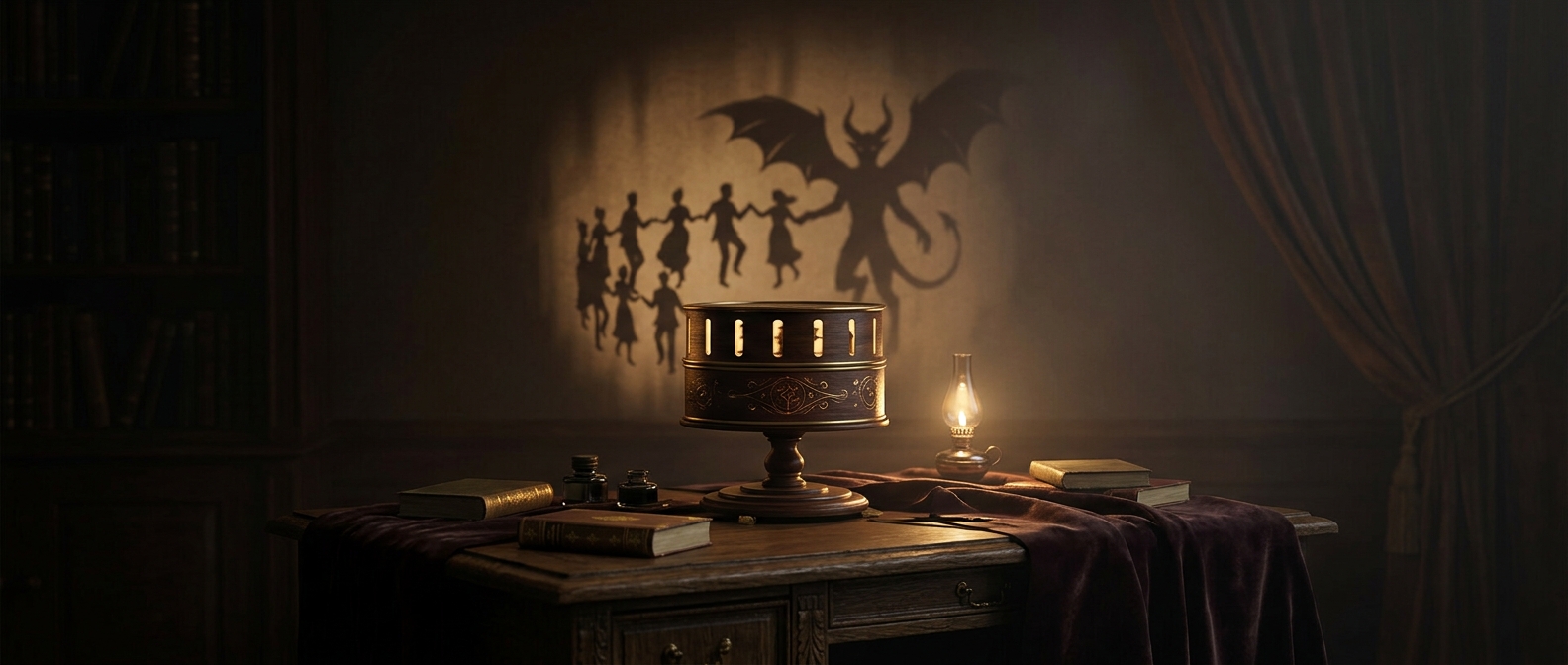
Ding Huan’s device turned heat into movement. A lamp warmed the air beneath the apparatus; as that air rose, it pushed against the parts above and made them rotate. The same basic principle—warm air rises—can be felt above a candle, but here the rising current was put to work as a small engine.
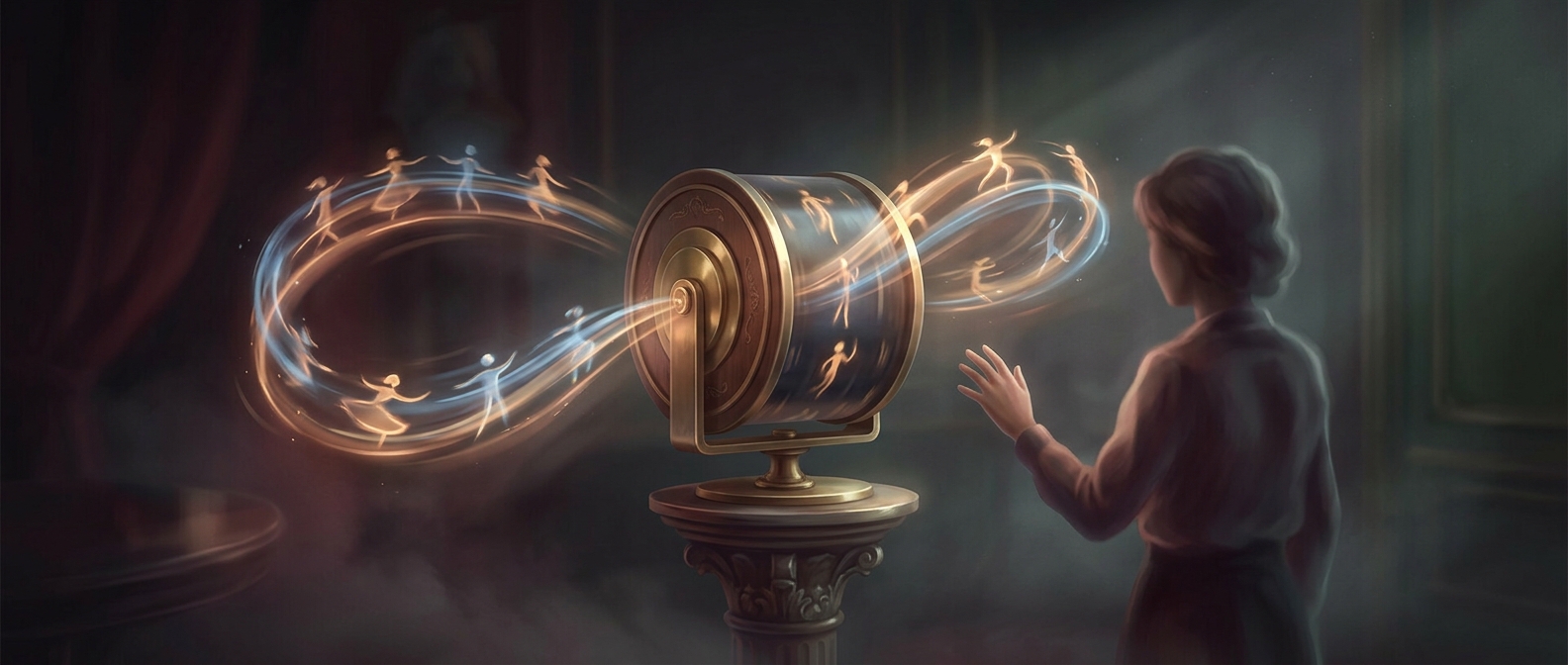
Painted birds and animals rode around with the turning structure. As one image followed another through the viewer’s sight, the figures seemed to move rather than merely circle. The effect depended on motion linking the pictures: the eye and brain briefly hold what they have just seen, allowing a rapid sequence to read as continuous action.
A moving picture without a motor
The striking feature was not simply that the images spun. It was that the device used a nearby source of light and heat to animate them, without gears driven by a person or an electric motor. The lamp supplied both illumination and motion, while the rising air did the mechanical work.
That makes the contraption an early example of two ideas meeting: a physical force converted into rotation, and a sequence of images used to suggest life. Its operation was delicate—the airflow had to keep the pictures turning—but the underlying trick is easy to imagine: a flame warms the air, the air lifts and turns the display, and painted creatures appear to stir as they pass.