Why the 7–10 split is so hard to convert
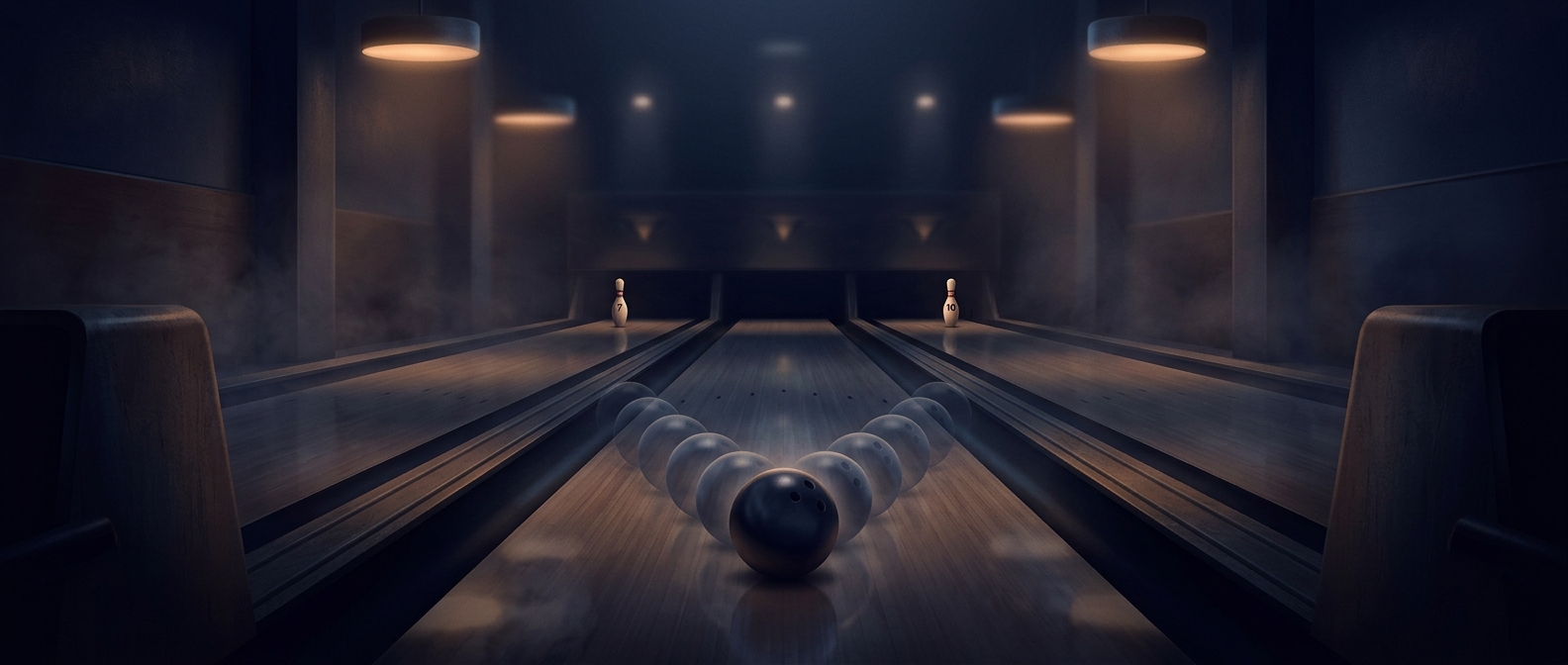
The 7 and 10 pins stand at opposite ends of the back row of the pin formation. After a first ball leaves only those two pins, there is no pin between them to carry the impact across. A direct hit on one corner pin usually sends it tumbling toward the gutter or back of the lane—not across the full width to the other corner.
The rebound has to do the work
A bowler aiming at the 7 pin, on the left, needs it to travel across the pin deck and strike the 10 on the right; aiming at the 10 requires the reverse. The pin must slide or bounce far enough, at the right angle and with enough force, to topple its distant target. Even a pin that moves dramatically may miss by inches, or pass behind the other pin without knocking it down.
That makes the shot less like a conventional spare, where the ball can be aimed at a cluster, and more like a narrow-angle bank shot. The bowler has to choose a line that sends the first pin across the lane while avoiding a ball path that simply clears one side and leaves the other standing.
Why bowlers rarely make it
The two pins are separated by nearly the full width of the pin deck, and the first pin’s path is unpredictable: its spin, bounce, and contact point all affect where it ends up. There is no reliable way to steer it once it leaves the spot where it stood. Success depends on a chain of precise impacts, not just hitting the first pin.
That is why a converted 7–10 split is memorable: the ball may appear to have done its job, but the spare is not complete until one corner pin crosses the deck and takes out the other.