A hidden route beneath the playing surface
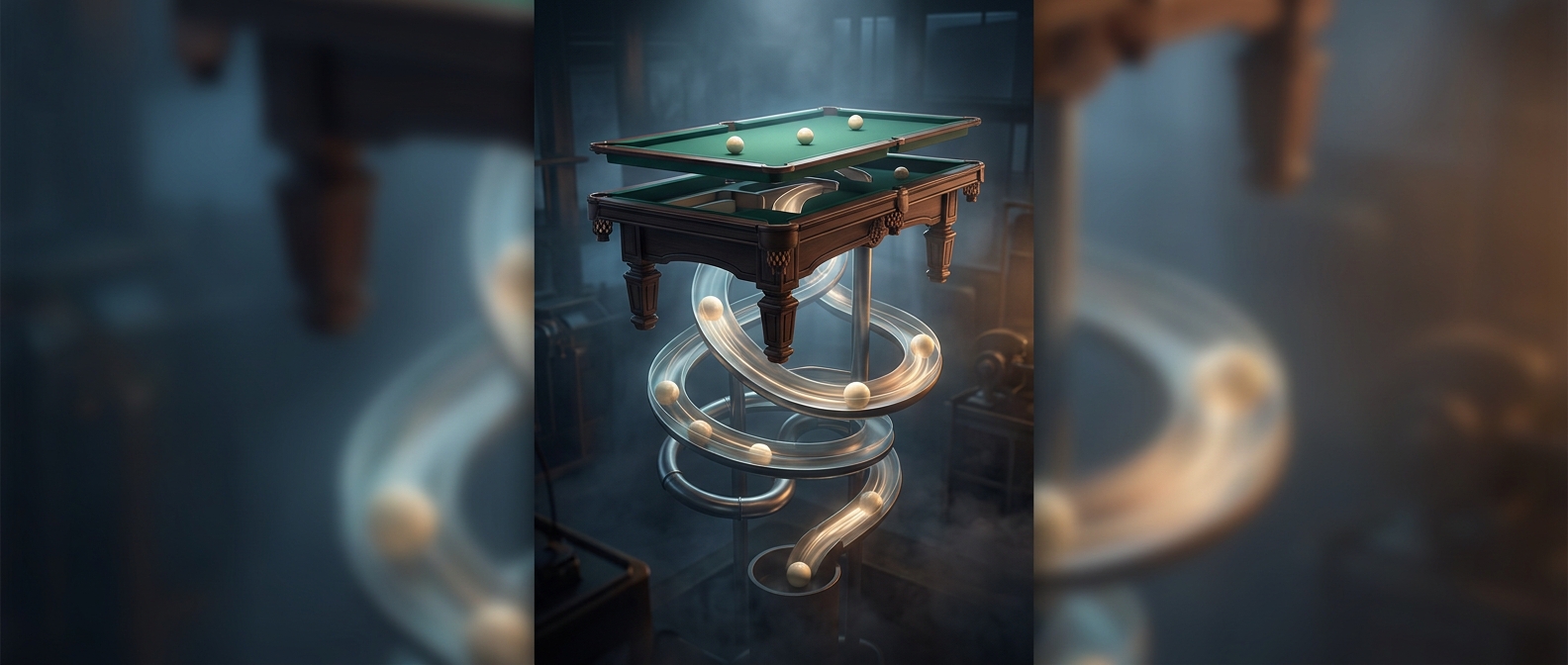
On a ball-return pool table, each pocket is the entrance to a small passageway. When a ball drops through the pocket opening, it lands on a sloped track beneath the felt. The track uses gravity—not a motor—to keep the ball rolling toward a collection box, often built into the table’s cabinet.
The slope has to be steep enough to move balls reliably, but the route also needs to guide them without letting them jam at joints or sharp turns. The table’s frame hides this network from players, leaving the smooth playing surface above and the return mechanism below.
Why some tables give balls back
A collection box gathers the balls in one place so they can be retrieved for the next game. On tables with a shared return, balls from different pockets travel through connected channels; on other designs, pockets simply hold the balls where they fall. That difference is why a ball-return feature is not found on every pool table.
The mechanism turns a pocket from a stopping point into a doorway: the ball disappears from view, follows a concealed downhill path, and reappears where players can collect it.