How a turn becomes a clamp
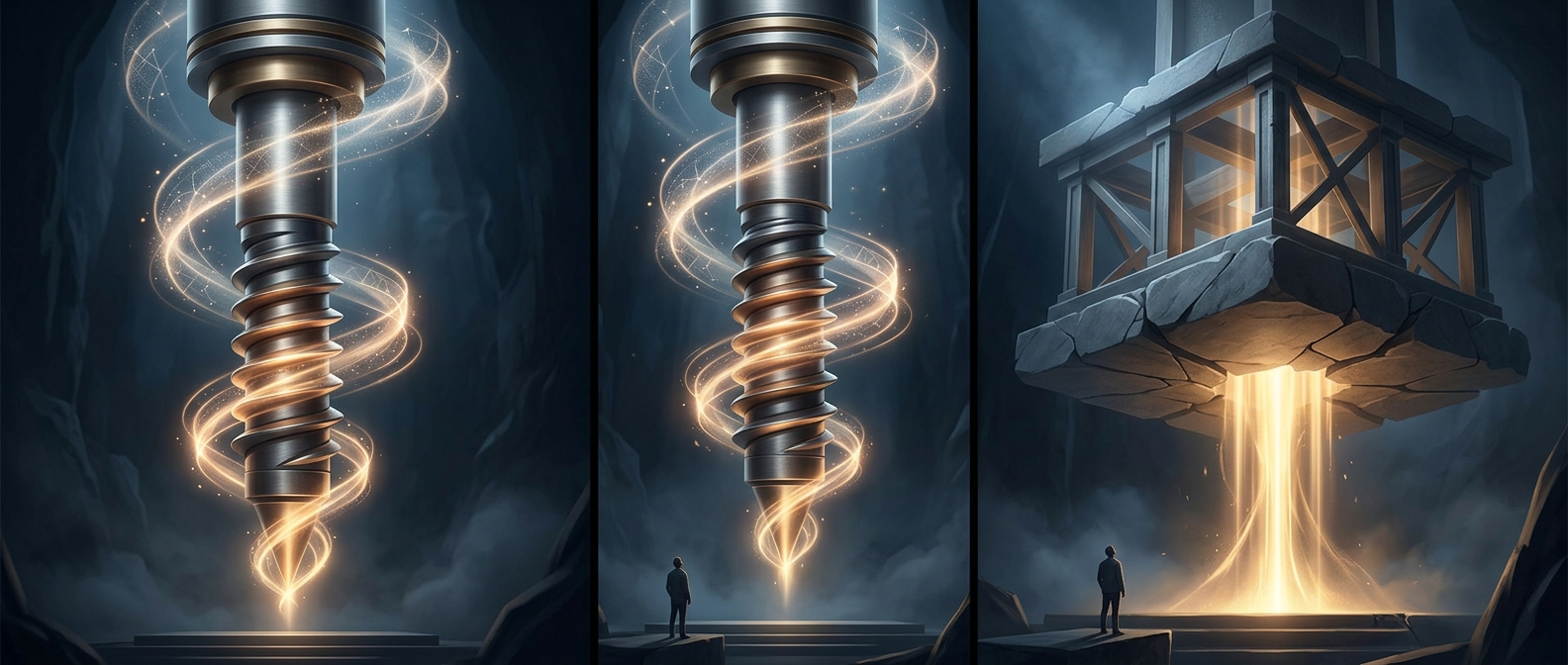
A screw does not simply push forward as it turns. Its thread travels through the material, and the screw’s head presses against the near surface while the threads grip farther in. Those opposing contacts draw the joined pieces toward each other and squeeze them together.
The distance a screw advances in one full turn is set by its pitch: the spacing between neighboring threads. A fine-pitch screw moves a smaller distance per turn than a coarse one, but the thread’s sloping surface gives the turning force leverage. That is why a modest twist can create a strong pull along the screw’s axis.
Why the joint stays tight
The screw’s head spreads pressure over the surface, while its threads resist being pulled back out. Friction between the threads and the surrounding material also helps keep the screw from unwinding. Together, these forces create clamping pressure—the squeeze that holds the pieces in contact.
Turn too far, though, and the screw can strip its grip, crush the material under its head, or damage the joint. Tightening is therefore not just about adding force: it is about creating enough squeeze without destroying the surfaces that provide it. A screw’s small spiral can hold firmly because it converts a turning motion into a controlled pull, then uses the materials around it to preserve that pull.