How magnets turn a spinning wheel into resistance
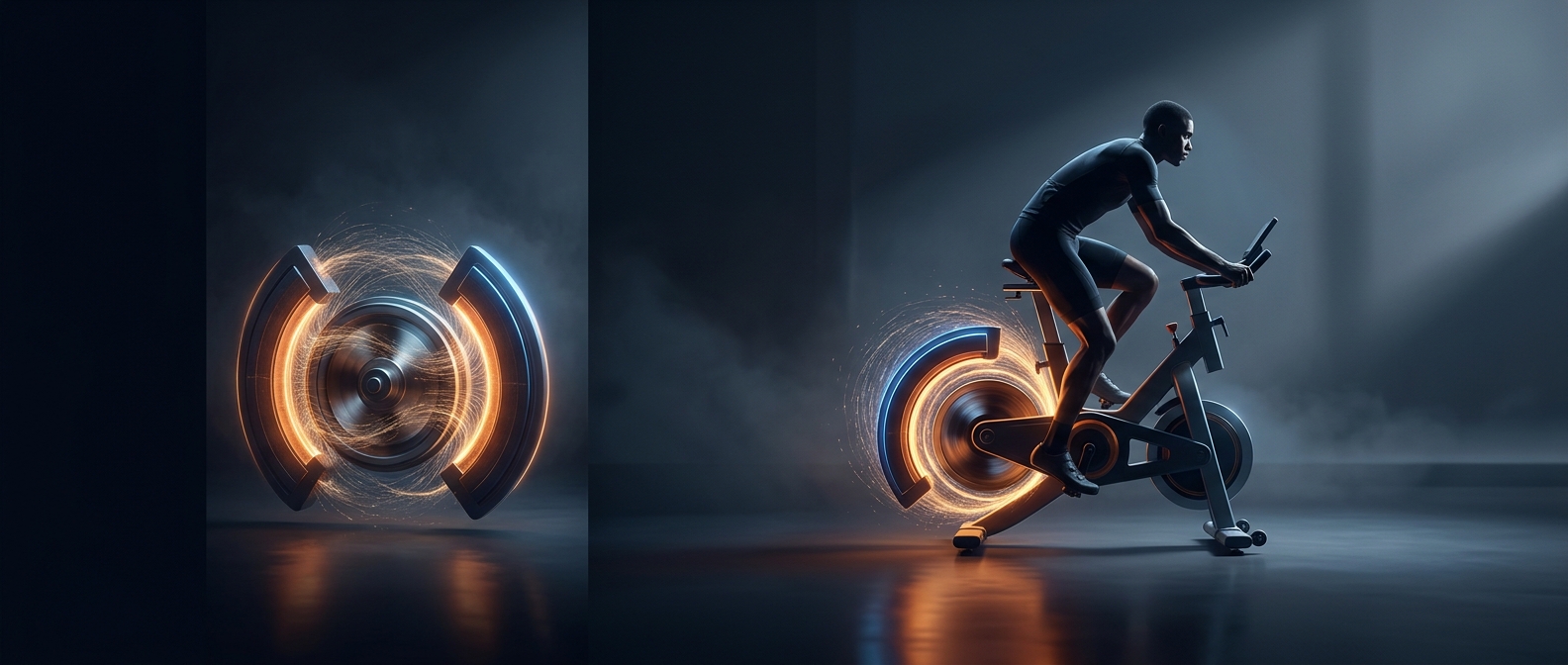
The flywheel is metal, and as it spins past a magnetic field, tiny circulating electrical currents—called eddy currents—form inside it. Those currents create their own magnetic field, which pushes back against the flywheel’s motion. The result is braking force without a brake pad rubbing on the wheel.
Changing the magnet position changes the strength of that opposing force. The rider still supplies the energy: the harder the flywheel is braked, the more force the pedals must transmit to keep it turning.
Why the effort can resemble riding into wind
On the road, air resistance pushes against a moving cyclist and grows sharply as speed increases. A magnetic bike does not reproduce that airflow; its resistance comes from electromagnetic braking. But both make continued pedaling feel harder, and both can turn a steady spin into a demanding effort.
The flywheel helps make the sensation continuous. Its mass carries it forward between pedal strokes, smoothing the motion, while magnetic braking steadily takes energy out of the spinning wheel. The “headwind” is a useful feeling, not literal wind: the bike is creating a persistent load at the pedals without moving the rider through air.