Why a Plow Blade Is Set at an Angle
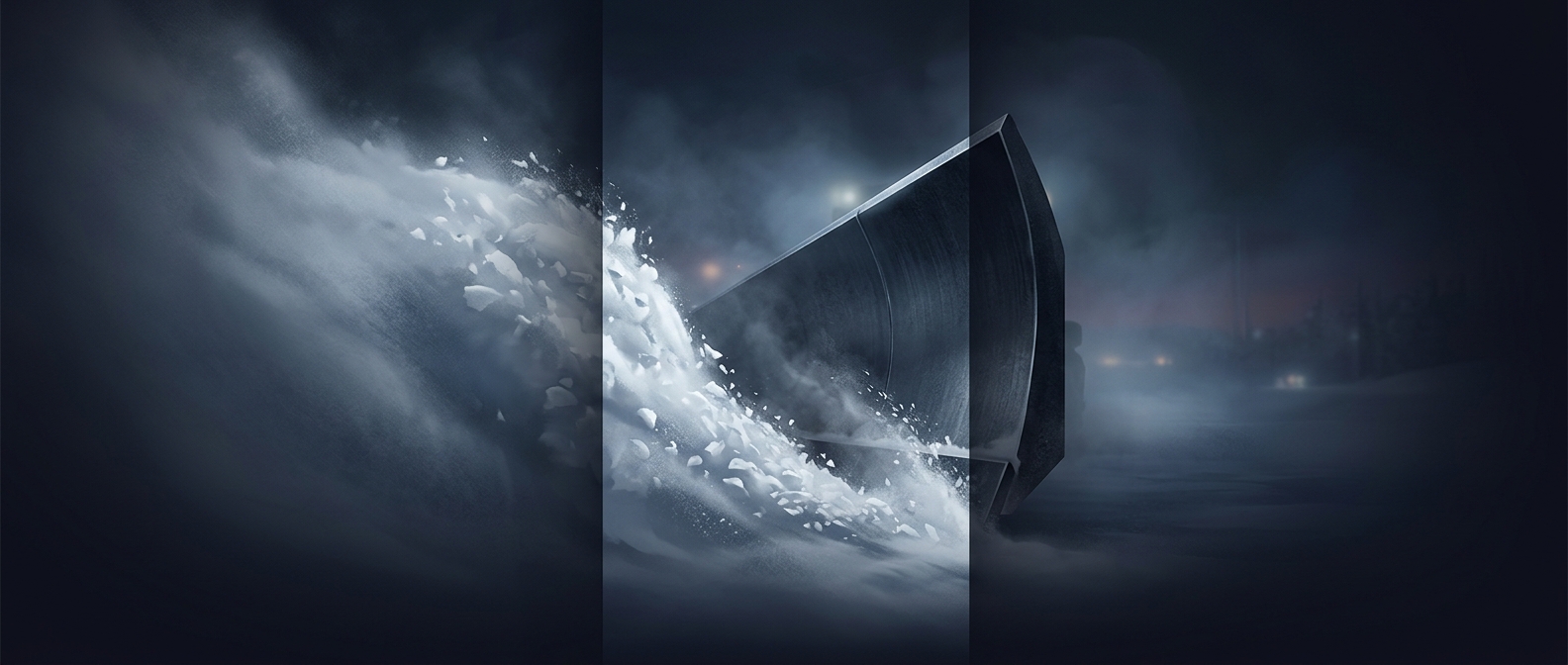
A plow does not simply shove snow straight ahead. Its curved, angled blade turns the truck’s forward push into a sideways flow: as snow meets the blade, the surface guides it along and off one edge. The truck supplies the force; the blade’s shape determines where much of the snow goes.
That sideways direction matters because snow left in front of the truck would quickly pile up, increasing resistance and making the plow harder to move. Sending it toward the road’s edge lets the truck keep advancing. On wide roads, plows may make repeated passes, each shifting the remaining snow farther outward.
Clearing the Road Means Moving the Snow Somewhere
The blade’s angle can be changed so operators can direct snow toward one side or the other. That choice depends on the road and the route: pushing snow across an intersection or into a driveway can create a hazard, while piling it along a shoulder may narrow the usable space. The blade clears the travel lane, but it does not make the snow disappear.
As successive passes build roadside banks, crews may need to make room for later storms or clear snow away from places where it blocks visibility. The practical limit of plowing is therefore not just how much snow a truck can push—it is how much space remains to put it.