The hidden knot inside each stitch
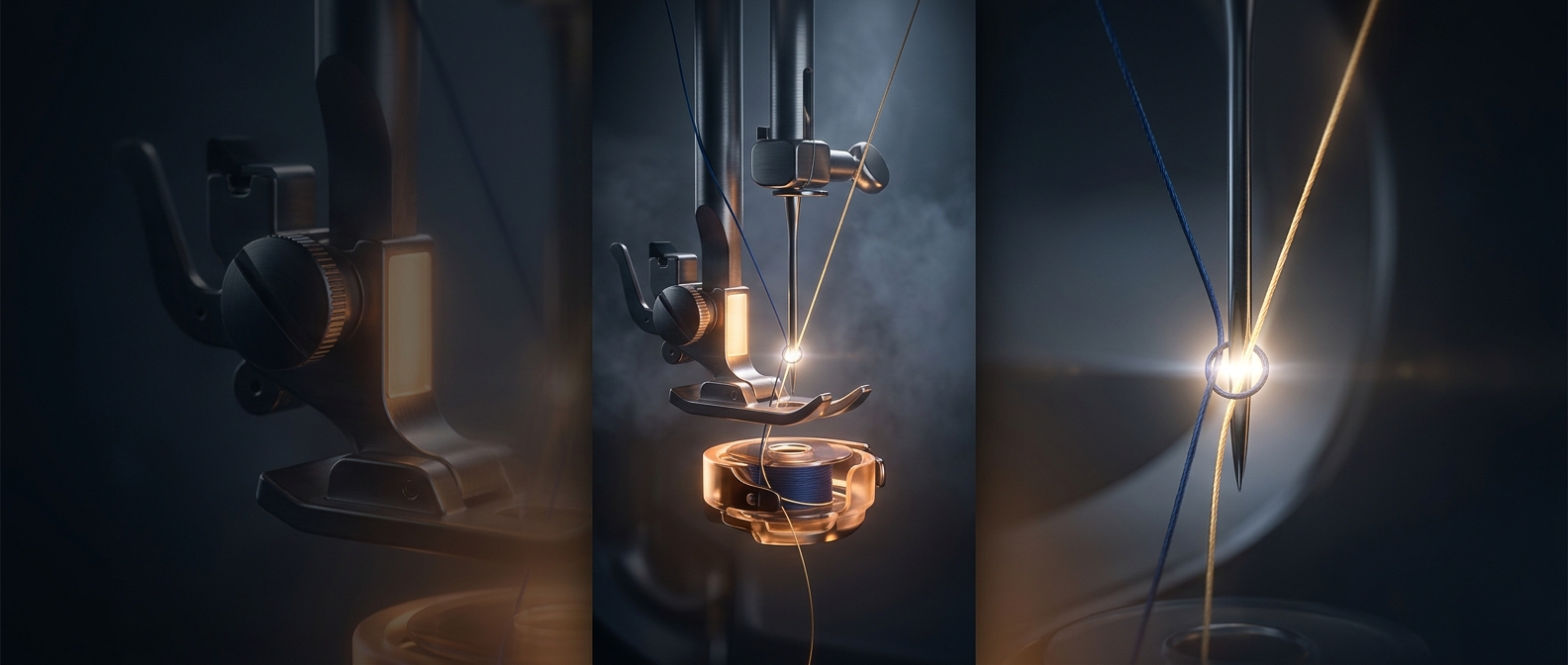
In a common sewing-machine stitch, the needle carries one thread down through the fabric. As it begins to rise, friction against the fabric leaves a small loop of that thread underneath. The needle’s motion is precisely timed with a rotating hook below the fabric plate: the hook slips into the loop before it can collapse.
How the threads interlock
The hook guides the needle-thread loop around a small bobbin, which supplies the second thread. As the machine continues its cycle, the two threads cross. A take-up lever then pulls slack from the needle thread, drawing that crossing into the thickness of the fabric. The result is called a lockstitch: neither thread simply lies on the surface; they lock together inside the material.
The hook does not tie a knot by twisting the threads together. Instead, it carries one thread around the other, and tension pulls their crossing into place. If the thread tensions are badly balanced, that crossing can be dragged to the top or underside, producing loose loops or puckering.
Why timing and movement matter
While the needle and hook make each stitch, toothed feed dogs beneath the presser foot advance the fabric by a small, controlled step. The needle must be out of the cloth before the next step, or the machine would pin the material in place. Every stitch therefore depends on a coordinated sequence: pierce, catch the loop, interlock the threads, tighten, and advance. The finished seam looks like a row of simple marks, but each mark is a tiny crossing hidden within the fabric.