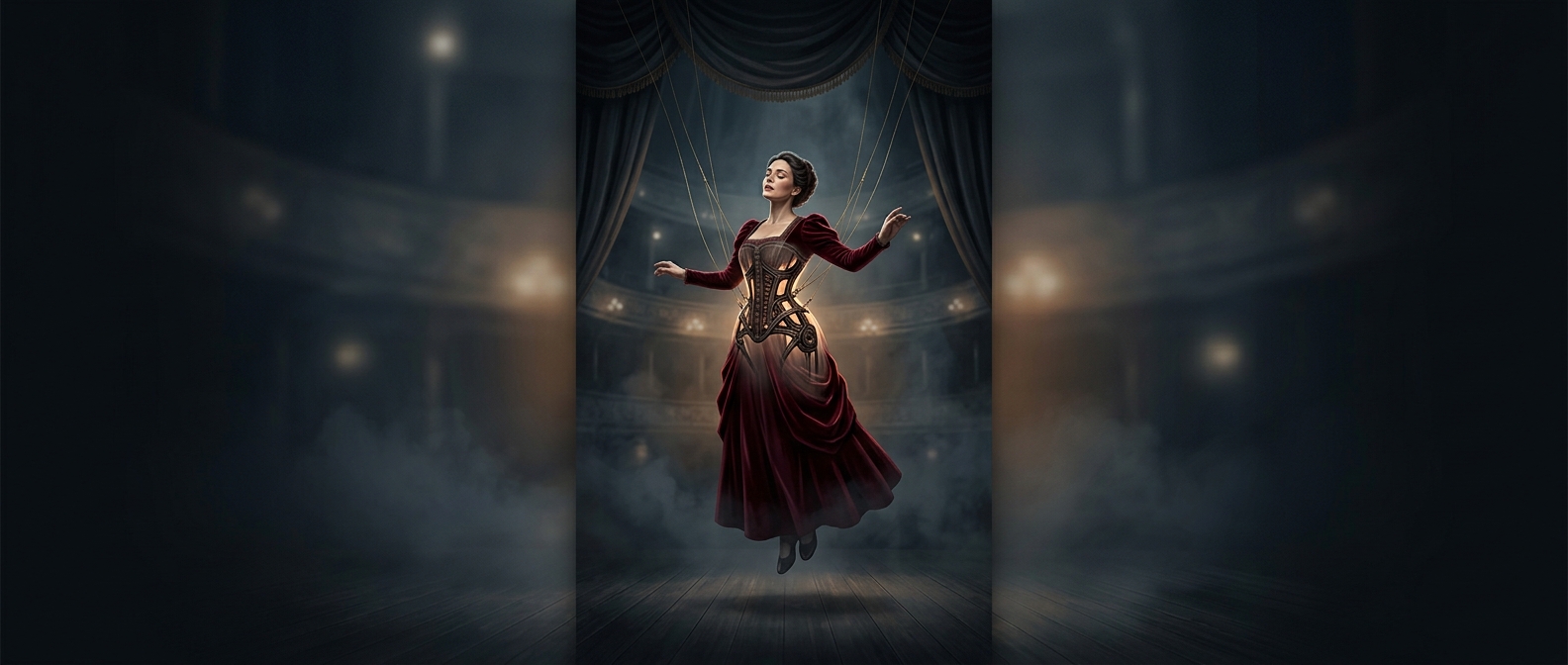
The corset gave the hidden lift something to grip
A concealed harness needs more than a rope: it needs a secure way to support a person without slipping or concentrating all the force on one small patch of skin. A tightly laced, sturdy corset could provide a firm foundation beneath a medium’s clothing. In effect, it helped spread the pull across the torso while giving the hidden lifting apparatus a stable point of attachment.
That mattered because the audience was meant to see a body rising, not the equipment carrying it. Loose, layered garments could cover the harness and soften the outline of any straps or supports. The corset’s rigidity, normally part of the outfit’s shape, could also serve a practical stagecraft purpose.
Darkness completed the illusion
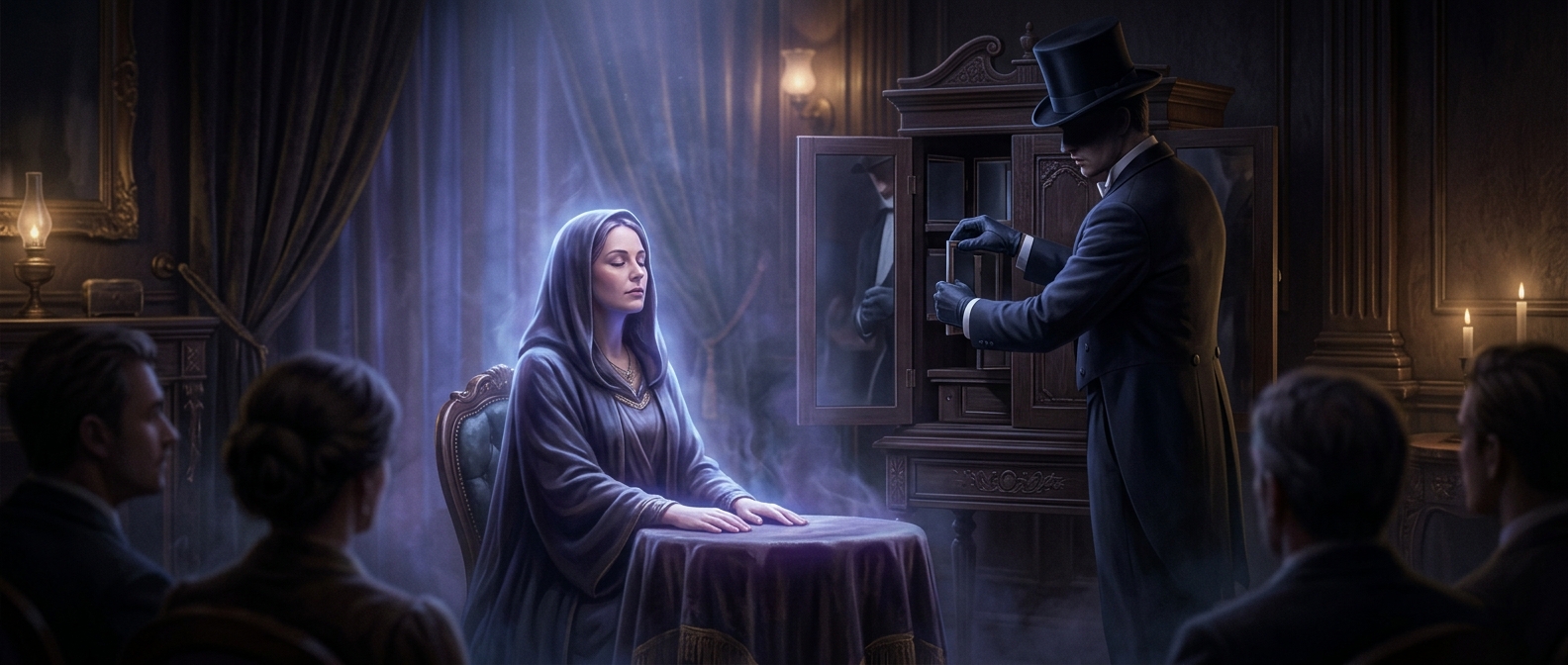
In a dark séance, accomplices could operate the hidden mechanism while the audience had little chance to inspect how the lift worked. The medium appeared to rise by an uncanny force; mechanically, the movement came from support concealed under clothing and people out of sight.
The trick depended on several details working together: a secure anchor, concealed hardware, voluminous clothes, and limited visibility. The corset was not what made levitation possible on its own. It helped make the hidden lift controllable—and helped keep the machinery from being seen.