A postal network could double as an intelligence network
The Thurn und Taxis family’s postal service carried more than routine correspondence: its routes and handling of letters gave the family access to messages moving between rulers and diplomats. That position made it possible to pass intelligence to the Habsburgs, whose interests could benefit from learning what rival diplomats were communicating.
The advantage was built into the mail’s journey. A letter had to pass through human hands before reaching its recipient, creating opportunities to inspect it without openly seizing it. In a “Black Chamber”—a secret operation for examining intercepted correspondence—agents could open a letter, read or copy its contents, and put it back into circulation.
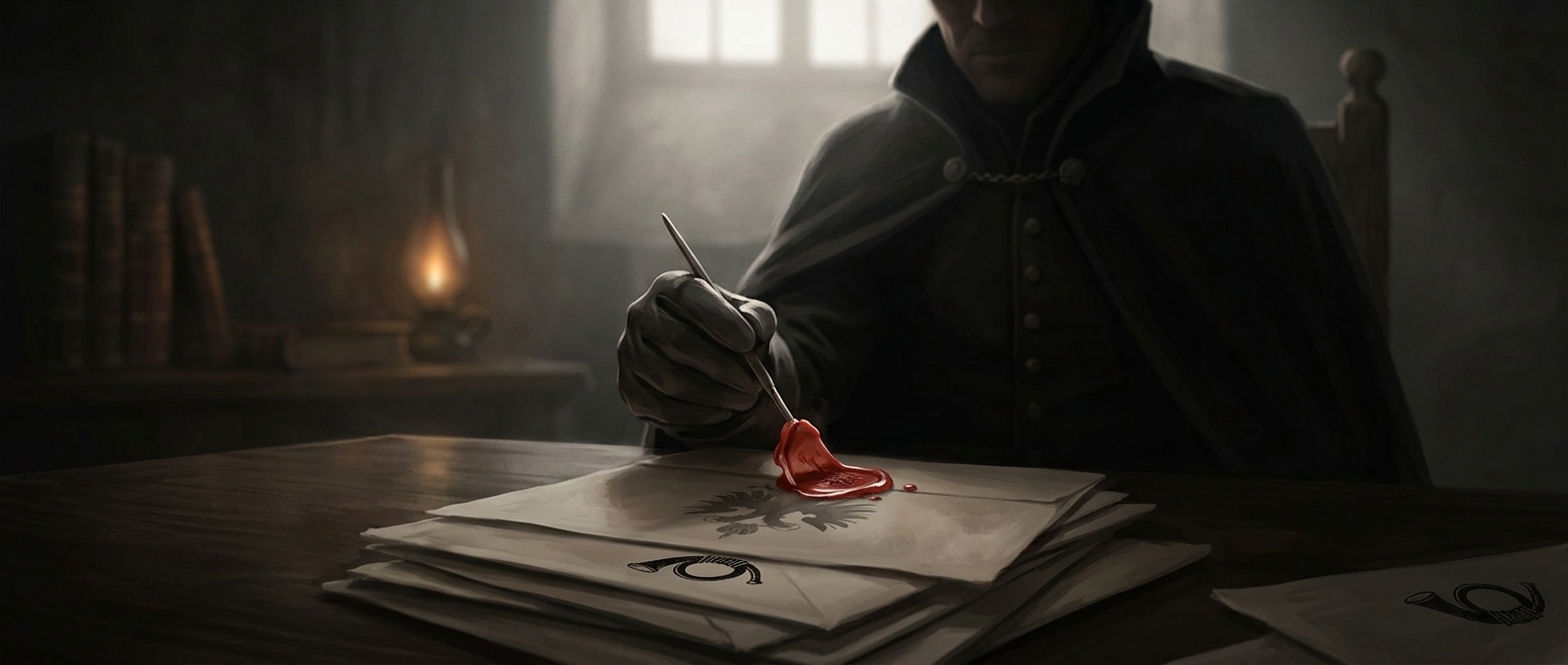
The seal was part of the disguise
A wax seal served as visible evidence that a letter had not been opened. But it was not an unbreakable lock: agents could soften the wax to open the folded paper and then use a forged seal to make the packet appear closed again. Ciphers—systems that conceal a message’s meaning by replacing or rearranging its words—could make the contents harder to understand, but they did not prevent interception. If agents could decipher the text, the sender’s precautions offered little protection.
The deception depended on more than reading a message. The letter had to arrive looking ordinary enough that its recipient would not suspect it had been handled. A postal service’s credibility could therefore help conceal the very surveillance its access made possible.