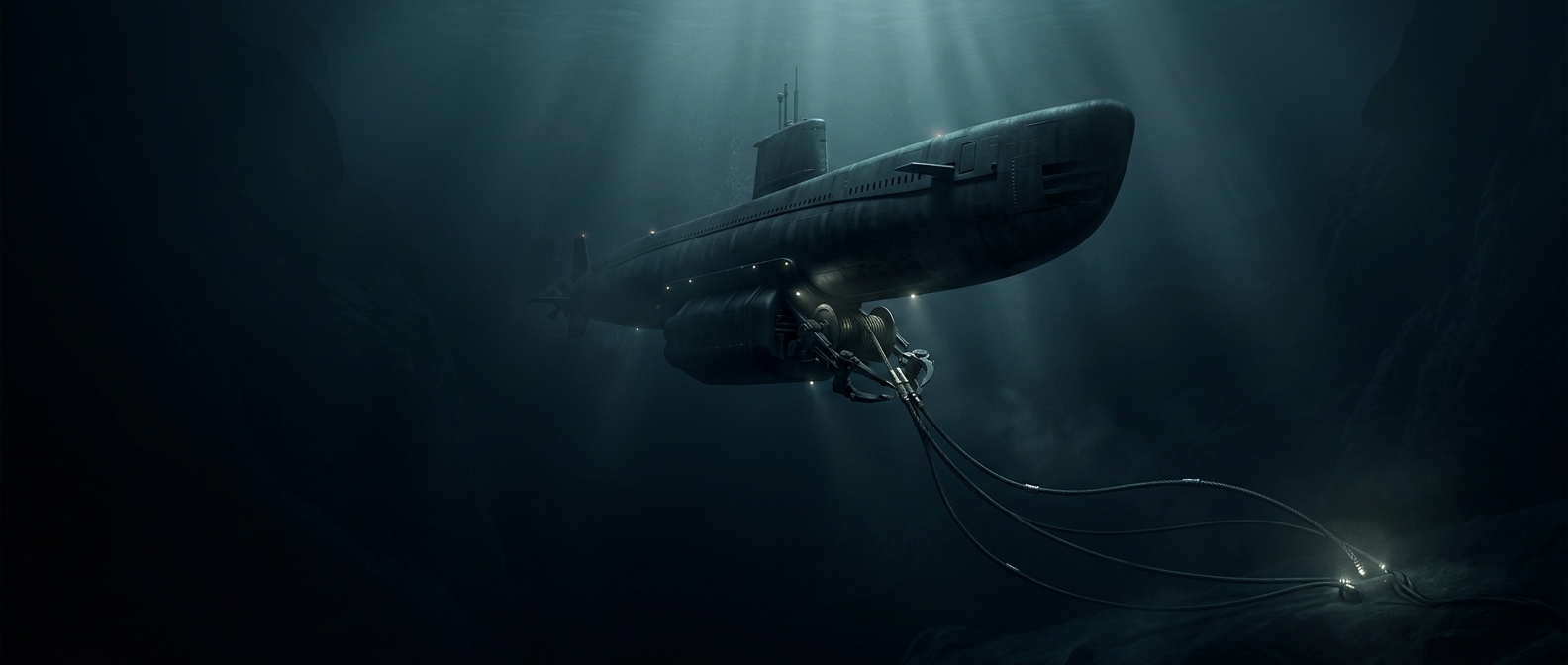
Why a cable on the seafloor mattered
During the Cold War, Soviet military communications moved through undersea cables as well as radio links. A cable offered something intelligence agencies could not easily get from distant antennas: conversations traveling between military installations inside the Soviet Union. But reaching one meant operating in waters the Soviet Navy controlled, where discovery could expose both the equipment and the people who installed it.
The USS Halibut, a submarine adapted for covert missions, helped make that possible in the Sea of Okhotsk. Its divers worked at depth using saturation diving: they lived under pressure in a specialized chamber and traveled to the seabed without repeatedly returning to the surface to readjust. That made extended underwater work possible, though it remained hazardous and technically demanding.
Listening without cutting the line
The divers attached a recording device, often described as a pod, around the cable. The point was to collect the signals without severing the line or leaving an obvious break. In effect, the device made an intact communications route into a listening post: Soviet messages could continue flowing while the equipment captured them.
That distinction mattered. Cutting a cable might interrupt service and alert its operators; a concealed tap could stay unnoticed. The recordings gave American intelligence access to military communications for years, while the submarine and divers faced the risk that a single discovery could reveal the operation.
A secret exposed from inside
The effort, later known as Operation Ivy Bells, depended not just on underwater engineering but on secrecy. That protection failed when NSA employee Ronald Pelton disclosed the operation to the Soviet Union in exchange for money. Once the Soviets learned that their cable had been tapped, the hidden listening post could no longer remain a secret.
The episode shows how an intelligence operation can hinge on two very different kinds of access: the difficult physical access to a cable on the ocean floor, and the human access to information about the mission. The pod could hide from the cable’s owners; it could not protect the operation from someone who knew where to look.