A drawing lesson with the wrong kind of canvas
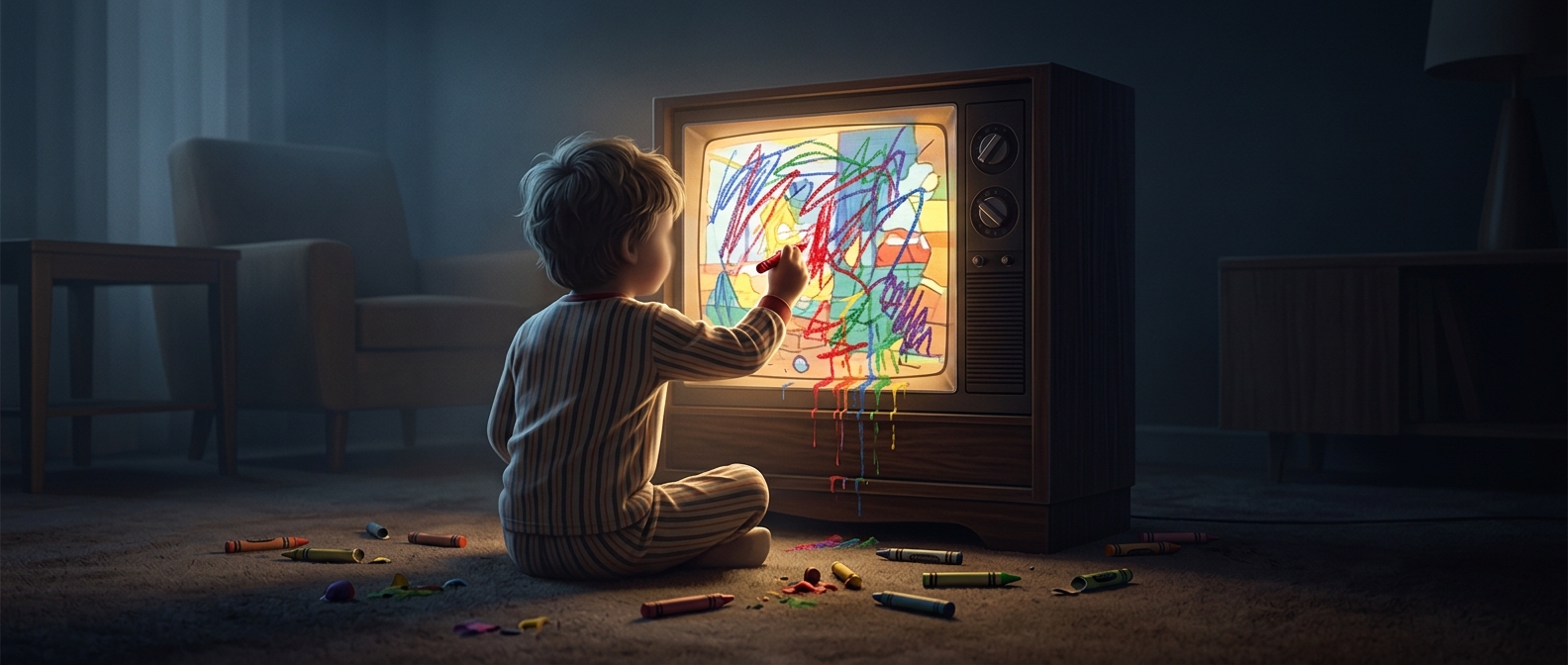
The program turned the television into part of the activity: children were encouraged to add bridges and ropes directly to the picture. But a TV screen was not a sheet of paper. Its glass was a hard, fixed surface, and pressing a crayon against it—or rubbing it around—could leave marks or risk damage, especially if grit caught between the crayon and screen.
The intended drawing surface was a separate protective plastic overlay. Fitted over the screen, it gave children a surface they could mark without putting the crayon directly on the glass. The catch was that families had to buy the accessory separately, so the show’s invitation could reach homes that did not have the part designed to make it safe.
When the screen became a prop
The idea blurred a boundary that television usually keeps clear: viewers look at the screen, while the equipment itself stays untouched. Asking children to draw on it made the set feel interactive, but the activity depended on an extra layer that was easy to overlook. Without it, a child following along could turn an ordinary TV into an improvised art board—and leave the household with a damaged or stubbornly marked screen.
That mismatch is the memorable lesson: an activity can appear to require only a crayon and a television, while its safe version depends on a separately purchased piece of plastic.