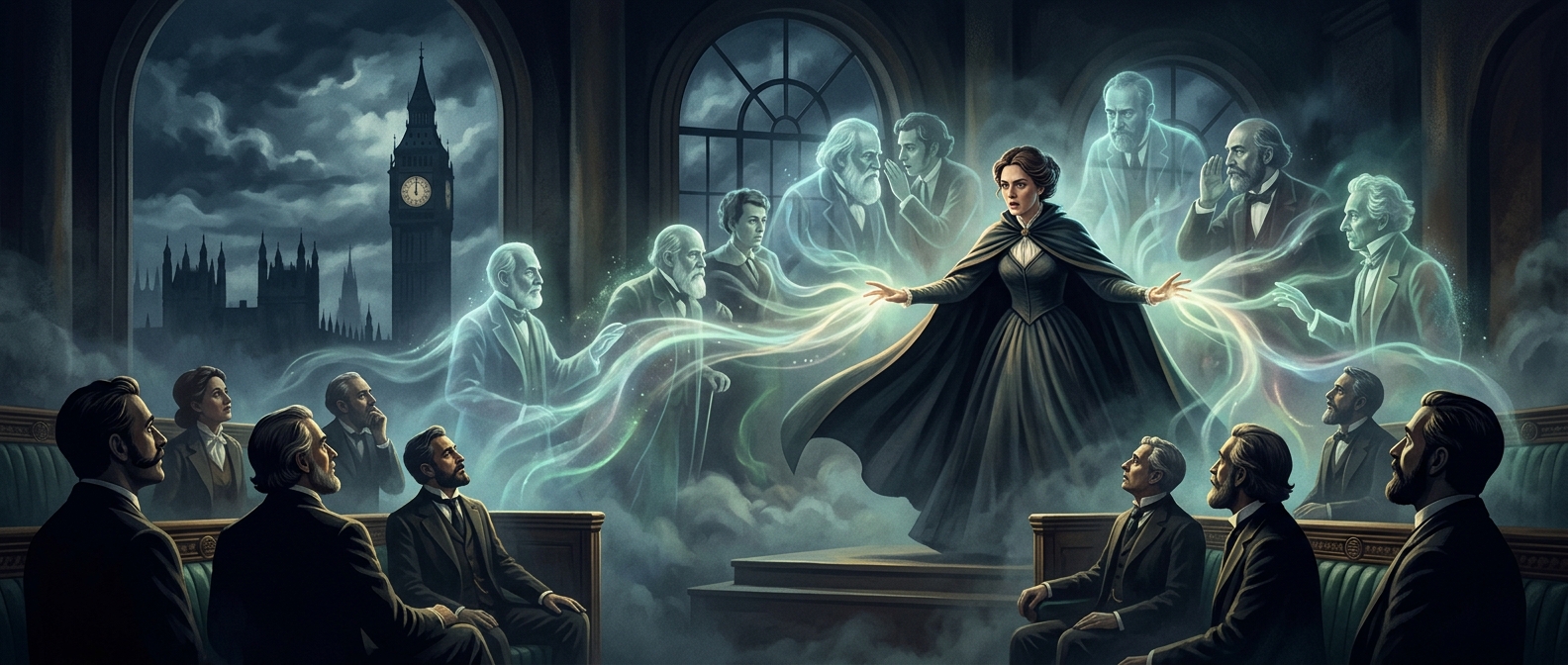
A séance became a platform for reform
In 19th-century Spiritualism, a medium was understood by believers to communicate with the dead. Emma Hardinge Britten used that framework not only for private messages but also for public speeches: she presented reform arguments as words conveyed by respected figures who had died. To listeners, the speaker’s authority could seem to come from beyond the room as well as from the woman standing before them.
That framing mattered in a period when women had limited access to formal political power. A woman addressing a large audience about women’s rights or labor conditions could be dismissed as presumptuous; presenting the same argument as the counsel of a revered historical figure gave it a different kind of standing. The claims remained radical, but they arrived wrapped in familiar authority.
The borrowed authority carried a sharper message
Britten’s speeches connected Spiritualist gatherings to live political disputes, including antislavery. Their force lay in the combination: recognizable moral prestige made reform proposals harder to treat as merely one speaker’s personal opinion. The dead statesman or reformer was not just a subject of the talk, but its claimed source.
That did not mean every listener accepted the explanation literally. The format could draw believers through its promise of communication with spirits, while the political content reached an audience assembled to hear it. In a crowded London hall, a message cast as coming from an honored dead figure could give a woman reformer room to speak—and make the audience weigh the reform itself.