How a display link parcels out a picture
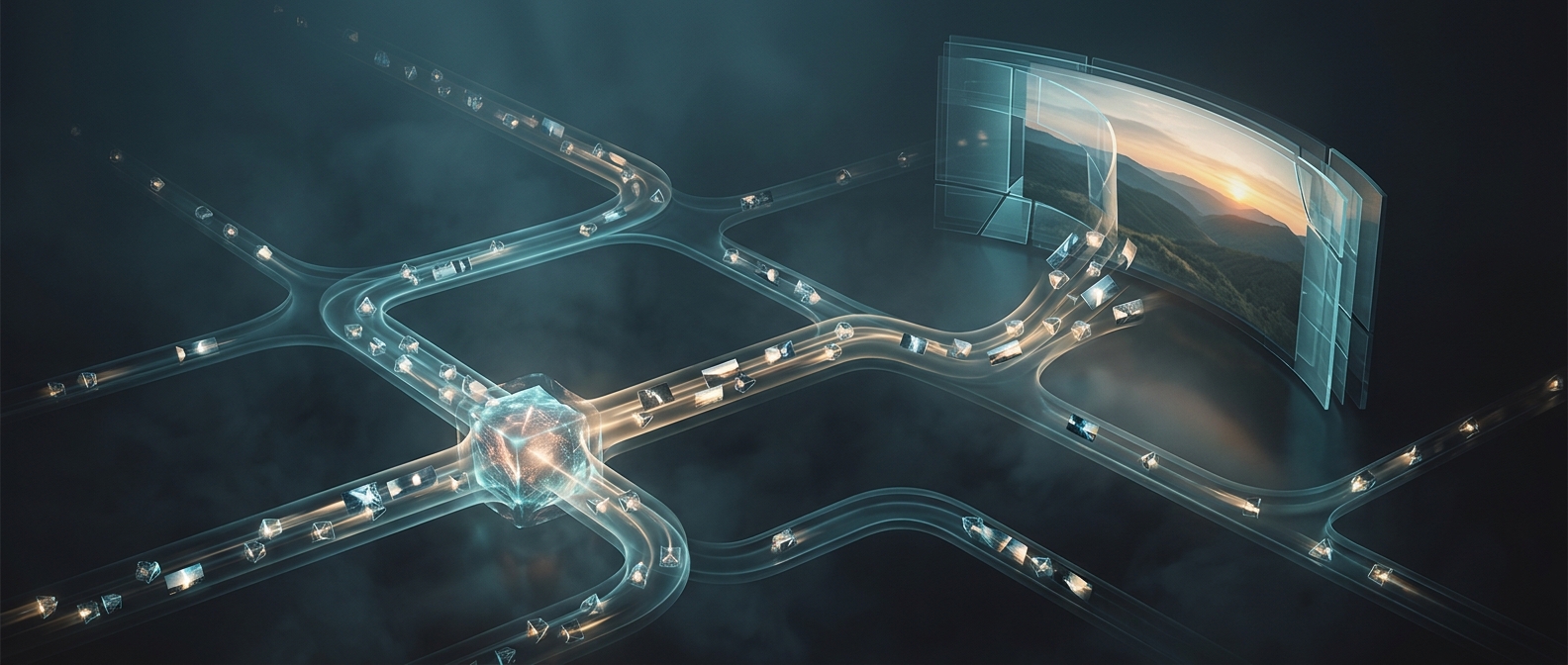
A screen ultimately needs a precisely timed sequence of pixel values: scan across a row, move to the next row, and repeat fast enough to refresh the image. A packet-based display link carries that information in labeled units rather than as one bare, uninterrupted flow. The labels and timing information let the receiving display work out which data belongs to the image and when to use it.
At the display end, a controller interprets the incoming units and rebuilds the timed picture stream the panel needs. If the picture were sent without enough structure, the display could receive the right pixel values but place them in the wrong rows or show them at the wrong time.
One link, several kinds of data
Because the link carries organized packets, it can schedule more than picture data. Audio and control information can travel alongside video, with the receiver distinguishing them by their type and timing. This avoids needing a separate physical cable for every kind of signal.
The network comparison has a limit: a display cable is not ordinarily routing each packet across a changing chain of computers. It is a purpose-built connection with finite bandwidth and strict timing demands. The sender must fit the picture and accompanying data into that capacity so the display can keep refreshing smoothly.
That structure makes a display link more adaptable than a simple stream of pixels: it can carry different kinds of information together while still delivering each piece where and when the screen expects it.