Why an Elevator Has a Counterweight
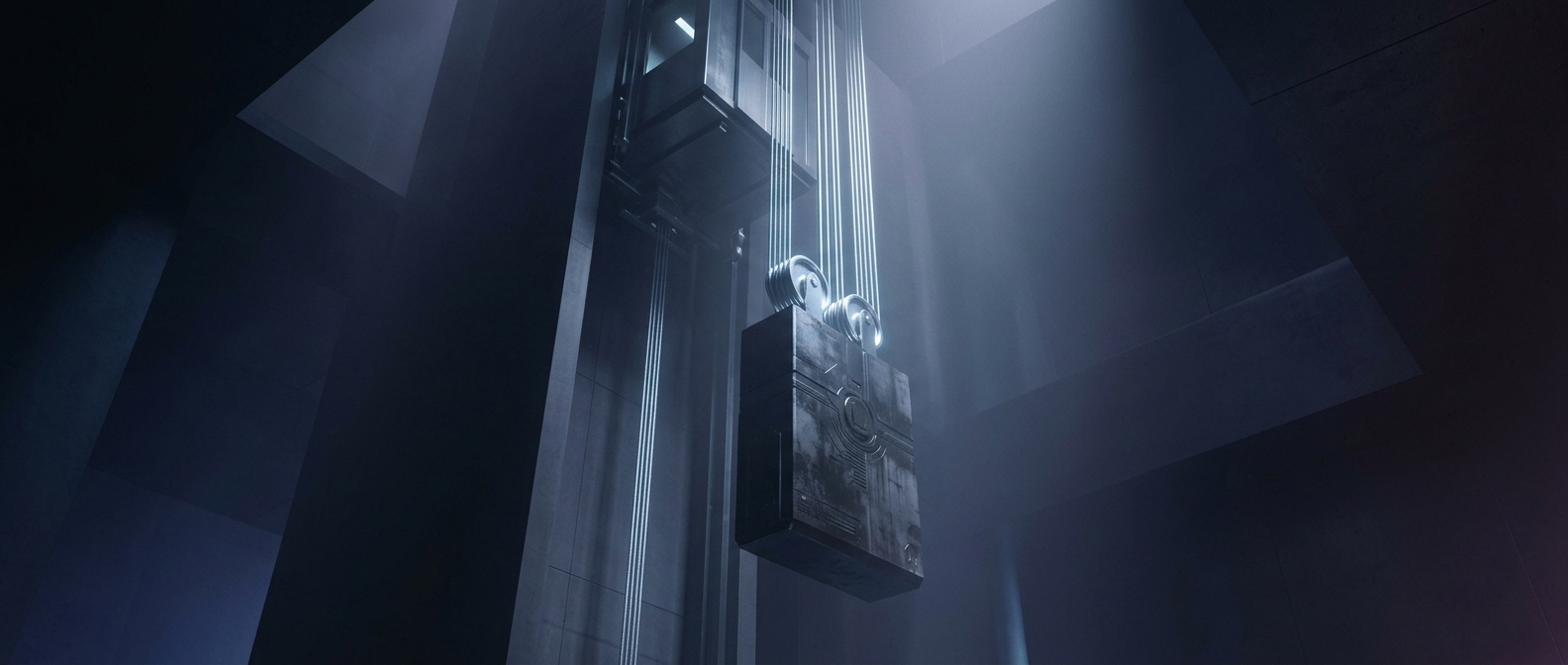
In a typical traction elevator, steel cables connect the car to a heavy counterweight, passing over a motor-driven pulley at the top of the shaft. The two sides move in opposite directions: when the car goes up, the counterweight goes down; when the car descends, the counterweight rises.
The counterweight is chosen to roughly balance the empty car plus part of its rated passenger load. That choice matters because an elevator’s load changes from trip to trip. With a moderate number of people aboard, the car and counterweight are close to balanced, so the motor mainly has to overcome the difference between them, along with friction and other losses—not lift the full weight of the car and its occupants from scratch.
The Motor Still Does Real Work
“Balanced” does not mean the elevator runs without power. The motor must accelerate and slow the moving system, keep it moving against friction, and manage the imbalance when one side is heavier. If a lightly loaded car travels upward, for example, the counterweight may be the heavier side, so gravity tends to pull it down and draw the car up. A heavily loaded car descending can create the reverse situation.
The motor and its controls govern that movement, while a brake holds the elevator when it stops. In some systems, the motor can also act as a generator when gravity is driving the motion, sending some energy back into the building’s electrical system.
Why Lift the Blocks, Too?
The counterweight itself must move, but it makes the system more efficient by reducing how much unbalanced force the motor must handle. It also lets elevator designers use a smaller drive than would be needed to raise the entire loaded car directly. So the heavy blocks are not dead weight added for no reason: they are the elevator’s moving balance, trading one load for a smaller difference between two loads.