When falling speed removes the steering time
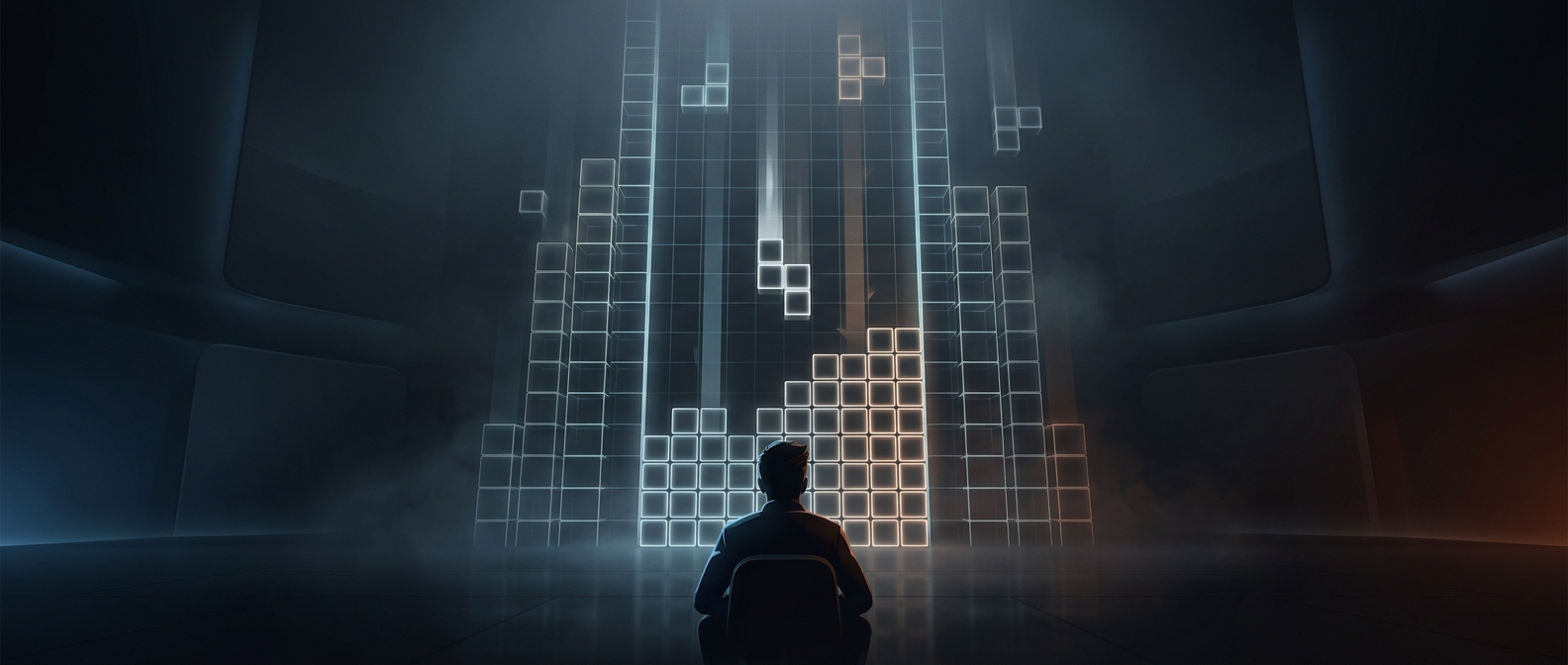
In ordinary Tetris, a piece usually descends gradually, giving the player time to move it sideways and rotate it before it lands. In modes where pieces fall almost immediately, that steering window nearly disappears. Players have to recognize the shape of a gap and prepare the right move before the next piece arrives.
That changes what counts as a useful skill. Fast fingers still matter, but a player cannot rely on nudging a piece into place after seeing where it lands. The board must be read in advance: which opening is available, which piece can fit it, and whether the move will leave a workable surface for what comes next.
Rotations become part of the placement
A spin is more than turning a piece in open space. Rotating a piece near a tight opening can let its corners pass around the surrounding blocks, placing it where a straight drop or simple sideways slide would not. In some rule systems, a rotation can also shift a piece slightly when it hits an obstacle; that adjustment is commonly called a wall kick.
Under extreme speed, those maneuvers turn rotation into a precise placement tool. The player needs to know the piece’s orientation and approach, then trigger the spin at the right moment. A move that looks like a last-second twist is often the execution of a plan made before the piece appeared.
The result is a version of Tetris that tests prediction as much as reaction: the board becomes a puzzle to solve ahead of time, while each spin is a narrow route into the chosen gap.