Why the Scheldt Became a Test of Power
The river at the center of the so-called Kettle War was more than a route to the sea. The Scheldt connected Antwerp, in the Austrian Netherlands, to international shipping. Since the 1648 Peace of Münster, the Dutch had kept its lower reaches closed to trade, protecting the commercial advantage of ports farther north. For Antwerp, that meant being close to the sea but unable to use the most direct route to it.
In 1784, Holy Roman Emperor Joseph II challenged that arrangement by sending an Austrian vessel downriver. The move put a practical question before the Dutch: would they let a ship pass, or enforce a closure that had lasted for generations? A single vessel could not force open the waterway, but its passage could test whether Dutch control still held.
A Shot That Settled the Immediate Encounter
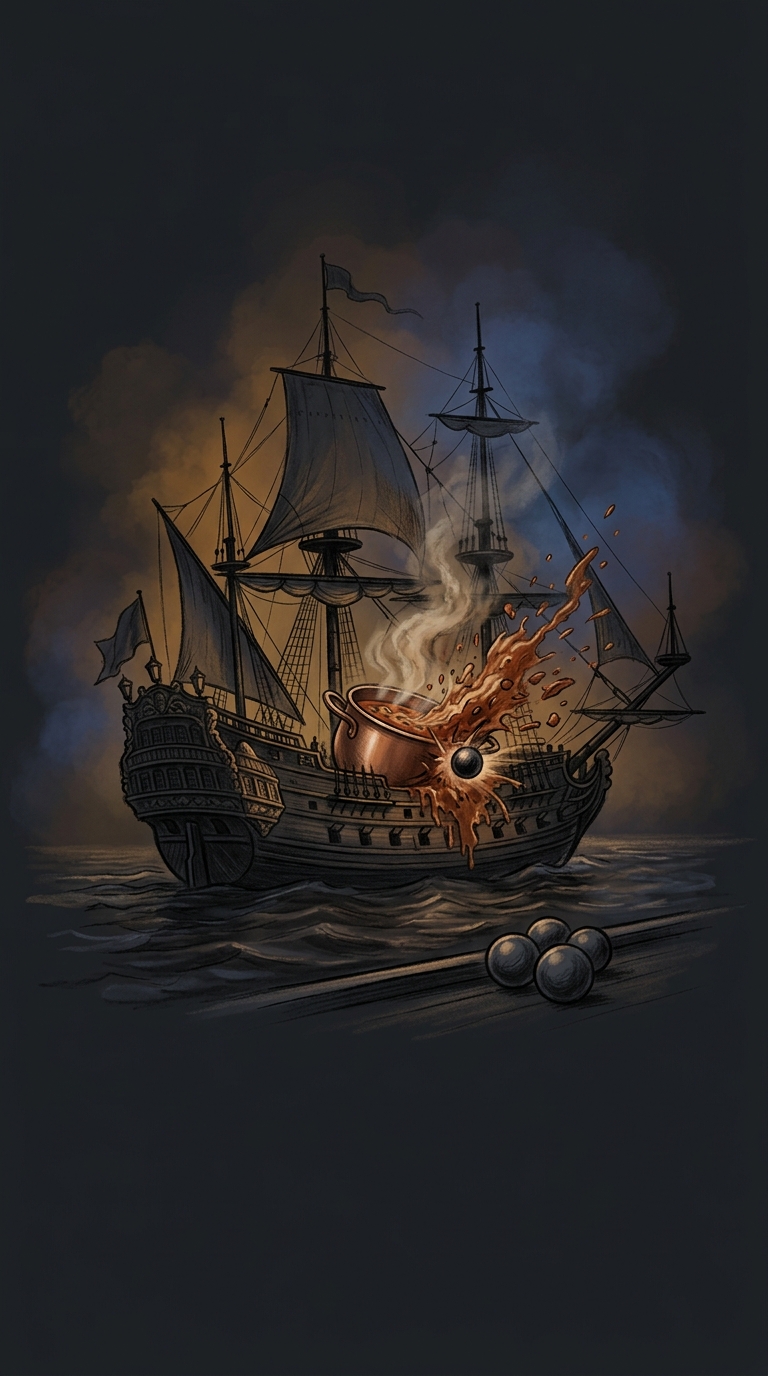
The Dutch response turned the test into a comic episode. A Dutch ship fired; the shot struck a cooking kettle aboard the Austrian flagship. The Austrians surrendered without exchanging fire. The nickname “Kettle War” comes from that oddly domestic target, not from a substantial battle or a campaign of fighting.
The incident was embarrassing precisely because the stakes were serious. Joseph’s challenge was about access, rights and prestige; the Dutch had shown they were prepared to stop the ship. But a brief naval encounter could not settle the underlying dispute. The two sides moved toward negotiation instead, and an agreement in 1785 addressed the Scheldt’s status and the claims arising from the confrontation.
The kettle became the memorable detail, but the deeper story is how little force it took to expose a long-running political fault line: one shot stopped a ship, while diplomacy had to deal with the river.