A railway built around one heavy cargo
Mauritania’s iron-ore railway links mines near Zouérat, deep in the Sahara, with the Atlantic port at Nouadhibou. The route solves a basic transport problem: ore is heavy, and the mines are far from the coast. Moving it by rail lets a train carry many loaded cars in one journey instead of sending a long stream of individual trucks across the desert.
That purpose shapes the line. The railway is a freight corridor, not a passenger network connecting a chain of towns. Its main job is to keep ore moving from mine to ship, so the train’s schedule and equipment are organized around the bulk cargo.
The desert is part of the engineering challenge
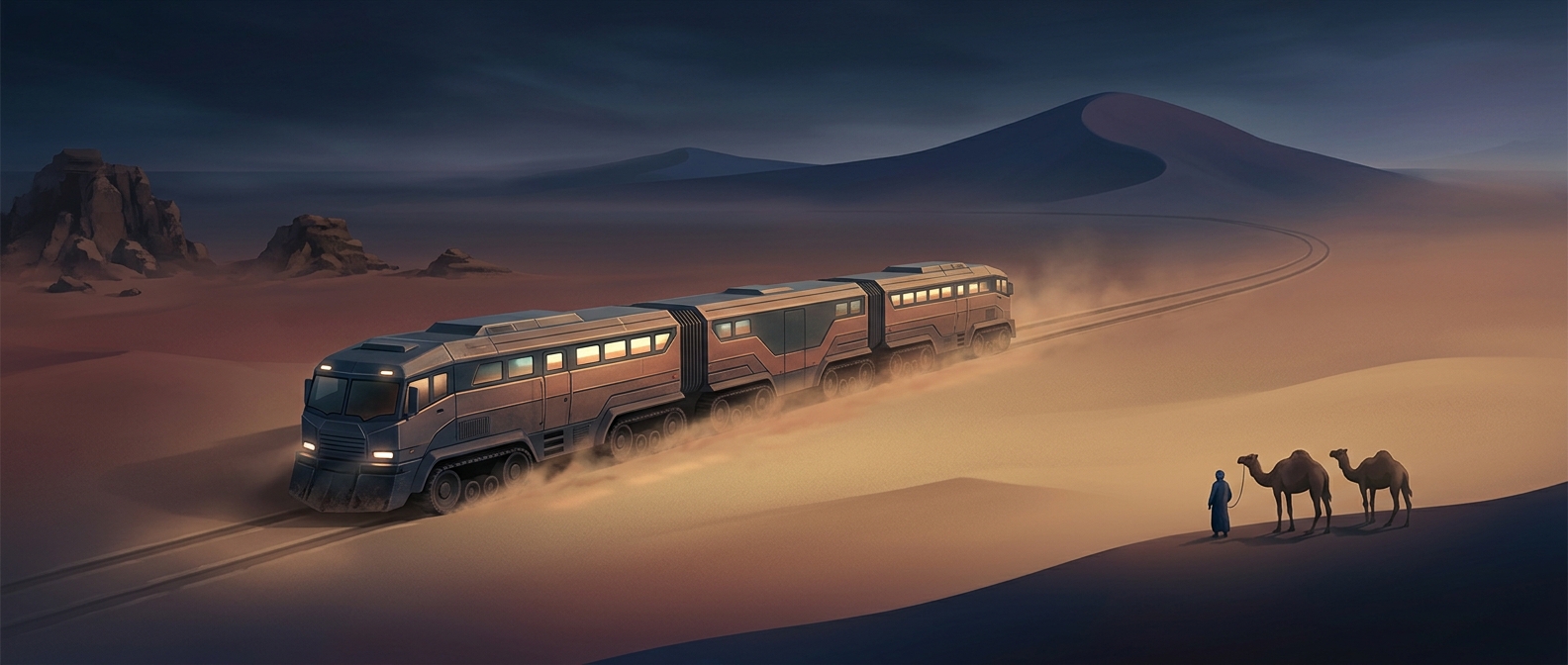
A railway crossing open desert has to contend with drifting sand, heat, and long stretches far from settlements. Sand can cover or obstruct track, so keeping the route usable is an ongoing maintenance task. The fixed rails are also an advantage: once the line is in place, trains can repeatedly carry heavy loads along the same corridor without needing a new road through the landscape.
For local travelers, the freight train can serve as an unusual connection across that distance. Some ride atop the ore cars, exposed to the wind and weather rather than enclosed in a passenger carriage. The same design that makes the train effective for hauling a vast mineral load also makes the journey starkly exposed: the cars are built to carry ore, while people adapt to the space the freight system provides.