From trapped blood to changing color
A bruise forms when small blood vessels break and leak blood into the tissue beneath the skin. The red blood cells are now outside the vessels, where the body’s cleanup cells—especially macrophages—gradually take them apart and remove their contents.
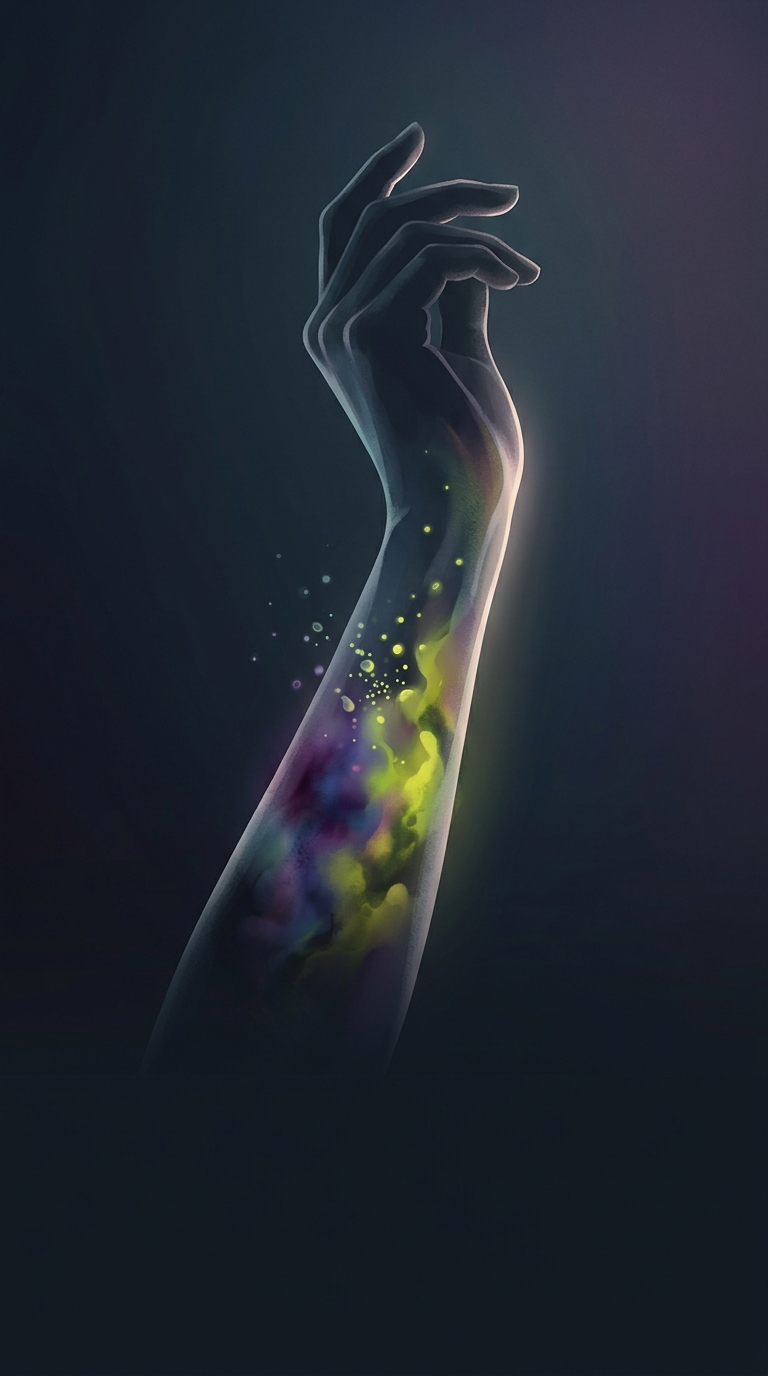
The color shift comes largely from heme, the iron-containing part of hemoglobin, the molecule that carries oxygen in red blood cells. As heme is broken down, it becomes biliverdin, a green pigment. An enzyme then converts biliverdin into bilirubin, which is yellow. Those pigments, mixed with the remaining blood and tissue, create the familiar greenish and yellow patches.
Cleanup takes time—and varies
The body also salvages useful materials. Much of the iron from hemoglobin is collected for reuse or stored, while other breakdown products are carried away and processed. As the leaked blood is cleared, less pigment remains in the tissue, and the bruise fades.
The sequence is not a precise color calendar. A bruise’s depth, size, location, and the person’s skin tone all affect what can be seen; colors may overlap, and some bruises never look distinctly green. Still, the changing shades reveal something happening below the surface: the body is dismantling leaked red blood cells and reclaiming what it can.